

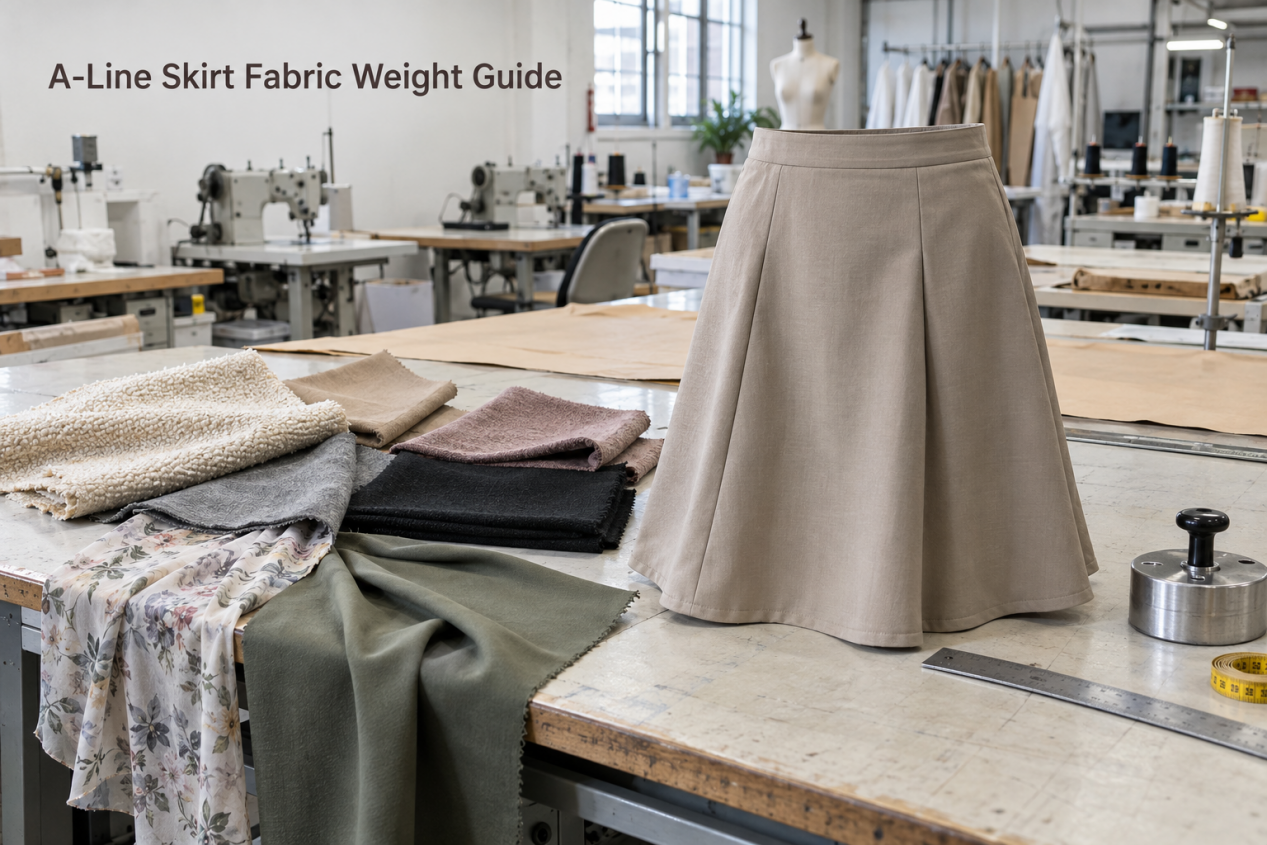
Been in this trade long enough. Buyers ask me the same thing every time: what’s the GSM? Will it work for an A-line skirt?
Honestly? That number alone won’t tell you.
Will the waistband bunch up? Will the hem drape right? GSM won’t answer that. After all these years, I trust my hand more than the spec sheet. Grab the fabric. Crush it. Let it fall. Watch what it does.
And bulk orders are where it bites you. The sample felt fine. Then a few thousand meters come off the line, the drape is off, the waist is puffy, and there’s no fixing it now. That’s when you learn — drape never shows up in a number.
One more thing buyers miss. Higher GSM means a stiffer hand, but your unit cost climbs too. Go lower, save money, lose the shape. So picking fabric for an A-line skirt was never about the highest or lowest GSM on paper. It’s whether the material and the pattern actually work together, and whether the numbers still make sense at the end.
That’s really what fabric weight analysis for skirts comes down to.
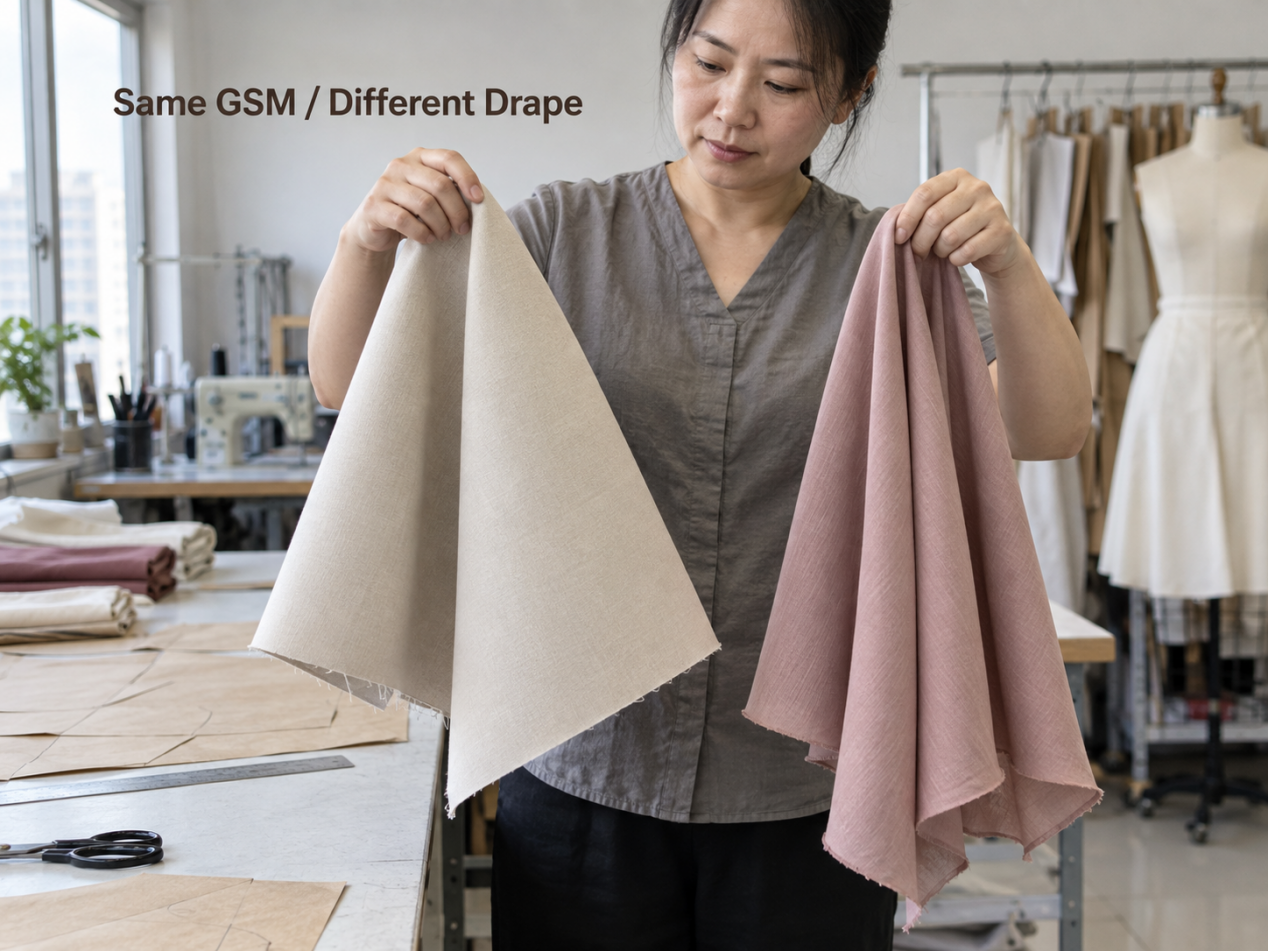
The Same GSM Can Produce Two Different Skirts
A compact polyester and a soft viscose fabric may have a similar weight, yet they will not produce the same skirt.
The polyester may hold the hem away from the legs and create a sharper outline. The viscose is more likely to fall closer to the body and move more freely when worn.
Stretch changes the result again. A fabric with elastane may need less ease in the pattern, while a non-stretch fabric needs enough room for sitting and walking.
The skirt length also matters. A material that works well for a structured mini skirt may feel too heavy when the same pattern is extended to midi length.
For this reason, we do not select fabric from the GSM figure alone. We check it against the waistband, zipper, pockets, lining and the amount of fullness at the hem.
Light Fabric Needs More Than a Lining
A light fabric is useful when the buyer wants movement, especially for a summer skirt or a style with a softer outline. Problems usually appear when the material is expected to hold a clean A-line shape without enough support.
The skirt may become transparent under stronger light. It may also collapse at the waist or ripple beside the zipper after sewing.
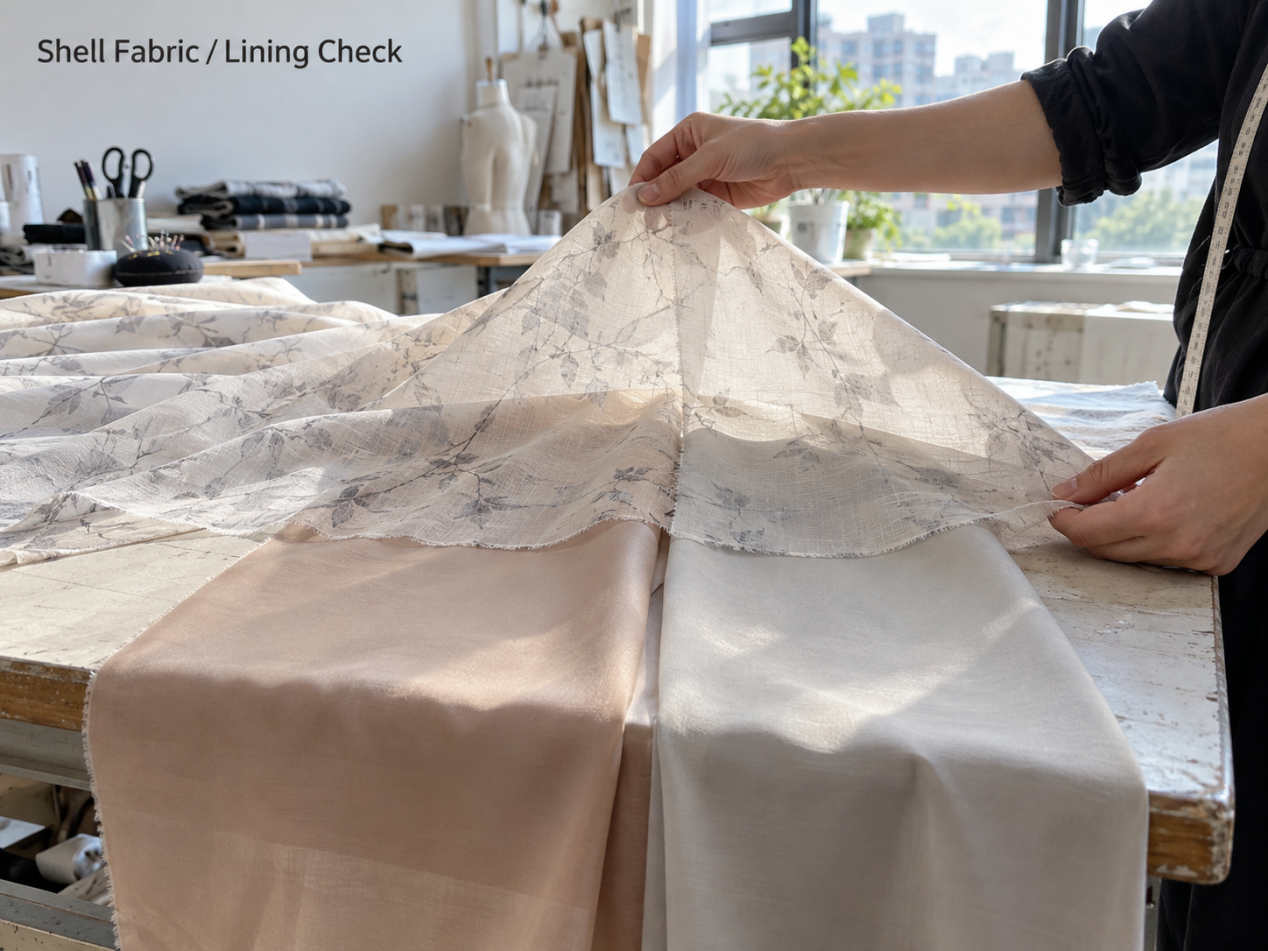
A lightweight skirt lining helps with coverage, but it has to move with the shell. Too stiff and it holds the skirt back. Too heavy and it drags on the waistband, and the hem hangs wrong.
Sometimes a full lining is unnecessary. A stable waistband facing and local reinforcement around the zipper may be enough, depending on the fabric and colour.
We prefer to place the shell and lining together before cutting the sample. It is a simple check, but it shows problems that cannot be seen when the two fabrics are approved separately.
Heavier Is Not Automatically Better
A high GSM fabric for skirts usually gives an A-line style more body. It can support a firm waistband, visible topstitching, patch pockets or a cleaner hem.
The extra weight becomes a problem where several layers meet.
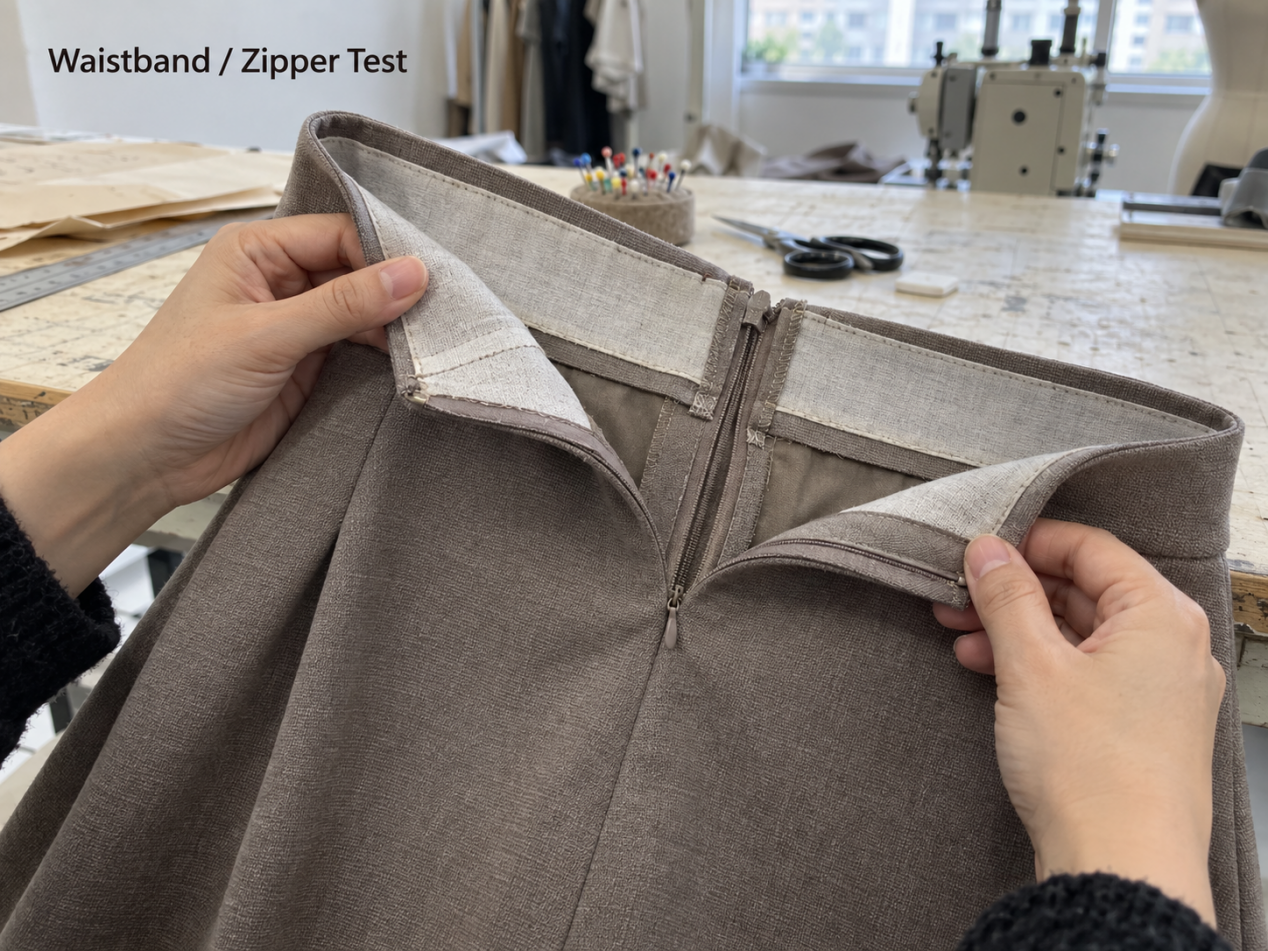
At the waist, the main fabric, fusing and seam allowances are folded together. If that section becomes too thick, the waistband feels hard and the zipper may no longer sit flat.
Pleats and gathers need attention for the same reason. A heavy fabric can build up around the waist, making the skirt look fuller than the approved design.
In many cases, we keep the main fabric and adjust the inside construction instead. Reducing the fusing weight, trimming the seam allowance or changing the waistband finish may solve the problem without losing the required outer shape.
When the material is unfamiliar, a small sewn section is more useful than another discussion about numbers. It lets us check the real thickness at the waistband and zipper before making the complete sample.
Where Fabric Weight Changes the Unit Cost
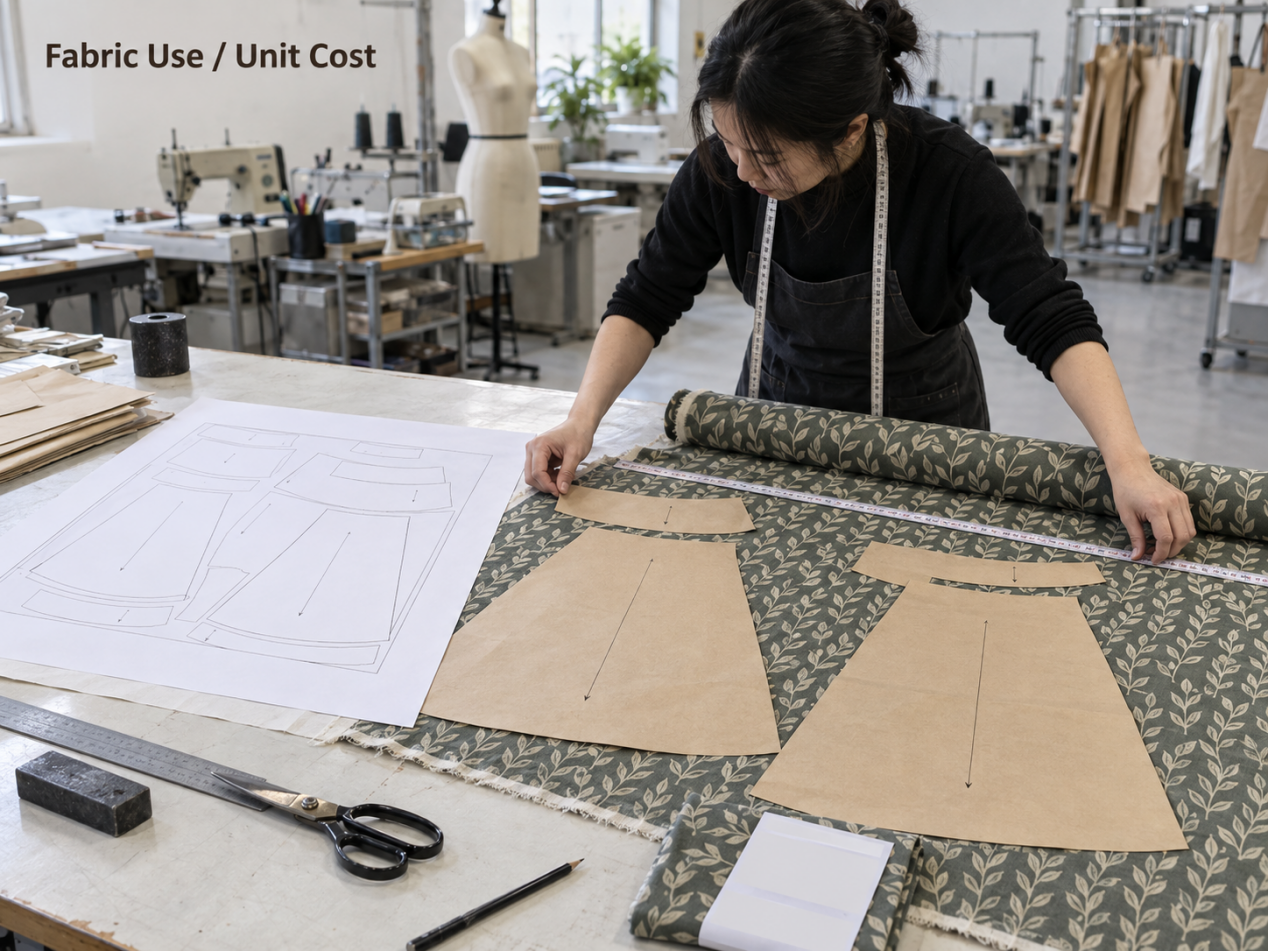
A heavier fabric may cost more by weight, but GSM is not a complete pricing method. Fabric width, fibre content, finishing and cutting consumption all affect the quotation.
A narrow lightweight fabric may use more metres per skirt than a heavier fabric with a wider usable width. Checks, stripes and directional prints also increase consumption when visible seams need to match.
Construction makes another difference. A transparent skirt may need a full lining, more careful seam finishing and additional handling during sewing.
Thicker material creates a different type of work. Waistbands, pocket corners and zipper areas take longer to sew and press when the layers are bulky.
This is why the A-line skirt production cost should be calculated after the fabric and construction are reasonably clear. If the material is still being sourced, the first price can only be an estimate.
| Production Point | Lighter Fabric | Heavier Fabric |
| Finished shape | Softer and closer to the body | Firmer and more structured |
| Coverage | May need lining | Often less transparent |
| Waistband | May need reinforcement | May become bulky |
| Zipper | Fabric may stretch or ripple | Thick layers may stop it lying flat |
| Cutting | Slippery fabric needs careful handling | Thick layers need accurate cutting |
| Cost impact | Lining and extra finishing | Material use and sewing time |
What We Need Before Recommending Fabric
A reference image helps us understand the look, but it does not show the fabric weight, stretch or internal construction.
Before sourcing, we need the design or Tech Pack, preferred composition, expected hand feel, skirt length and size range. The estimated order quantity, lining requirement, colour, print direction and target delivery date are also useful.
If the buyer has an original fabric swatch, we can use it as a physical reference. When the same fabric is unavailable, Meng Ruolan Apparel can look for options with a similar weight, stretch, texture and drape.
A replacement is not approved simply because its GSM is close. It still needs to work with the waistband, zipper, pockets and intended skirt shape.
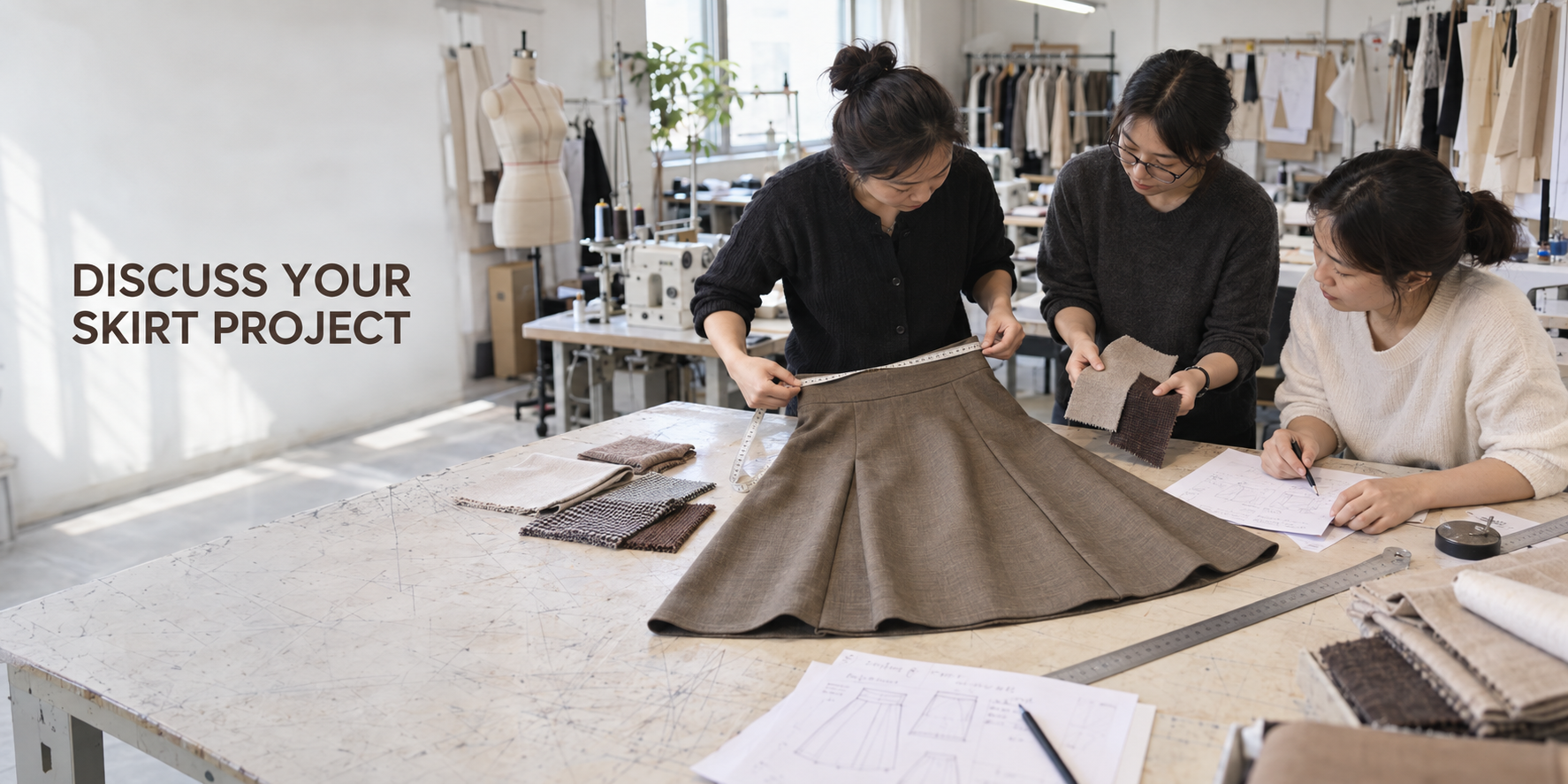
As a custom A-line skirt manufacturer, we can review the fabric and construction before the sample is made. If the material is difficult to judge, we can first test the waistband or zipper area in a small sewn section.
This gives the buyer something real to check before bulk fabric is arranged. It also leaves time to change the material or internal construction without disrupting the main production order.
Working on an A-line skirt collection? Send us your design, fabric reference, size range, expected quantity and target delivery date. Our team can review the main fabric and construction points before sampling.
Contact Details:
Dongguan Meng Ruolan Clothing Factory
WhatsApp 86 18825766882
Post time: Sep-15-2026


