

Bias-Cut Satin Skirts: What to Check Before Approving the Hem
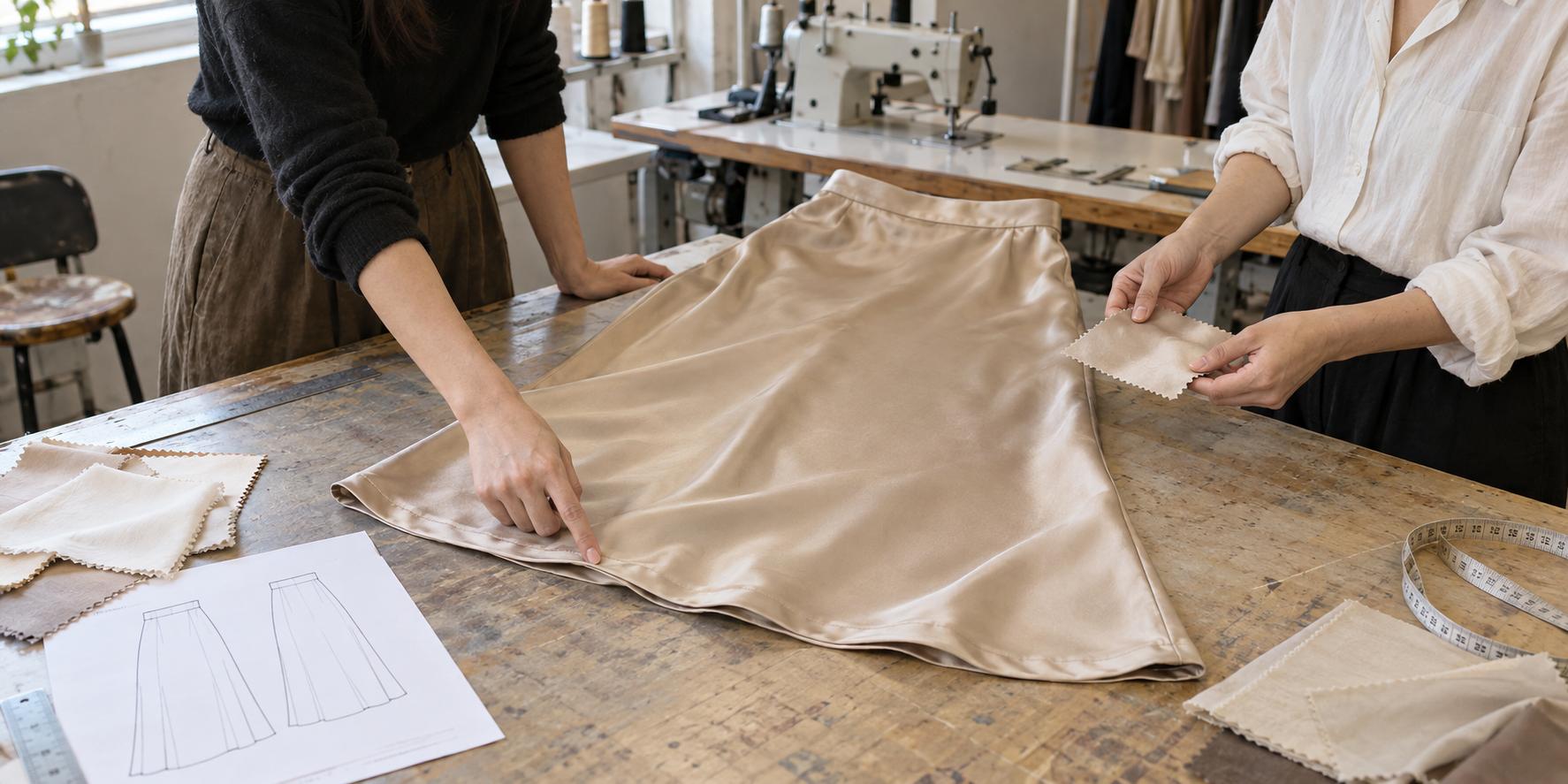 1.The right side needs to come up a little.
That may be the first comment when a satin skirt sample is tried on. It sounds like a small alteration, and sometimes it is—but cutting away the extra length too soon can leave the next sample with the same problem.
With bias-cut satin skirts, the hem is only the symptom — what happens higher up is usually the cause. Before you touch it, figure out two things: has the fabric finished moving, and is the skirt actually sitting right at the waist and hips?
2.Before You Shorten One Side, Ask How the Sample Was Finished
A skirt fresh off the machine isn’t done moving. Press it, hang it, and bias-cut fabric keeps dropping — and not evenly, either. The panels don’t all stretch at the same rate. What you measure today might not be what you get tomorrow.
So the first thing to ask the factory: was the skirt hung before the hem went in, or did it come off the machine and go straight to finishing? If it never hung, the uneven edge probably showed up after the hem went in — and that changes what needs fixing.
About 24 hours is the usual starting point for a bias-cut garment. But hours don’t prove anything. Measure it, let it sit, measure it again the same way. If the number has moved, it’s not ready, no matter how long it’s been hanging.
Trying to level a hem while the fabric is still moving is wasted work — you’ll be trimming a shape that keeps changing. Let it settle first, then see what actually needs to come off.
And don’t let this stay a sample-room conversation. If your approved sample got to hang overnight, the bulk order needs that same time built into the schedule. It’s usually the first thing to disappear when production gets busy, and it’s exactly when the problem comes back.
3.The Hem Can Reveal a Fit Problem
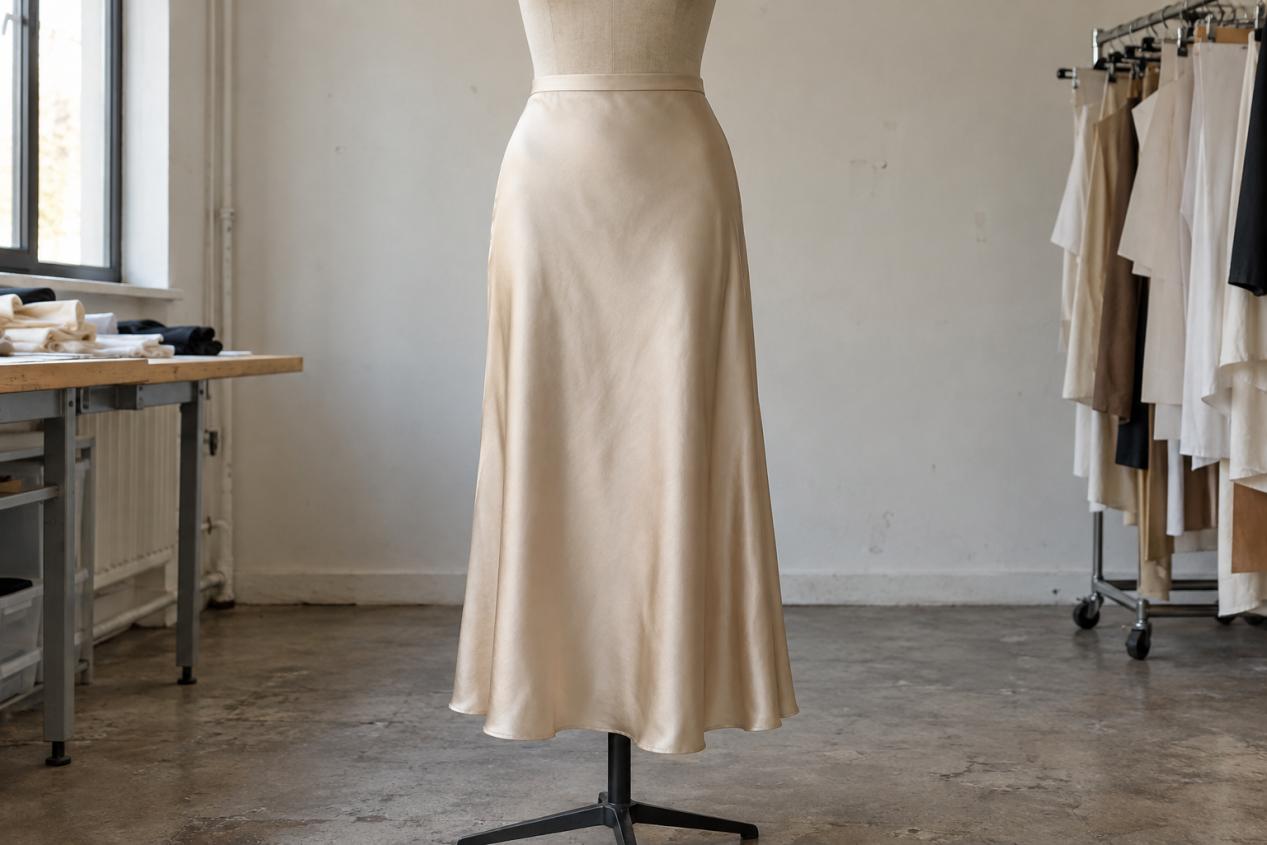
Once the fabric has settled, put the sample on the way it will be worn — waistband where the design says it should sit, zip closed, hands off. Let the skirt drop on its own. If you pull it into place, you’re only hiding what it wants to do.
Still seeing an uneven satin skirt hem? Don’t reach for the scissors yet. Check the waist and hips first. A waistband that’s tilting, or fabric that’s catching tight across the hips, will lift one side of the skirt — the hem is just where you notice it.
Watch the side seams while the model walks. If they swing forward or the skirt slowly turns, trimming the lower edge will make it look fine in a standing photo and do nothing about what’s actually wrong.
Have the model walk, turn, and stand again. Honestly, a short fitting video tells you more here than a close-up of the hem ever will.
For a level design, use the floor as your reference during the fitting — it’s the only thing that doesn’t move. But keep those fitting notes separate from your garment measurements,
which should always come from the points in your size chart.
4.A Neat Hem Should Still Let the Satin Move
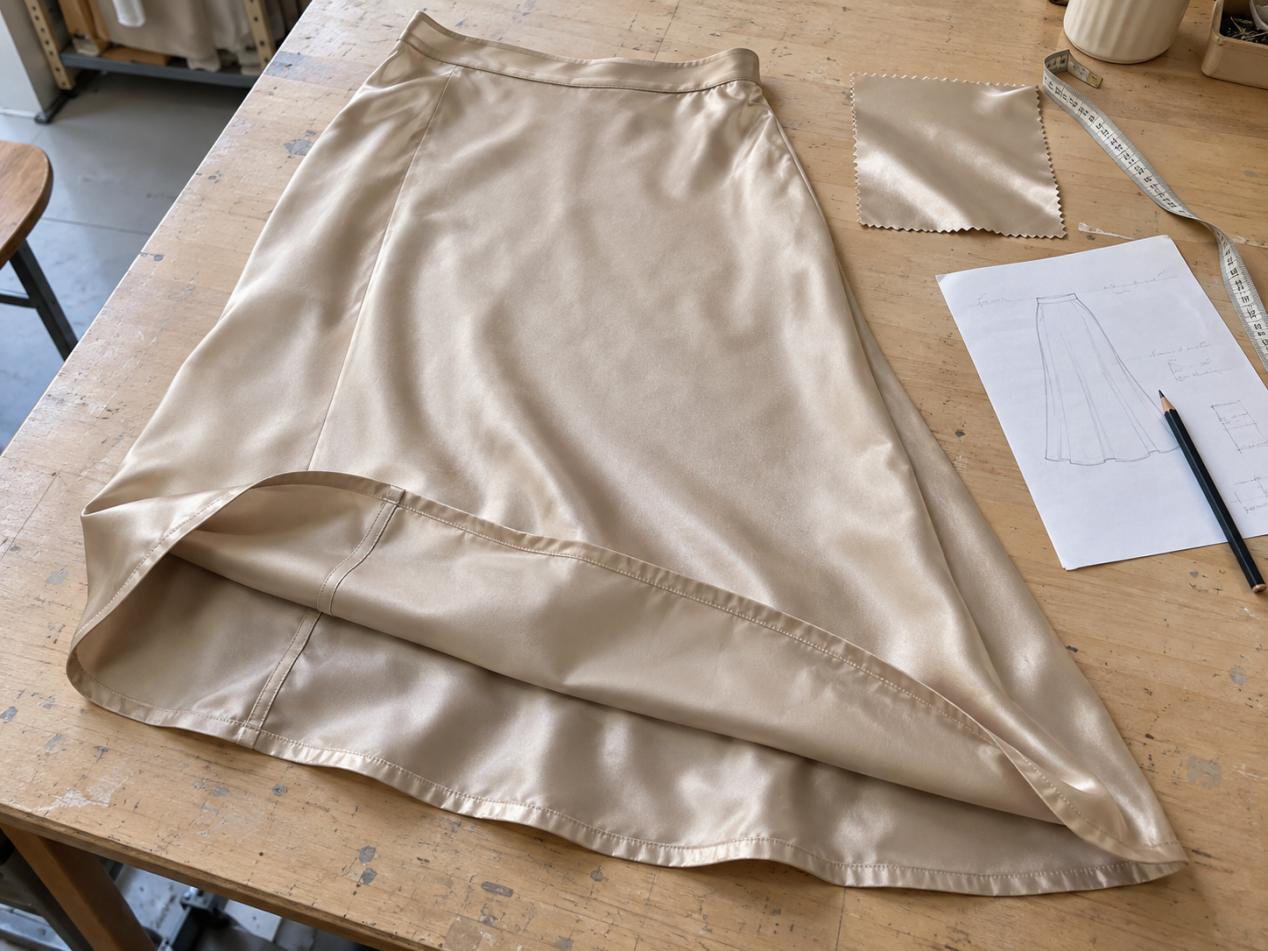
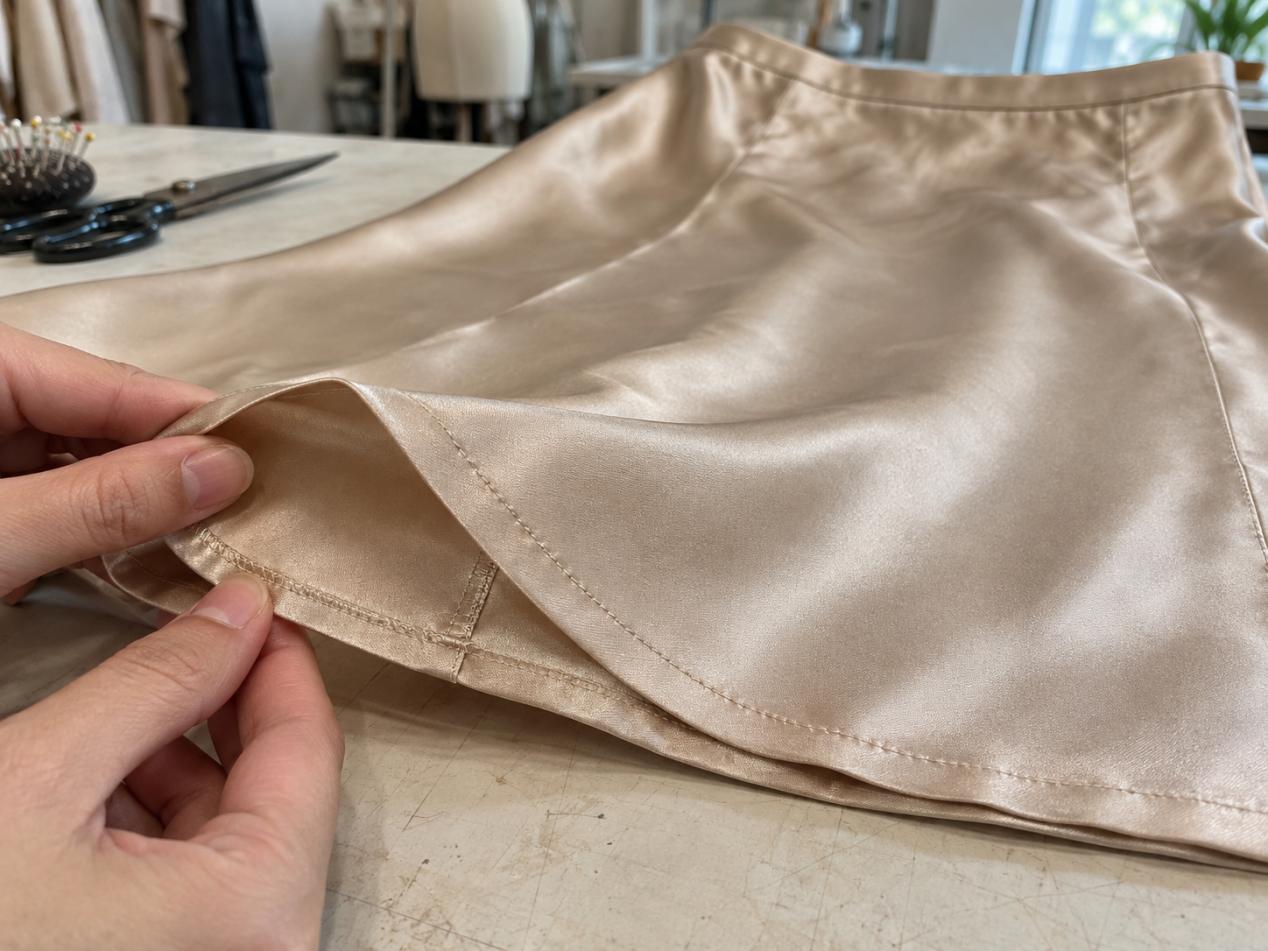
Once the balance is right, the finished edge is worth a second look. Satin shows everything. A line of stitching pulled slightly tight, or a hem fold that’s a bit heavy, can catch the light from across the room even when it looks perfectly tidy up close.
Start from a few steps back. Does the lower edge fall in line with the rest of the skirt, or does it kick out slightly? A hem that flares is usually a hem that’s too stiff.
Then flip it over and check the stitching side. Small ripples, a bit of puckering, a chunky fold — those are all signs to ask for another trial, especially where the side seam meets the hem. That’s where bulk builds up fastest.
Both a narrow turned hem and a rolled hem can work on satin, but neither one is right for every satin. Let the fabric decide, not habit.
If you are still in the sample development stage, have the factory run both finishes on the same skirt — a few centimetres of each — and compare them. Then check your pick on the full garment, not on a cutting. A hem only shows what it does to the drape when the whole skirt is hanging.
5.Fresh Pressing Can Make Approval Look Easier Than It Is
A freshly pressed sample is the easiest thing in the world to approve. The steam smooths everything out, the edge looks sharp, and for a moment it seems done. Don’t sign off in that moment. Let the skirt cool, hang it up, and walk away.
Come back later and look at it in normal daylight — not under the fitting-room lights, and check it from the side too. Two things to watch for: does the waviness come back once the fabric has hung for a while, and can you see the impression of the folded hem allowance showing through on the outside?
If pressing made it look fine but the problem came back after the skirt had hung a while, the press isn’t fixing anything. Have the factory check the sewing and the handling instead of running it through the press again. A second pressing won’t change what’s wrong.
6.Make the Revision Comment Specific
“Please improve the hem” leaves too much open to interpretation. A photograph showing the problem, together with a measurement or a clear description, gives the sample team something they can act on.
These are the details worth keeping with the approval:
|
What You Notice |
What to Clarify Before Approval |
|
One side hangs lower |
Has the fabric settled, and is the waistband level? |
|
The skirt turns during movement |
Does the fit, grain direction or seam construction need review? |
|
The edge ripples or flares |
Would another hem finish work better in this fabric? |
|
The lining pulls or shows |
Does its length or attachment need changing? |
|
The sample looks different after cooling |
Is pressing hiding a sewing or handling issue? |
|
A revision is promised for bulk |
Do you need to see the corrected sample first? |
If the correction changes the skirt’s shape or the way the edge falls, review it on a revised satin skirt sample. Leaving that decision until bulk means the first opportunity to judge the result comes after production has begun.
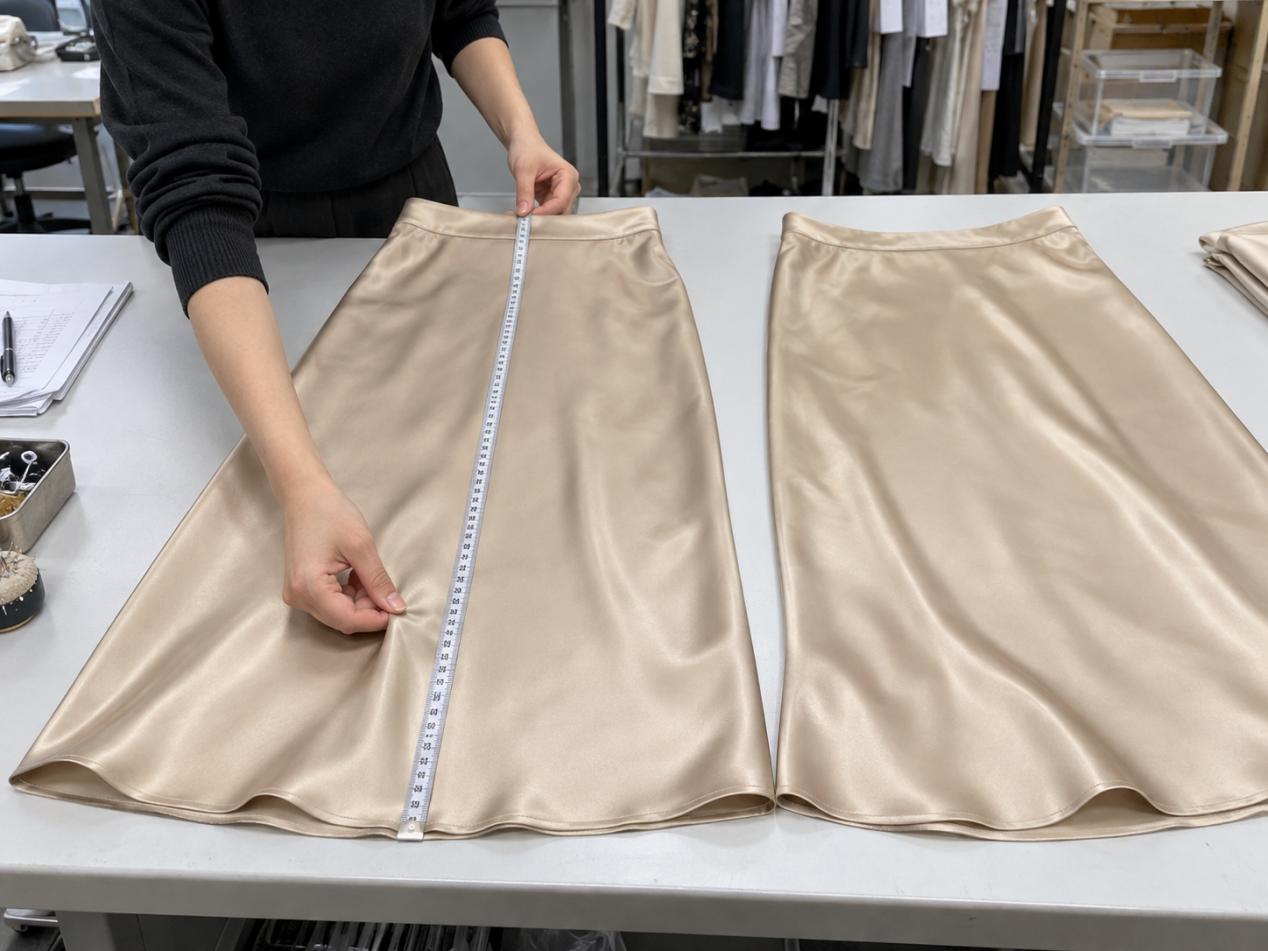
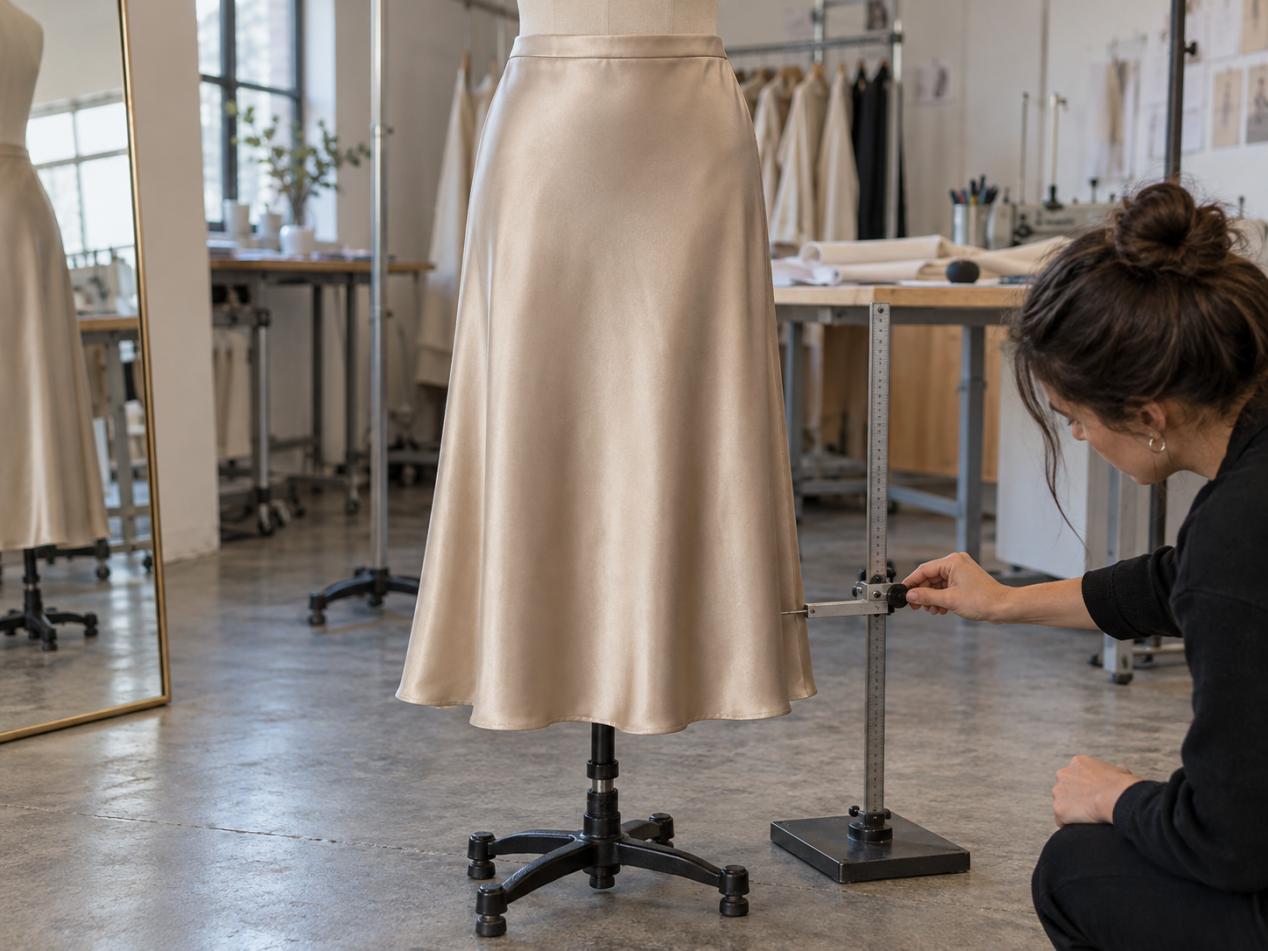
7.Satin skirt sample with measurements and hem revision notes
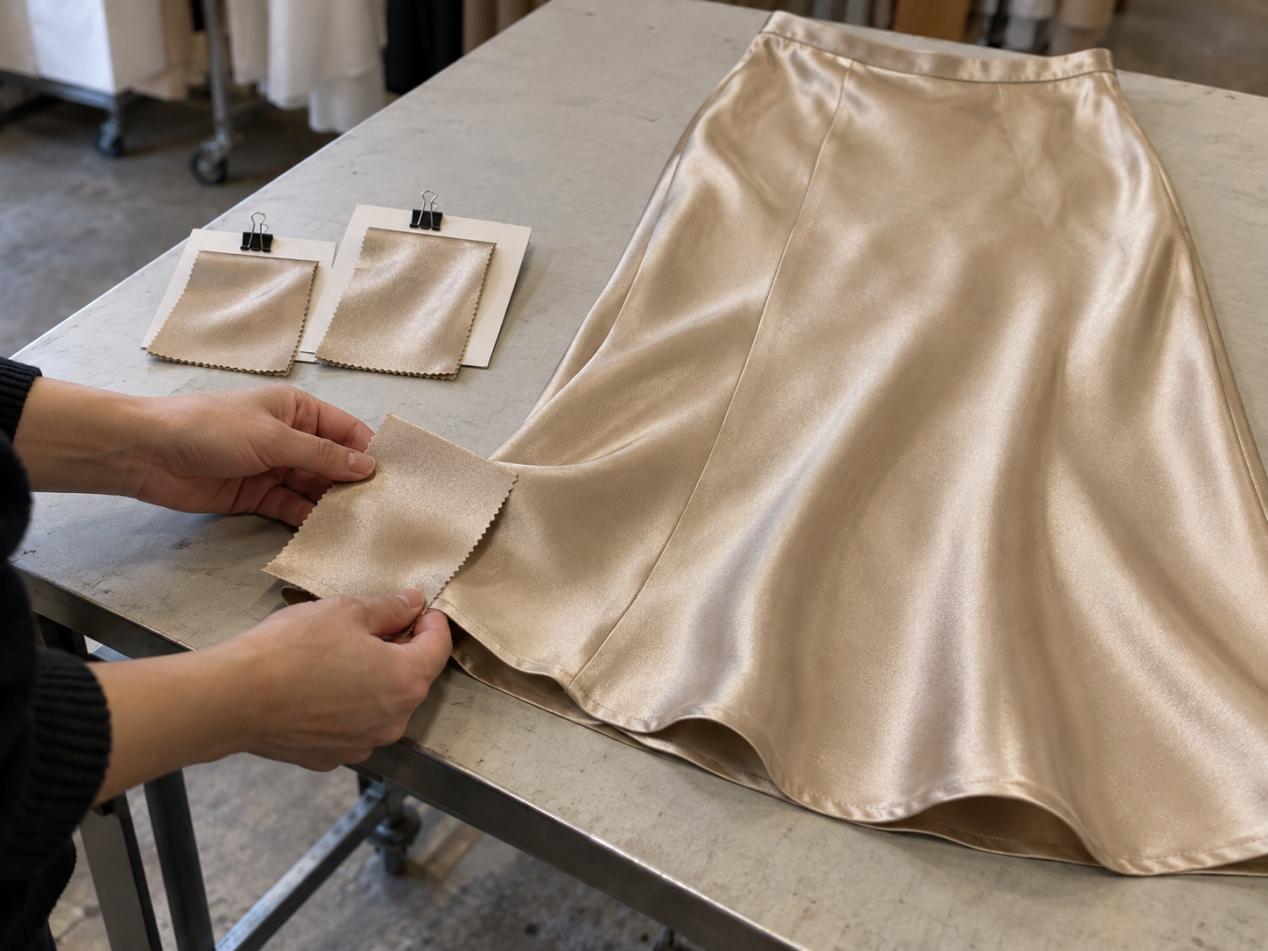
One thing we’ve seen more than once: “satin” on the label doesn’t mean two fabrics will act the same. Same weave, sure, but completely different behaviour — one of them can drop a lot on the bias while another barely moves. The word won’t tell you the fibre, the weight, or how the fabric handles in sewing. So if the bulk material isn’t the same one the sample was cut from, don’t assume the hem result carries over. Just measure it again.
A substitute fabric is fine for checking the early fit. It just can’t answer every question about the production garment — especially the ones about how the edge will fall and stay.
For custom skirt production, keep the approved sample, the fabric reference and your final comments together as one package. When bulk starts, compare the first pieces against them — and if your size range is wide, check a few representative sizes, not just the middle one.
What you’re really doing is handing the production team something they can reproduce. A hem that only looks right because someone finessed it on one sample isn’t a standard — it’s a workaround. Fix it before it becomes the benchmark for the whole order.
8.Have a Satin Skirt Sample That Needs Another Look?
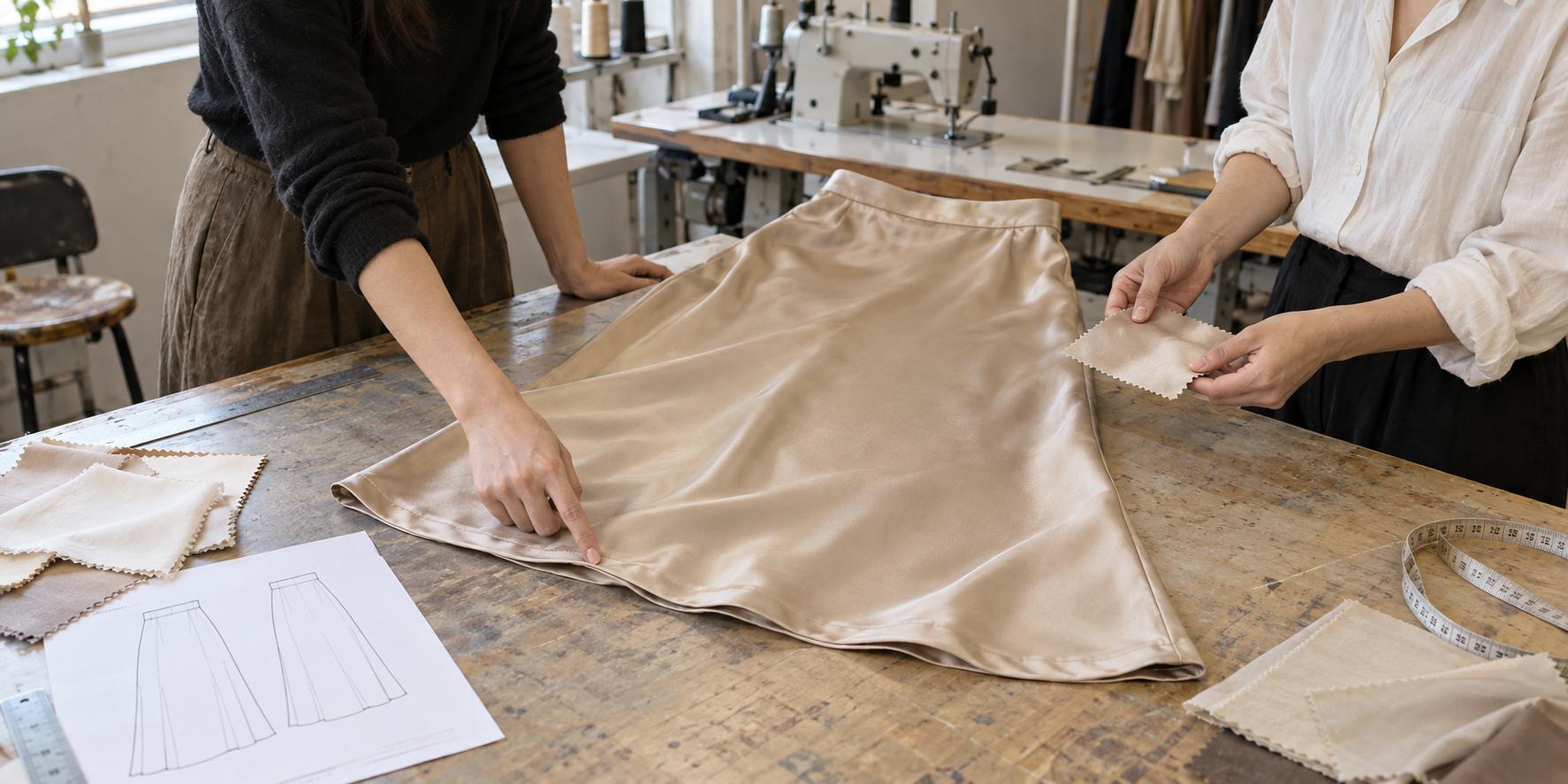
Send Meng Ruolan Apparel your design or tech pack, proposed fabric, size range and expected quantity. If a sample already exists, include front, back and side fitting photographs and explain what changes after walking or hanging.
That gives us a useful starting point for discussing the pattern, fit and hem finish before the next sample is made.
Send your satin skirt project for review.
Contact Details:
MENG RUOLAN FASHION COMPANY LIMITED
Email:mandy@mrlapparel.com
WhatsApp +86 18825766882
Post time: Oct-10-2026


