

Digital Print Blouses: What to Approve Before Bulk Printing
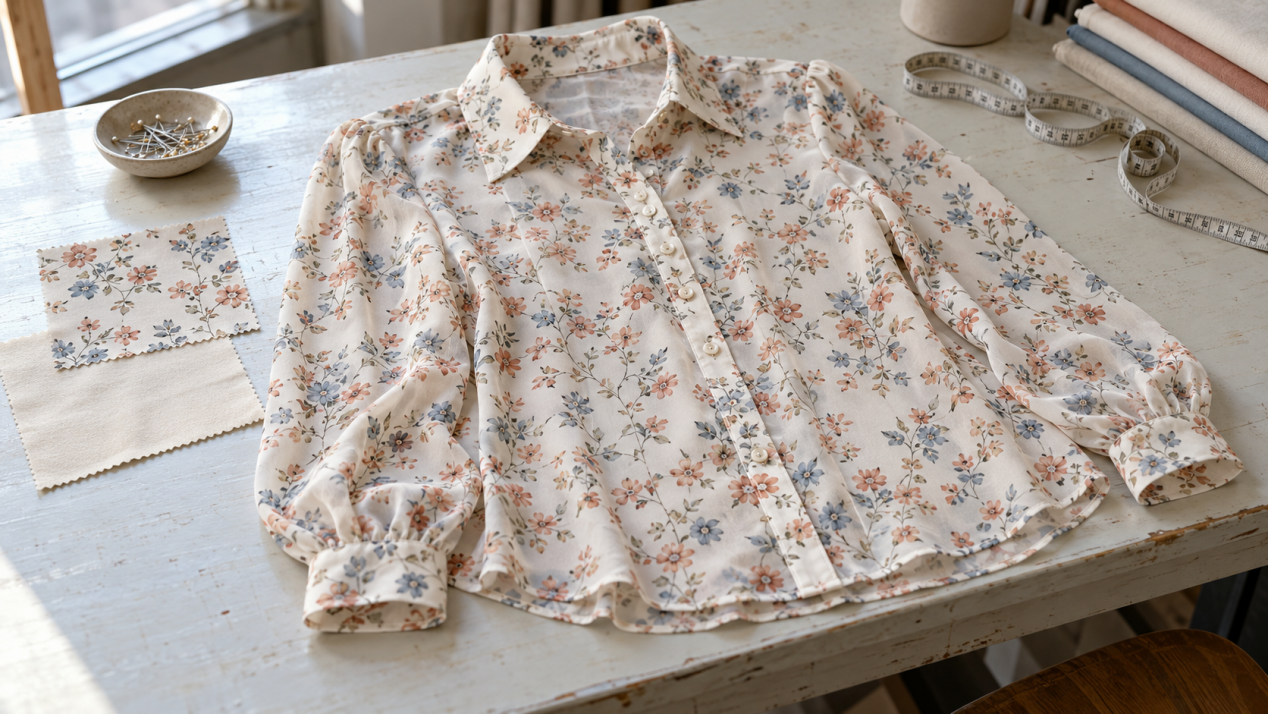
The flowers need to be a little smaller.
The flowers need to be a little smaller” sounds simple enough. But smaller where? On the swatch, across the front, or around the collar? It’s worth asking before anyone touches the artwork.
For digital print blouses, these are separate decisions. A print can look fine laid flat and feel crowded once it’s cut into a sleeve, gathered at the neckline, or folded into a placket.
So before bulk printing, look at both: the fabric, and the blouse made from it.
1.Ask for a Print Sample on the Actual Fabric
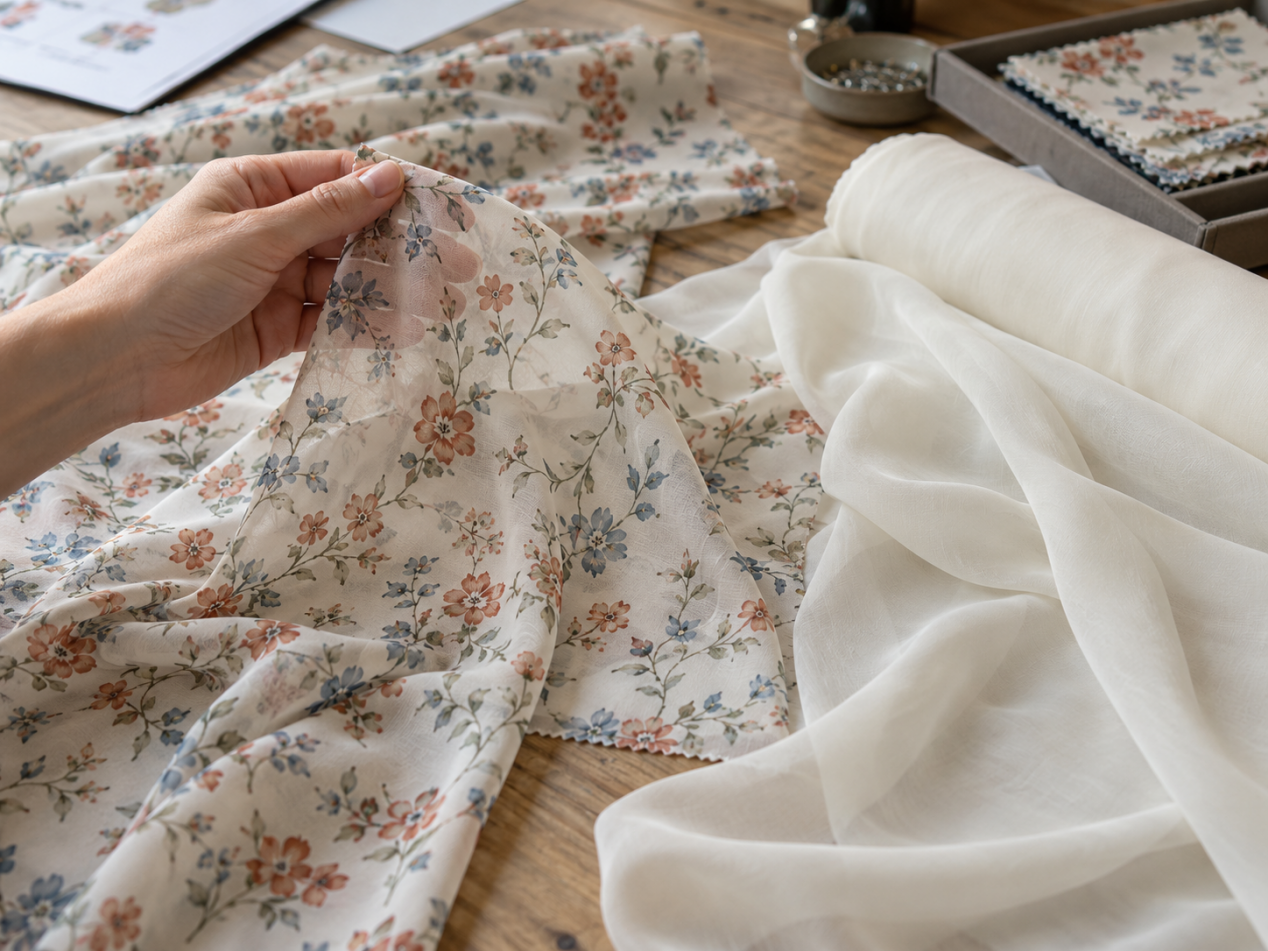
Get a strike-off first — a small printed piece, not the whole roll. Ask what fabric it’s actually on. And whether it’s had the finishing the bulk will get, because an unfinished strike-off lies to you.
Similar chiffon” won’t cut it for approval. Two chiffons can look identical in a photo and print completely differently. Even the base colour shifts the whole thing.
No fabric yet? Fine — use a substitute to talk through the design. But that’s a provisional yes. Check it again on the actual material before bulk.
And handle the strike-off, don’t just look at it. Hold it up, let it drop, put it over something plain. The hand feel and how clearly the print reads matter as much as the colours.
2.Be Specific About the Colour You Want Changed
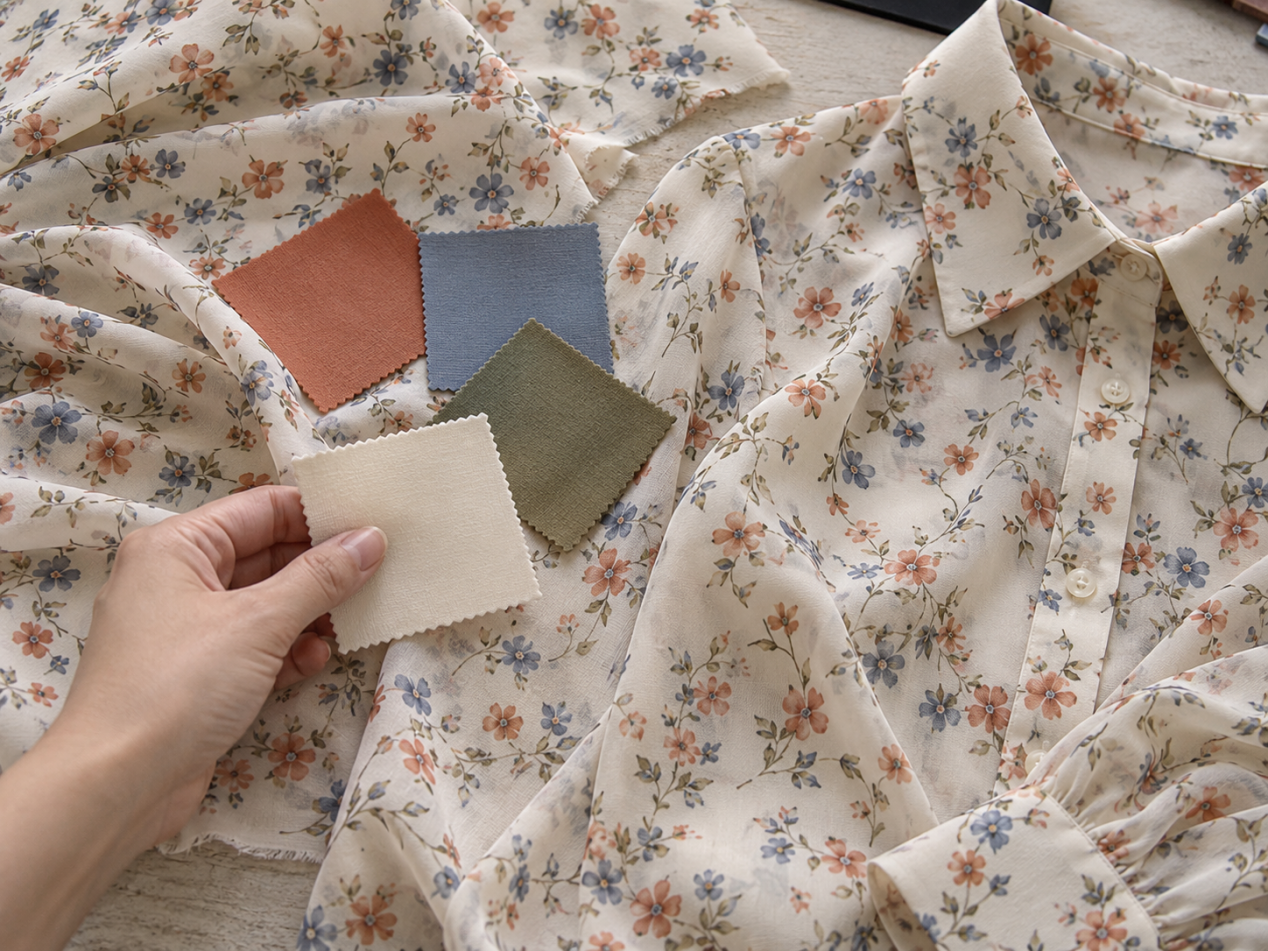
Photos are fine for showing a problem. Just don’t use them as the colour reference — lighting and screens change what everyone sees. Compare the physical strike-off with your agreed reference, same light both times. And look at the background as carefully as the flowers or leaves. A background that runs slightly yellow warms up the whole print; darker leaves can make a light design feel heavy even when the flower colour barely moved.
With custom blouse prints, specific comments save a round of back-and-forth. “Background closer to this ivory swatch” tells the printer what to do. “The colour doesn’t feel right” doesn’t.
Keep the approved physical sample. The printing team and the garment factory need to be looking at the same thing.
3.Look at More Than One Flower
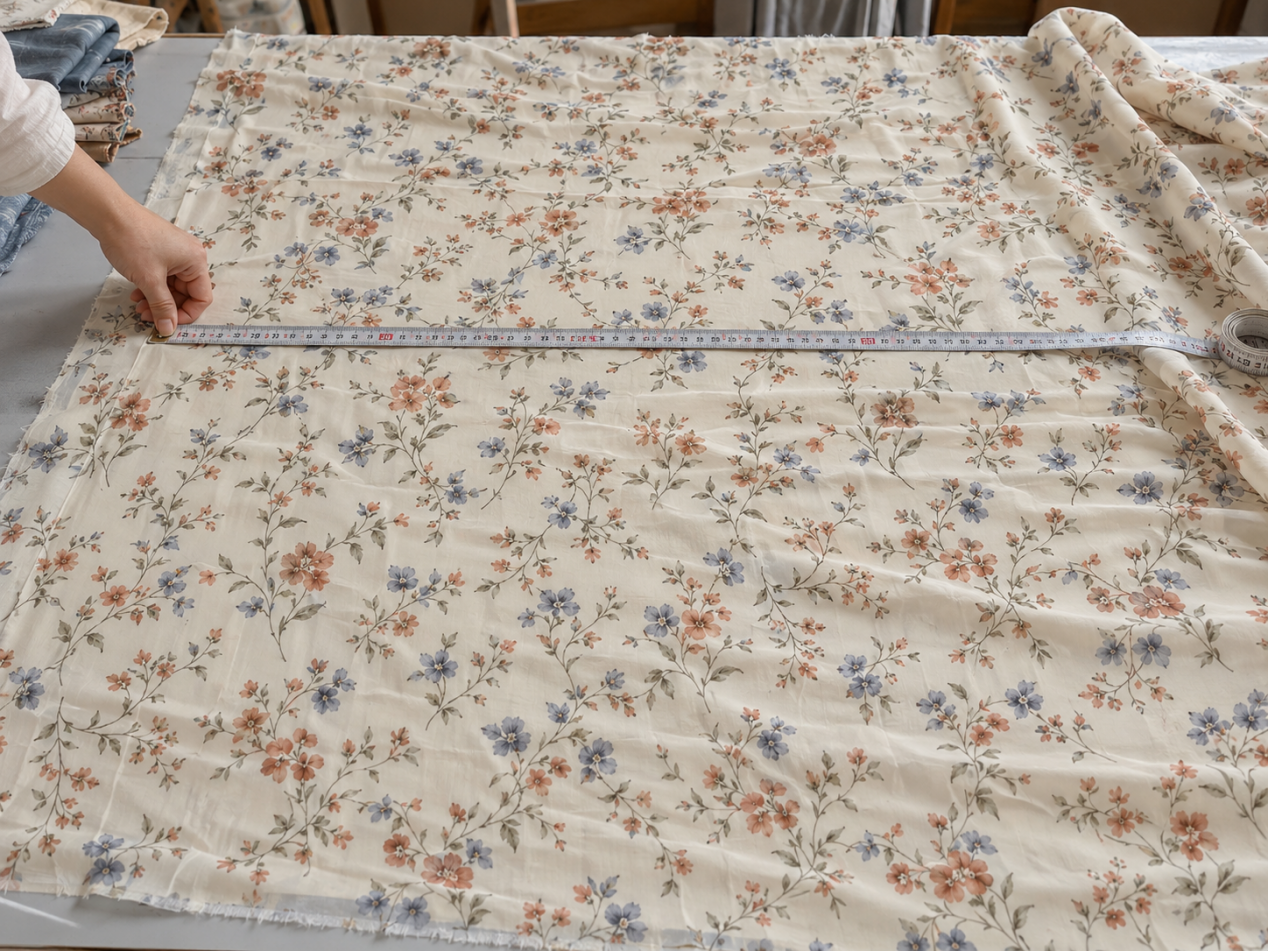
A swatch can show you the prettiest corner of the design and hide the repeat. Ask for enough printed fabric to see one repeat meet the next.
Spread it out, step back. Look for rows showing, empty patches, or a darker band you couldn’t see on screen.
Then check the motif size in centimetres. If the flowers should be smaller, give the number — “slightly smaller” means something different to everyone.
Direction too. If every flower faces up, the cutting layout has to follow it. A print that works either way gives you more freedom.
4.Check the Front Opening Before Approving the Blouse
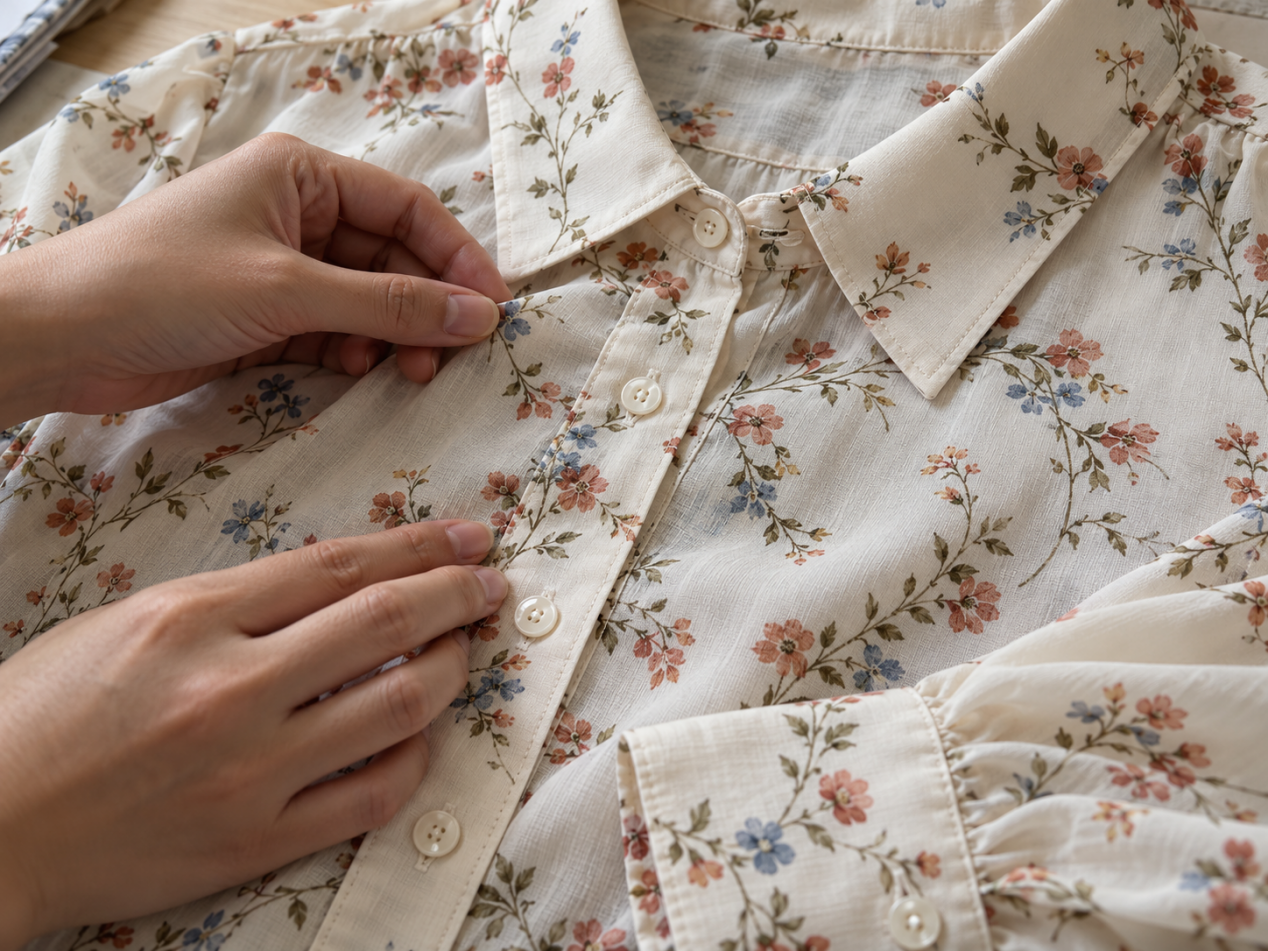
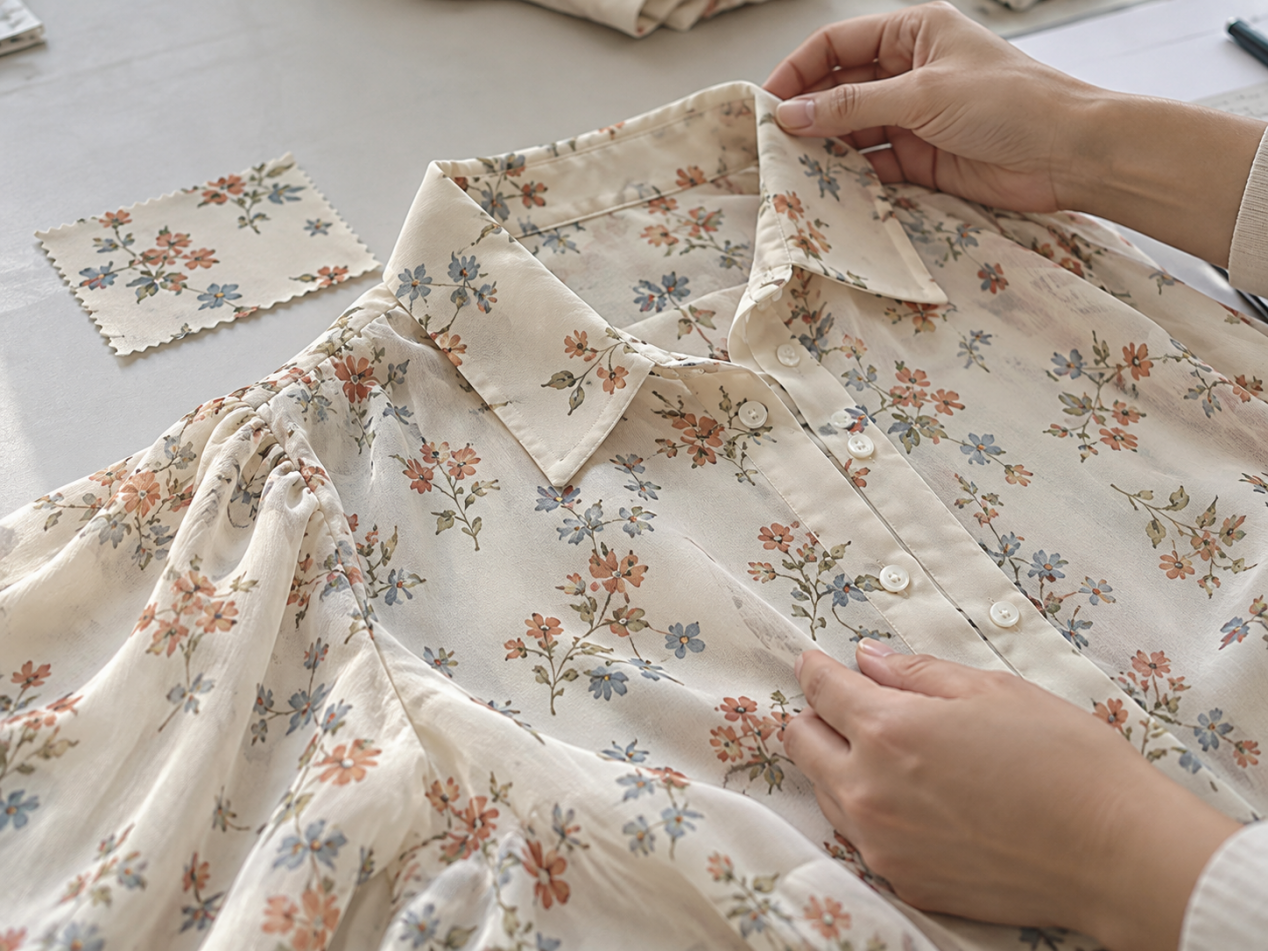
The button placket is the risky spot. It can cut through a flower, hide part of the design, or leave the two sides of the front looking uneven. None of this shows on a flat cutting, so we only make this check on a sewn sample — which is why the print review belongs in blouse sample development.
Due to the use of full-page printing design,The specific position of the pattern on each shirt will vary.If the position of the pattern is of great significance,Please mark on the design drawing,And before the cutting process, each size needs to be confirmed.
Matching is a decision to make early. Continuity at the centre front is often required. The side seams are usually less important. The decision changes fabric consumption and price.
5.See How It Looks After Care and Pressing
Care testing is the part everyone wants to skip. The sample looks fine, so it gets approved, and then the complaints arrive after two washes.
We wash the sample the way the care label says. Sometimes the buyer tells us their customers ignore the label, so we run that version too. Once it is dry, we check the colour, the hand feel and the measurements. Then the blouse goes back on the form, because seams, collar and drape can all shift in the wash.
Formal testing is a separate conversation. Methods and acceptance criteria should be agreed before the lab starts, because a pass on washing colourfastness says nothing about rubbing. They are different tests.
Pressing gets the same treatment. We check the print after the production pressing, not before it, because the pressed version is the one the customer unwraps.
6.Make It Clear Which Version Is Approved
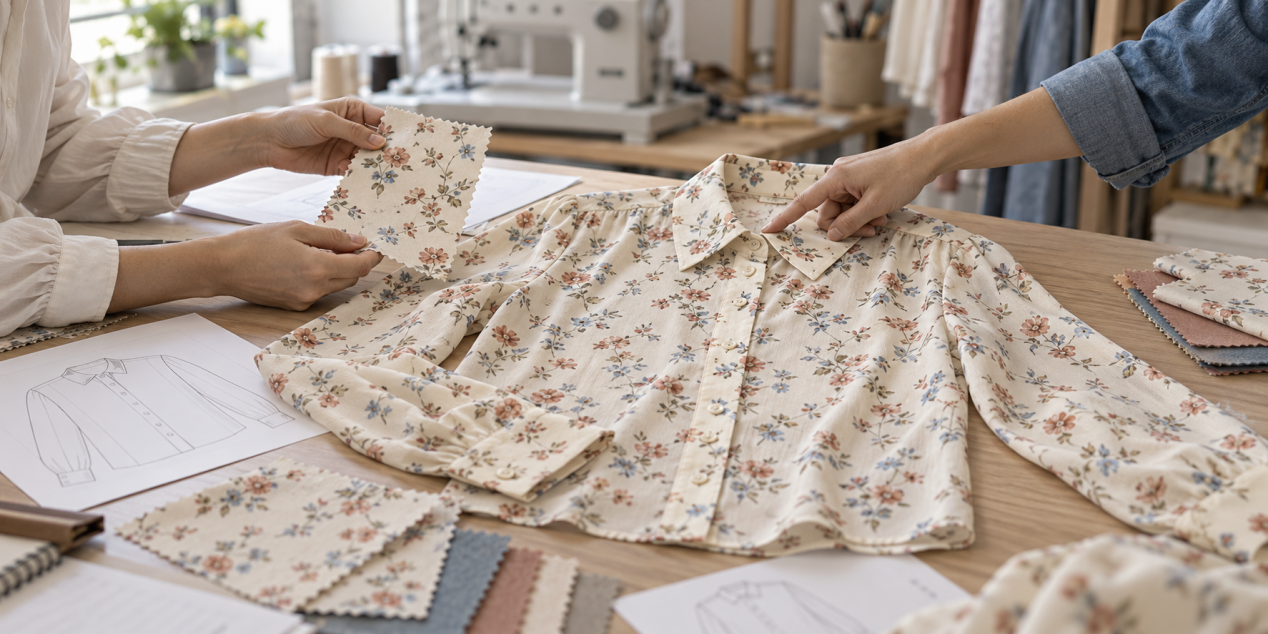
By final approval, the email thread behind custom printed blouses is a mess — artwork versions, strike-off photos, comments stacked on comments. We label the final file clearly. Otherwise someone downstairs opens the wrong version and cuts it.
The approval record can stay simple:
| Item | Detail to confirm |
| Fabric | Approved fabric reference and finish |
| Artwork | Final filename and colourway |
| Repeat | Confirmed dimensions and direction |
| Colour | Approved physical strike-off |
| Placement | Areas requiring positioning or matching |
| Checks | Agreed results and any outstanding requirements |
Approve the print and garment separately. You may be happy with the colour while still asking for a collar adjustment, or approve the fit while waiting for a revised strike-off.
If the fabric or artwork changes afterwards, confirm what needs another review before printing continues.
Have a Blouse Design Ready to Review?
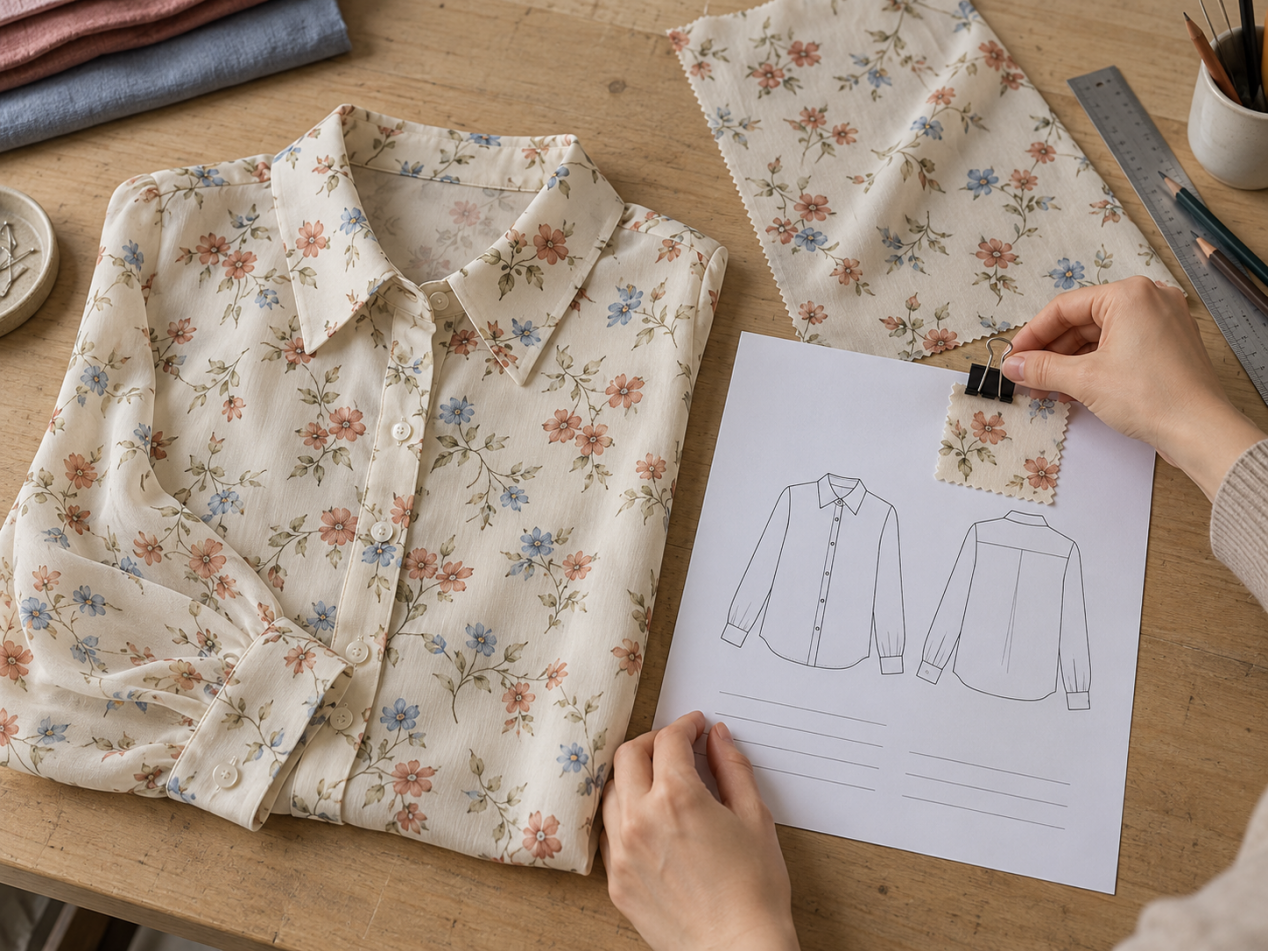
Send Meng Ruolan Apparel your artwork, blouse drawing or tech pack, preferred fabric and planned quantities by colourway. Mark any details where print placement matters, especially the front opening, collar or pockets.
We can review the material and sample requirements with you, including what still needs confirming before bulk printing.
Send your printed blouse project for review.
FAQ
Do I need a new strike-off if I change the fabric?
Yes. A colour approved on one fabric means little on another — the same ink can shift with the base colour and the finishing. We always print a fresh strike-off on the replacement fabric before anything gets approved.
Can the same floral motif sit in the same place on every blouse?
Only if you ask for it, in writing. Identical placement is a cutting-plan decision, and it changes how the factory lays out the fabric and how much the order consumes. We review all of that before confirming.
What artwork should I send for sampling?
The original file, the print size in centimetres, and colour references — that’s the minimum. We also confirm file format and resolution with the printing team before the strike-off, so nobody rebuilds the artwork halfway through.
Contact Details:
MENG RUOLAN FASHION COMPANY LIMITED
Email:mandy@mrlapparel.com
WhatsApp +86 18825766882
Post time: Oct-12-2026


