

There are a lot of people who are interested in wholesale and foreign trade purchasing of women’s clothing, and they frequently inquire: The distinct difference in value of two similar women’s clothing garment types. The fundamental answer to the question of price difference between same type of women’s clothing items is not simply within the style itself, but varies in whole detail from the raw material to the finished product. High quality women’s fashion doesn’t happen by chance; it’s the result of an established apparel production system with defined Garment Manufacturing Processes, Quality Control on Textiles and Finished Garment(s) and Reliable Clothing Manufacturers! We’re going to walk through the numbers to give you a sense for the cost, value and true wholesale value of a particular item of women’s apparel.
I.What exactly constitutes the cost of a high-quality women’s garment?
The price of a womens dress is not just fabric and workmanship. The best designs in particular have impact of each step on their cost and wearability. We have listed five main elements of the cost, with specific percentage for each element, so you can compare them to your own supply chain.
1.Core cost composition percentage
The following is a general sample of mid-to-high-end women’s clothing produced by the clothing manufacturer. The cost information is based on long-term actual production data.
| Cost Component | Proportion | Notes |
| Fabric & Accessories | 55%–65% | Key to textile quality |
| Cutting & Sewing Labor | 18%–25% | Related to garment manufacturing standard |
| Factory Management & Equipment | 5%–8% | Ensure apparel production efficiency |
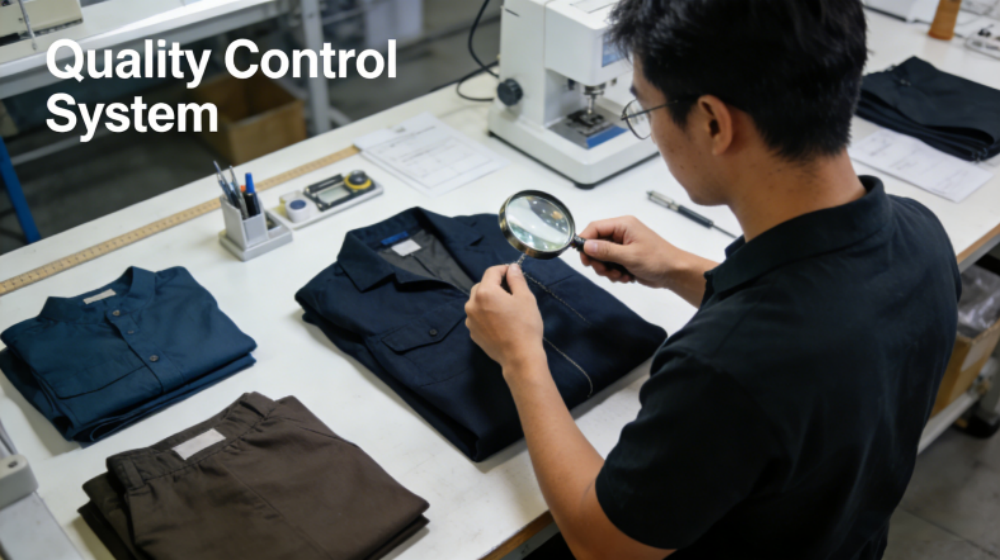
| Quality Control & Inspection | 3%–5% | Reduce defective rate |
| Profit & Logistics | 7%–12% | Reflect real wholesale value |
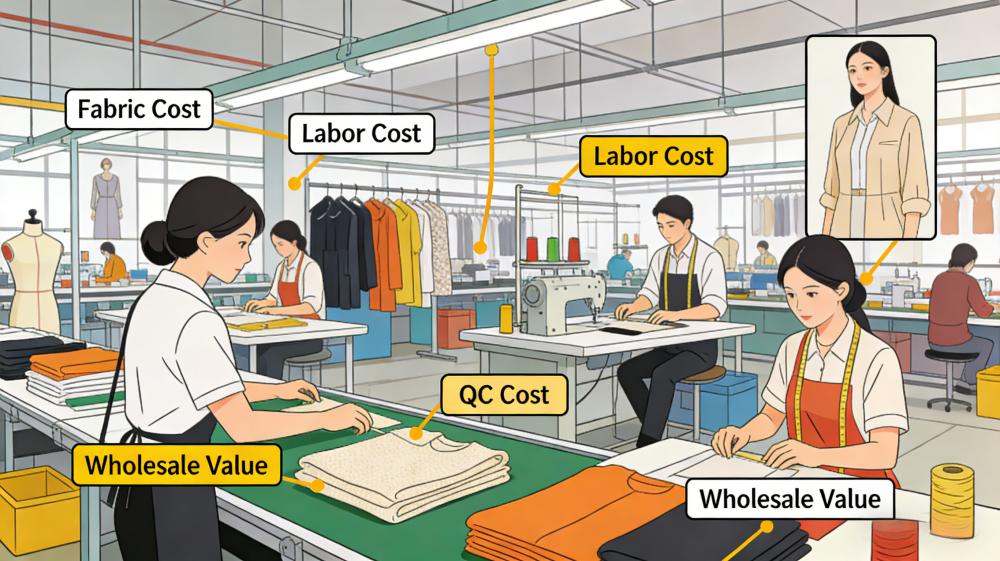
Based on the data in the table, fabric and accessories make up the largest portion of the overall cost. This is the most considerable distinction between high-quality women’s garments and the cheap women’s ones. Many of the manufacturers of the cheap women’s dresses cut on the cost of the garment by using material and accessories that are of low quality. This results in the products being of low quality. They do not feel good, change shape easily, and experience significant color fading. Consequently, they harm the brand’s reputation and hinder the repurchase rate.
II. Fabric: The First Threshold Determining Textile Quality
Anyone in the clothing industry knows that fabric is the soul of a garment. Textile quality directly determines the grade, comfort, and lifespan of a piece of clothing.
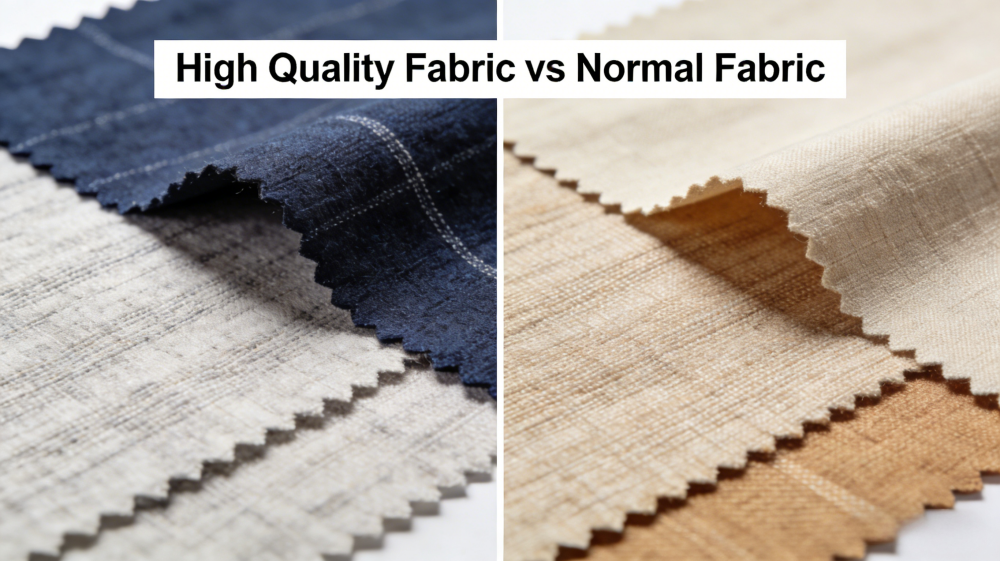
The price difference between ordinary fabrics and high-quality fabrics is enormous. To give a real example…
Basic Polyester Fabric Prices ($1.2/meter to$2.5/meter) Rayon and Combed Cotton Blended or Premium Fabric Prices (Up to $3.8/meter to$7.5/meter) Imitation Silk, Acetate and Knitted Boutique Fabrics (Up to $8/meter to$15/meter). The average material requirement for a woman’s dress runs between 1.5 to 2.2 meters. Therefore, the fabric cost difference alone for this style can range from$2 to$30. The cost of high-quality zippers, buttons, elastics, linings, or shoulder pads is 2 to 4 times higher than that of low-quality items.
most customers only consider final price but they hardly ever consider the fabric grade. the garment manufacturing process is developed, fabric must be tested in multiple ways before they even reach the manufacturing facility. The tests include weight, colour fastness, shrinkage etc etc These testing costs will not be visible on the invoice free consumer but will directly influence the quality of finished garments as well as the cost of manufacturing.
III. Production Process: The more standardized the apparel production process, the more transparent the costs.
People often think of garment production as just sewing, but proper garment manufacturing involves a variety of processes, including pattern making, cutting and sewing, overlocking and ironing, sewing buttons, trimming loose threads, quality inspection, and packaging.
Every step in the manufacturing process affects the cost. Taking a pair of high-quality women’s casual trousers as an example, the labor costs for each step are roughly as follows:
| Production Process | Unit Cost (USD) |
| Professional Cutting | 0.35–0.60 |
| Sewing & Stitching | 1.20–2.10 |
| Ironing & Shaping | 0.25–0.40 |
| Thread Trimming & Cleaning | 0.15–0.25 |
| Final Packaging | 0.20–0.35 |
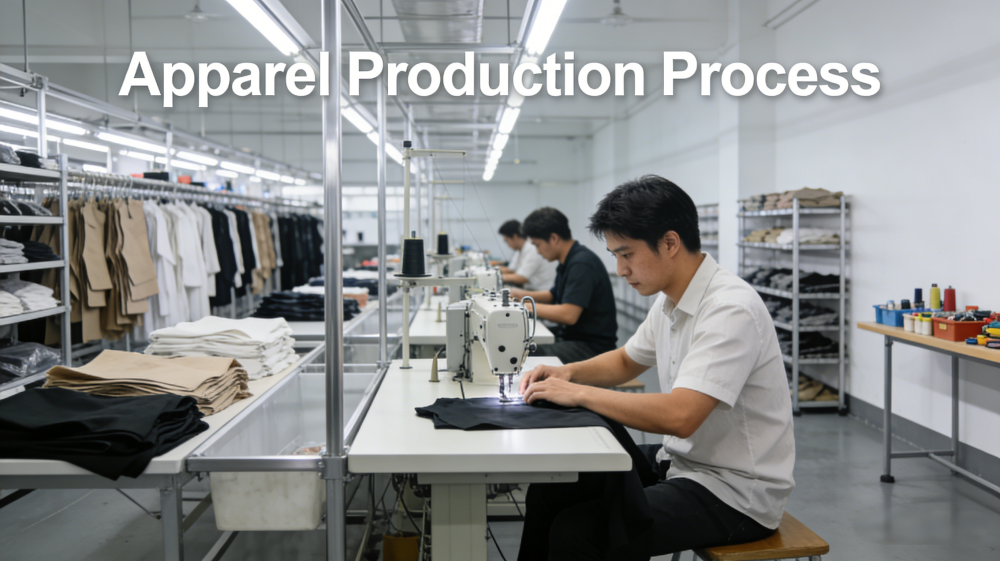
Quality stitching produces high-quality garments, with cut/sew lines that are even both horizontally & vertically, consistent density, and no missed or broken strings. The skill of the worker and the accuracy of their sewing machine are very important. Many of the small ships have cut down on production processes to cut costs and, as a result, cut back on the quality control of the products they produce. While most will look very similar when new, they will often become deformed or split apart after just a few wears.
Professional clothing factories strictly adhere to process standards. Although their costs are slightly higher, they have lower return rates and better customer reputation, making them more cost-effective in the long run.
IV. True wholesale value is more than just low price.
Many buyers focus ağuely on price alone, neglecting the core of wholesale value which includes a stable quality product, on-time delivery, reliable after-sale service and a sustainable supply chain.
We looked at two data sets: Low-price/low-quality sources, which were priced 15% lower on original orders but had defects from 8% to 15%, post-sales service was problematic and low percentage of customers was repeat customers; Higher quality stable sources, prices were slightly higher, but had defects of less than 1%, customers gave more positive feedback, and the repeat order rate increased by 40% or more.
Wholesalers and brands with a lot of experience know that when they cut corners on the quality of the fabric, they are hurting their sales, and when they cut corners on workmanship, they are hurting their reputation.
The main point of manufacturing garments is not to find the lowest possible price, but to know that every penny spent making the garment shows in the finished product.
V. Practical Advice for Apparel Suppliers & Buyers
Based on years of practical experience in women’s clothing factories, here are a few practical suggestions.
1. Compare both the “unit price divided by the defect rate” and prices. Two factories are producing identical garments for $10, but one has a defect rate of 10% and the other has a defect rate of 1%. This represents almost a 10% difference in the effective costs. When considering longer-term relationships, we advise you to opt for factories that create products with a steady level of fabric quality and strict quality assurance.
2. Producing test batches in small quantities prior to large quantity orders. Conduct test sales of 50 to 200 units for new styles. When you have verified that the fabric, pattern and craftmanship meet all necessary criteria, then you can place a larger order. This results in lower risk and more efficient manufacturing of apparel products.
3. Go for factories with total transparency: Reliable top-quality women’s clothing manufacturers will provide fabric documentation and reports on produce progress, as well as quality inspection records so that you can see exactly where your money is being spent, as opposed to vague and hidden quotes.
VI. Want to control costs while maintaining quality? Welcome to contact Meng Ruolan Garment Factory.
If you are looking for a manufacturing company that can control costs accurately and will provide consistent, high quality products from small lot production through to full scale production, then Meng Ruolan Garment Factory could be the right partner for you.
We have been immersed in garment manufacturing for many years, maintaining utmost transparency and traceability throughout the entire process, including fabric selection textile quality control, as well as standardized apparel manufacturing. We are not a supplier that sells low prices, we manufacture high quality women’s clothing at true wholesale prices, therefore, we offer stable, reliable, and long-term supply to wholesalers, brands, and cross-border sellers.
If you are interested in knowing about the costs involved with new designs, increasing your supply chain efficiency, obtaining samples, customising your designs and/or preparing yourself for manufacturing, please reach out to us at any time. With the support of a capable production process, Meng Ruolan Garment Factory can assist in producing higher quality garments for women which are more competitive.
Contact Details:
Dongguan Meng Ruolan Clothing Factory
WhatsApp 86 18825766882
Post time:
Apr-27-2026
Post time: Apr-27-2026


