

How Spandex Content Affects Stretch Trouser Fit and Shape
Most customers zero in on the spandex percentage first. That’s a sensible starting point, but we’ve learned the hard way that the number on the spec sheet says very little about how the trousers actually wear.
We regularly see fabrics with the same composition behave differently during sampling. One returns to its original shape quickly, while another becomes loose around the knees or seat after being stretched.
This happens because the performance of stretch fabric pants depends on more than the spandex ratio. Fabric construction, weight, yarn structure, stretch direction and finishing all affect the final result.
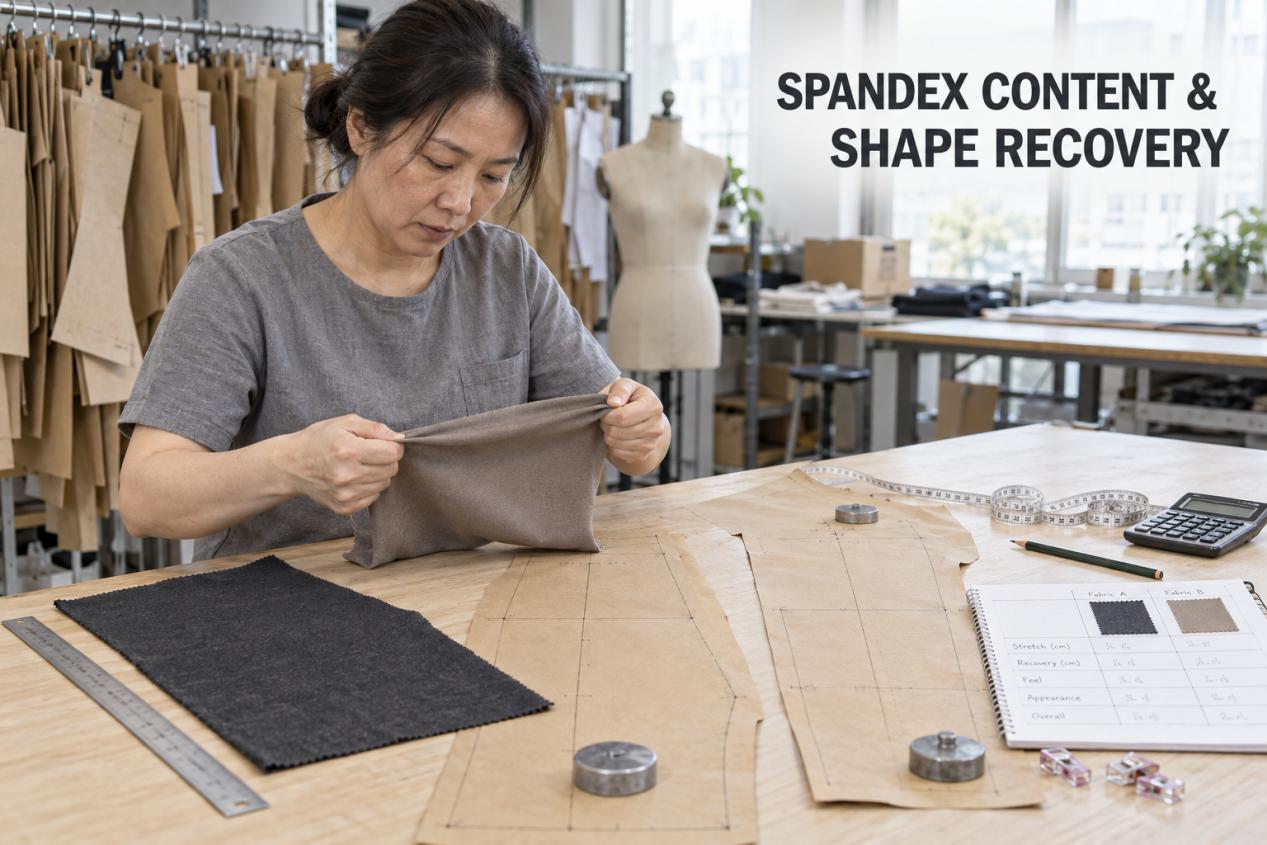
Why Spandex Content Is Not Enough
A higher spandex percentage does not always mean better shape retention. Some woven fabrics stretch mainly across the width, while knitted fabrics may stretch in both directions.
The pattern must work with that movement. If the pattern allowance or cutting direction is wrong, the trousers may feel tight at the hip but become loose at the knees.
A fabric with strong recovery can also create problems. It may make the trousers feel restrictive or cause puckering along the seams.
A fabric with weak recovery has the opposite problem. It may look correct when the sample is first measured but lose its shape after sitting or moving.
Forshape retention pants manufacturing,we check the composition together with the fabric weight, construction, stretch direction and recovery. Looking at these points together gives a much clearer picture than relying on one percentage.
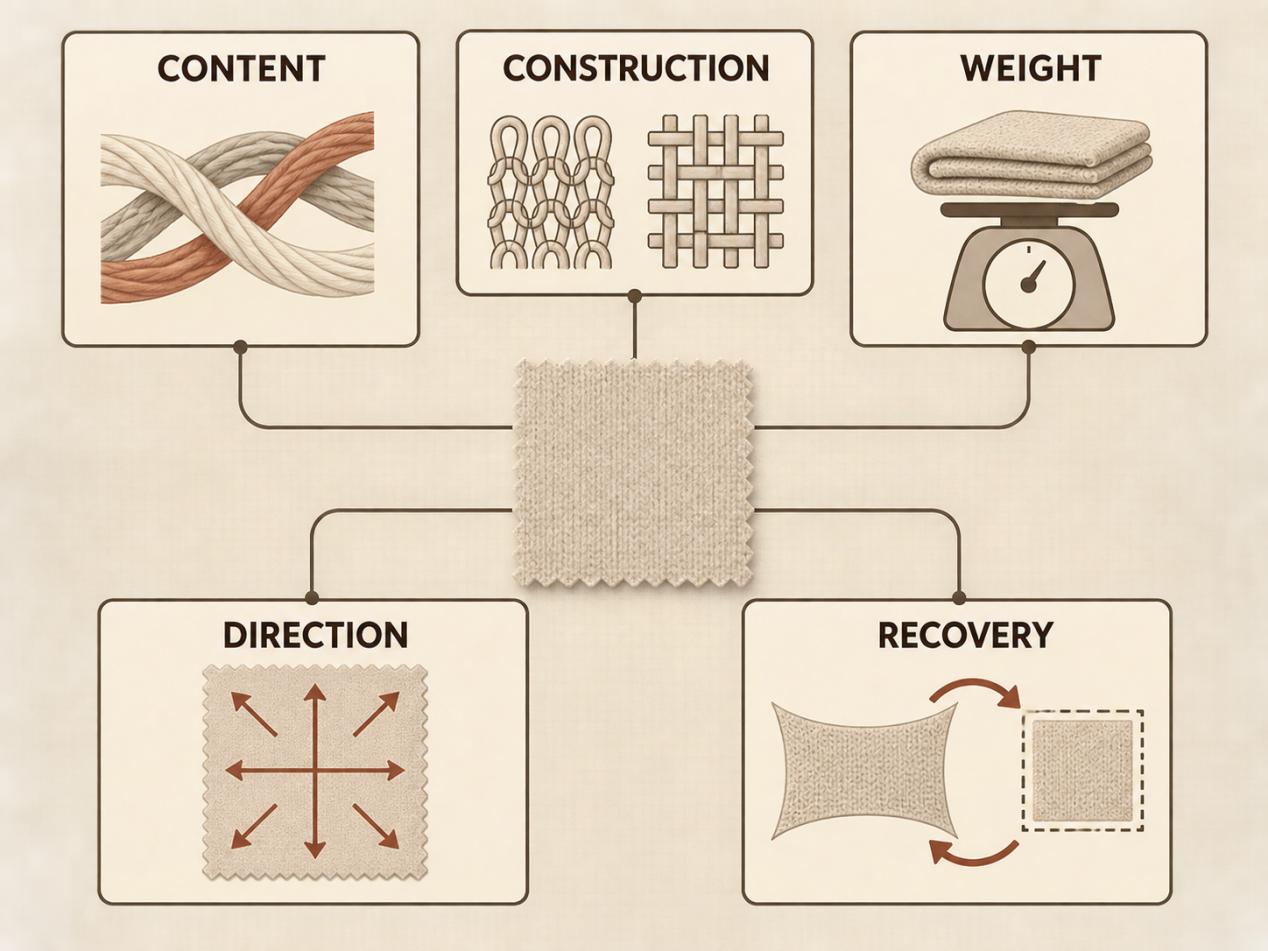
What We Check Before Cutting
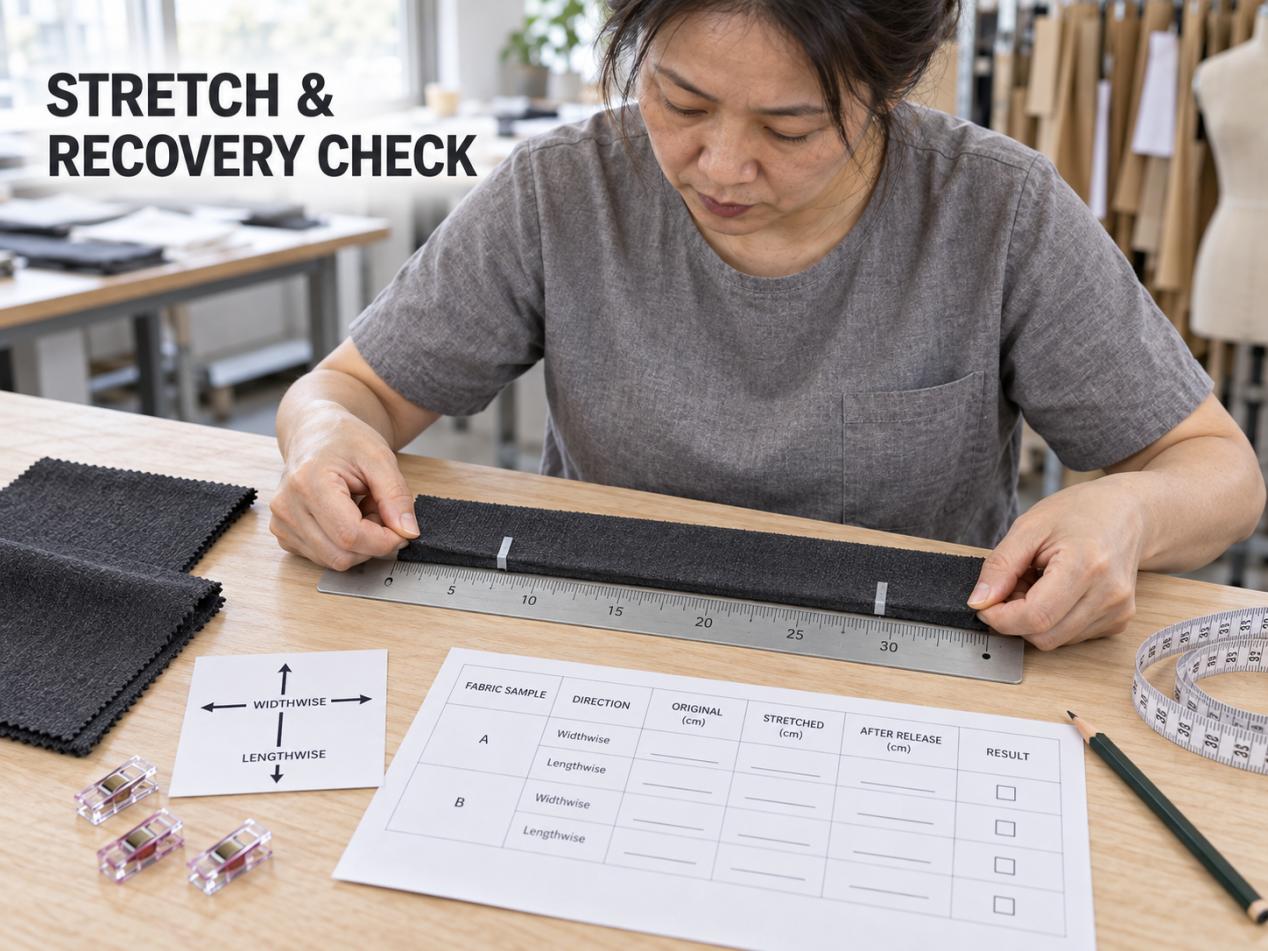
Before cutting a trouser sample, we first check where the fabric stretches and how it returns after the pressure is released. We also compare the fabric movement with the intended fit of the trousers.
If the customer already has a required test method, we follow that specification. ASTM D3107 may be used for woven stretch fabrics, while ASTM D2594/D2594M may be suitable for knitted fabrics; ISO 20932-1 may also be specified for strip testing.
The name of the standard is not the most important part for every project. What matters is that the fabric direction, testing condition, resting time and measurement method are agreed before the results are compared.
At Meng Ruolan Apparel, we record the original measurement, the extended measurement and the measurement after recovery. The fabric direction and material batch are also marked so the same fabric can be checked again during production.
We do not use one recovery requirement for every trouser style. A fitted trouser, a wide-leg trouser and a pull-on pant do not place the same pressure on the fabric.
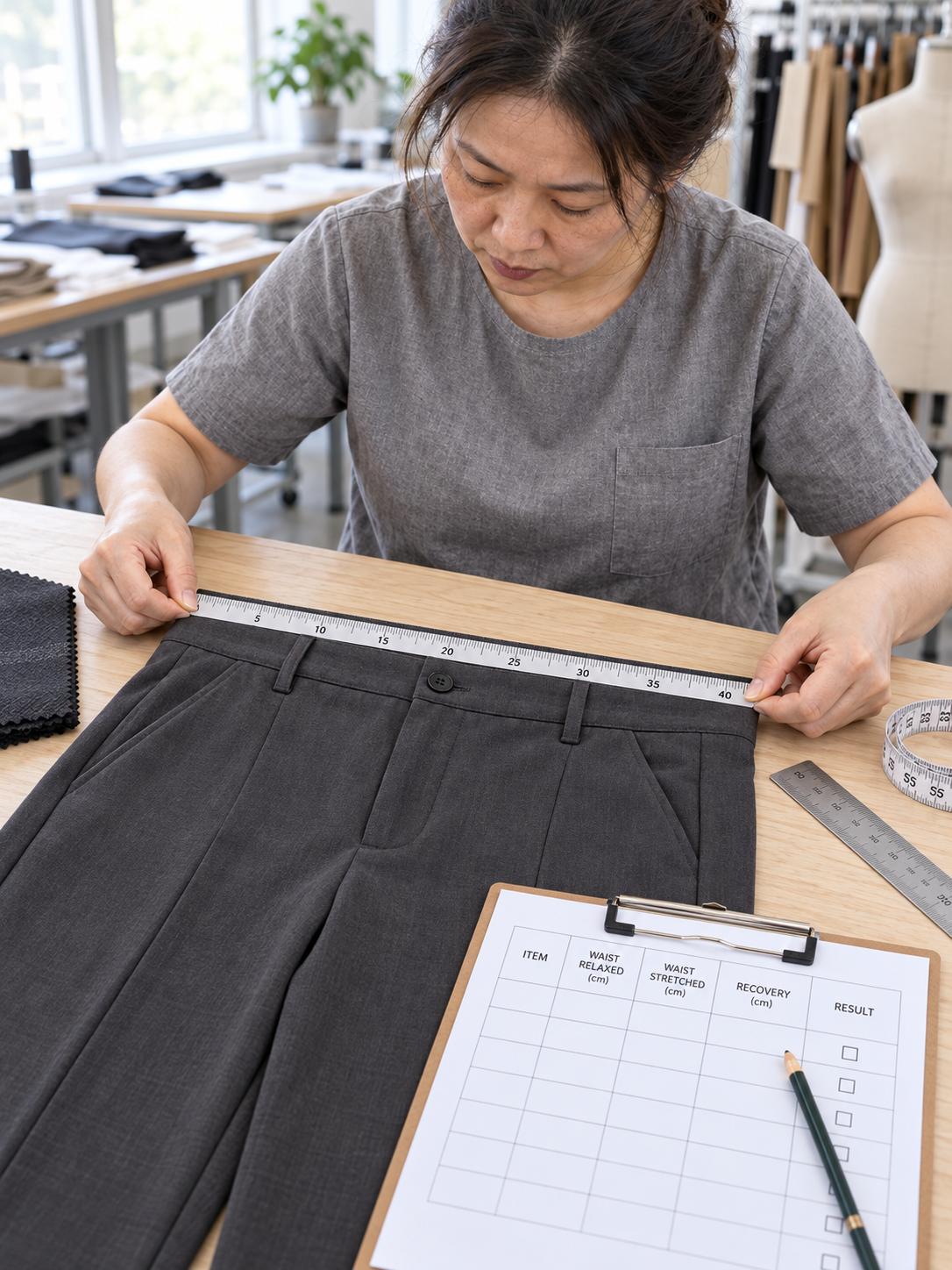
Why We Test the Finished Waistband
A fabric can recover well while the finished waistband still feels too loose or too tight. The result is affected by the elastic width, elastic length, joining seam, stitch density and the way the elastic is attached.
This is why elastic waistband tension testingneeds to be completed on the garment sample. Checking the elastic tape by itself cannot show how the complete waistband will perform.
During sample review, we measure the waistband in its relaxed position and again when extended. We then check whether it returns evenly without twisting or leaving visible waves.
The hip, crotch and knee areas are reviewed at the same time. These areas usually show fit or recovery problems earlier than the rest of the garment.
After the PP sample is approved, the confirmed measurements, tolerances and sewing details are added to the production records. Our QC team uses the same information during inline and final inspection.
If the customer wants the fabric checked after washing, the washing method must be confirmed before testing. Otherwise, the sample and bulk fabric may be measured under different conditions.
What We Need From You Before Sampling
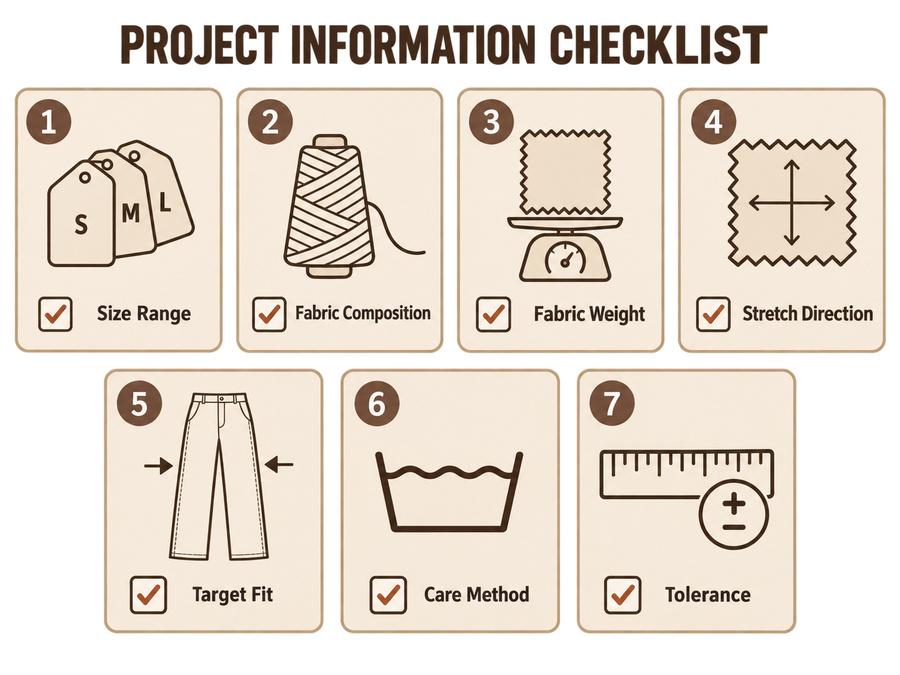
A clear Tech Pack is the best starting point. It should include the target size range, key measurements, fabric composition, fabric weight and the required fit.
Please also tell us whether the fabric should stretch in one direction or two directions. If you have a preferred test method or recovery requirement, include it with the fabric specification.
A reference sample can help, but it still needs comments. We need to know which areas should fit closely and where extra movement is required.
If some information is not available, our team can review the design and discuss the missing points with you. We will not add unconfirmed test results or fabric performance claims to the production specification.
Meng Ruolan Apparel normally arranges sampling within 7–10 working days after the required design and material information is confirmed. More time may be needed when special fabric sourcing, washing or external testing is involved.
If you require laboratory testing, your own inspection team or third-party inspection, please let us know before the quotation and production schedule are confirmed. This allows us to prepare the correct samples and inspection records from the beginning.
Stretch Trouser Production Checklist
| What We Check | What You Need to Confirm | Why It Matters |
| Fabric composition | Confirmed fiber content | Identifies the material but does not prove recovery |
| Fabric construction | Woven or knitted | Helps select the correct checking method |
| Stretch direction | One-way or two-way stretch | Affects pattern allowance and cutting direction |
| Fabric recovery | Required fit and recovery level | Helps reduce loose knees and seat bagging |
| Waistband tension | Target relaxed and extended waist | Prevents the waistband from feeling too tight or loose |
| Washing requirement | Care method and test condition | Keeps sample and production checks consistent |
| Garment measurements | Size chart and tolerance | Gives QC a clear approval standard |
How Meng Ruolan Supports Your Project
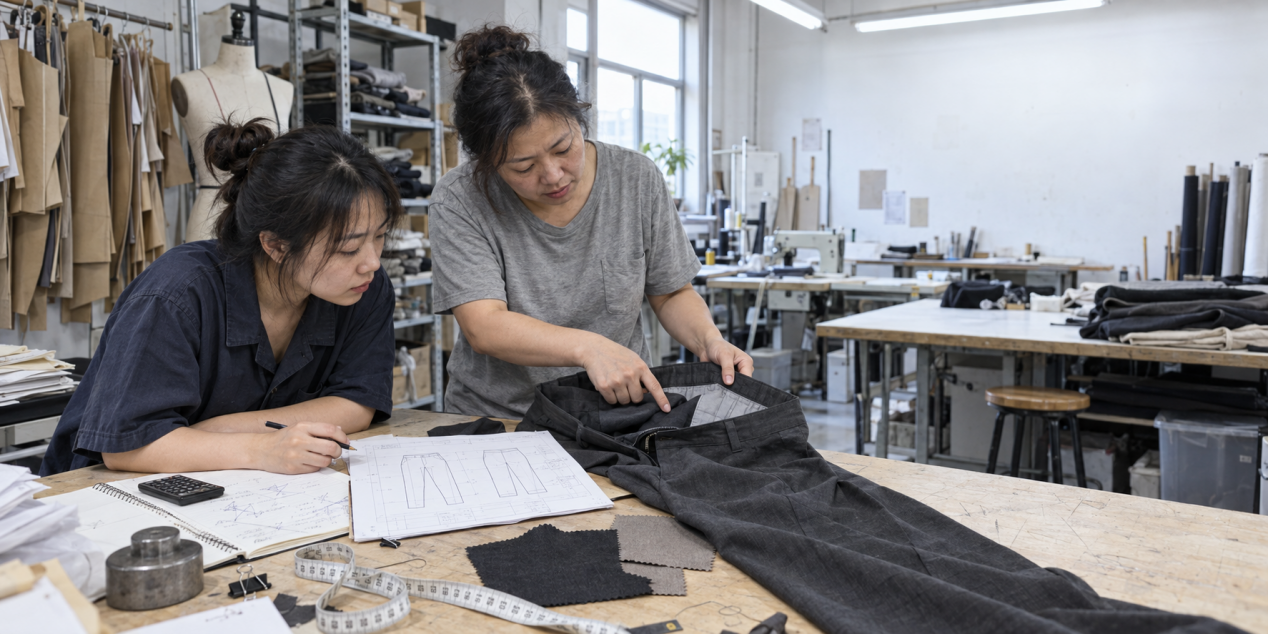
Our pattern and sample teams review the fabric together with the intended trouser fit. We check whether the pattern allowance and cutting direction suit the fabric before the sample moves forward.
During sample development, we pay particular attention to the waistband, hip, crotch and knee areas. Any approved changes are recorded before bulk production begins.
We can also work with customer inspection teams or independent third-party inspectors. The test method and approval standard should be confirmed in advance so everyone checks the order in the same way.
Developing a stretch trouser style? Send us your Tech Pack, fabric requirements, expected quantity, size range and target delivery date for a production review.
Contact Details:
Dongguan Meng Ruolan Clothing Factory
WhatsApp +86 18825766882
Post time: Sep-18-2026


