

How to Write Sample Comments a Clothing Factory Can Act On

The first sample shows up and the design is nearly there. Fabric’s right, pockets land where you expected — then somebody tries the trousers on. The waist digs when they sit. The front hangs nothing like the picture in your head.
So you message the factory: “Please loosen the waist and improve the front.”
Now pause. Because the factory has to translate that. Does “loosen” mean a longer waistband? A different rise? Or is the whole garment sitting lower on the body than your team designed it to? Three different problems, three different pattern fixes — and the factory can’t tell which one you mean.
This is exactly where good garment sample comments earn their keep. Think about the person opening your comments at the pattern table. They need to know what went wrong at the fitting. They need to know what you want the garment to do instead. And they need to know which details are already approved — those don’t get touched. Give them that, and the next sample actually moves forward.
Length isn’t the point, by the way. Pages of technical English aren’t required. One clear observation usually does more than a long list of instructions. Add a reference point and an agreed next step, and you’re ahead of most comment sheets we’ve seen.
Start with the Sample You Actually Reviewed
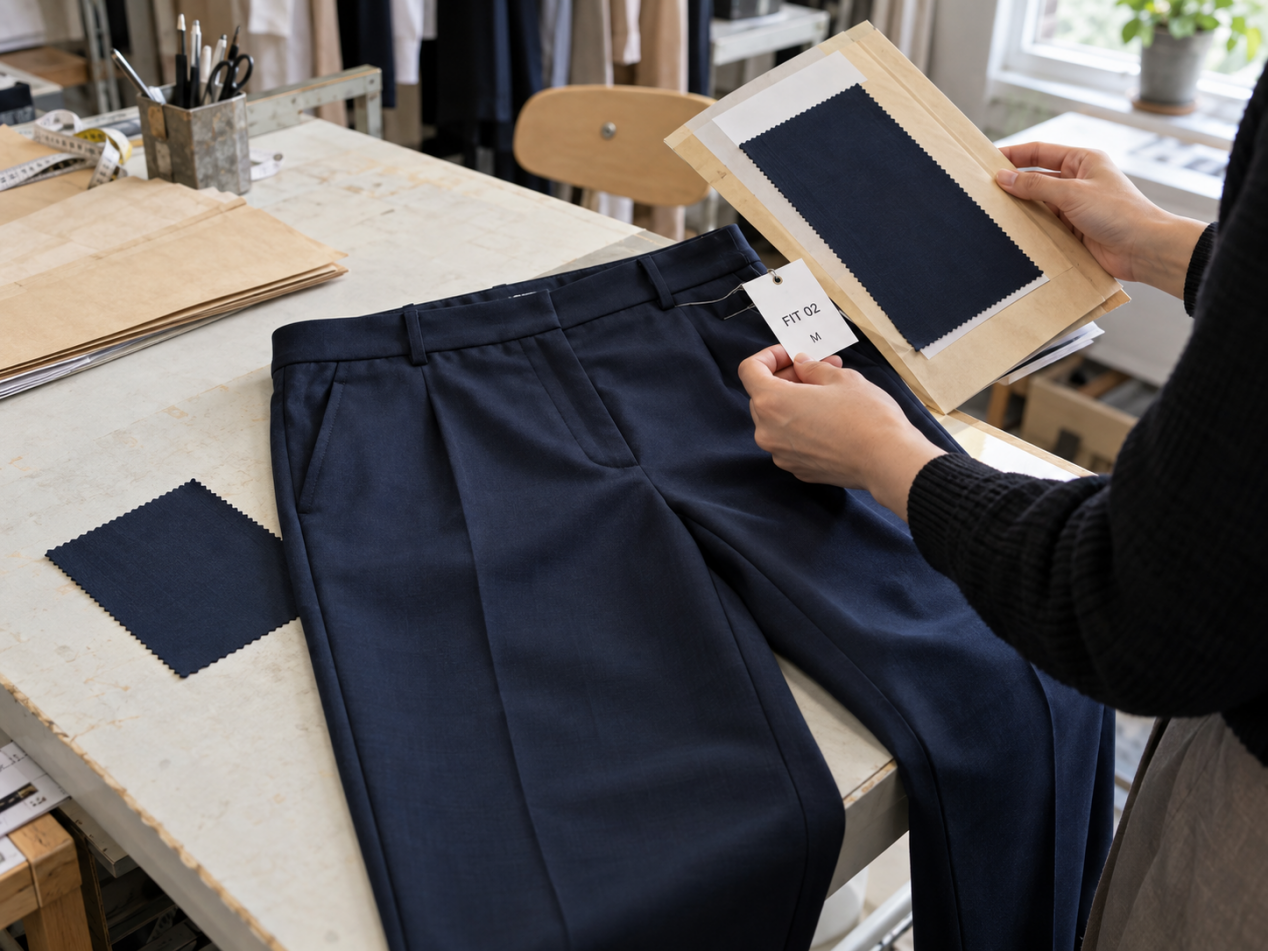
Before anybody describes a problem, get everyone looking at the same garment. Write down the style number, the sample size, which round it is, and the tech pack version used for that review. Four details. Ten seconds.
Sounds obvious with one sample on your desk. Wait three weeks and the picture changes. The navy version took the black one’s place. The chart got an update somewhere in between. Then someone drags up an old photo and drops it into the thread. Which garment is anyone even talking about now?
One clean reference anchors all of it. Something like “TR-024, Fit Sample 02, size M, Tech Pack Rev C.” Keep that reference on the comments and the related photos, always.
Material matters too. And this is where teams usually trip — a sample sewn in a substitute fabric should be flagged as such before anyone starts debating how the garment hangs or stretches. A waistband can feel fine in one fabric and act totally different in another.
While the garment sample development is still running, write down which fabric and trims actually went into each version. Where the final material hasn’t been confirmed yet, leave those decisions open. Locking them on the comments only confuses the next round.
Explain What “Too Tight” Means During the Fitting
“Too tight” gets the conversation started, but it doesn’t hand the factory anything they can use. What they need is where the tightness shows up, and what the wearer was doing when it happened.
Take trousers. The waistband can feel completely fine standing, then press straight into the front waist the moment someone sits down. Or a blouse — roomy enough through the body, except the wearer reaches forward for something and suddenly feels wrapped in tape.
Those two observations point to different fixes. Add width around the whole garment and you might break the part of the fit that was already right.
A better trouser comment sounds like this: “The front waist presses into the body when sitting; the standing waist fit is acceptable. Please review the seated photos and front-rise shape before proposing a correction.”
That’s the wearer experience, no guessing at what the pattern should do. And if your team has a technical designer who already knows the correction, pass it along. If nobody’s sure of the cause yet, ask the pattern maker to walk you through the proposed change before it goes into the sample.
Good fit sample comments also state the end goal. “We need comfortable seated movement while keeping the approved standing silhouette” — that gives the factory a boundary to work inside.
Appearance issues follow the same approach. Don’t write “the neckline looks wrong.” Write that it stands away from the body at centre front, mark where, and name the neckline shape you want to keep.

Put Measurements in Terms Both Teams Can Follow
A number can look precise and still get read two different ways.
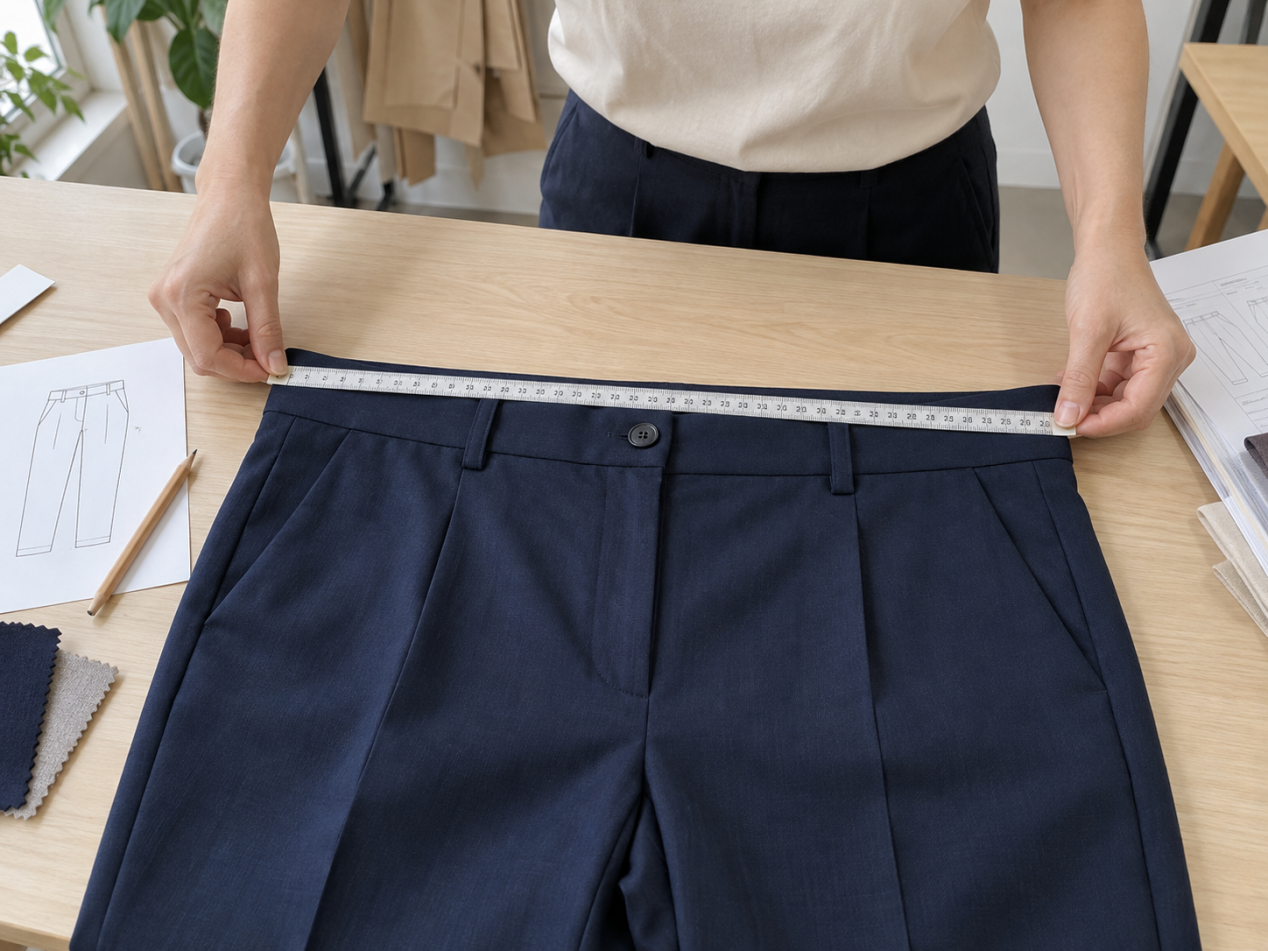
Say the comment says “reduce the waist by 2 cm.” Off the full circumference, or off the flat half-waist? Those produce different garments — so the comment has to name which measurement is being changed, not just by how much.
Try this format: “The waistband measures 36 cm flat, fastened and relaxed. The existing target at POM W01 is 35 cm flat; please correct it to that target and retain the waistband height.”
POM, by the way, means point of measure — the codes come from the measurement chart both sides agreed on. And both teams measure the same way. Where a start or end point might be ambiguous, draw it. A small diagram beats three paragraphs of description.
One more distinction worth making during review: is the sample outside the agreed measurement, or is the specification itself the problem?
Picture two scenarios. The waistband was supposed to hit 35 cm and the sample arrived at 36 — the factory needs to fix the sample. But if the sample measured 35 cm on the nose and the fitting still felt wrong, then the fit you had in mind needs a different number. You’re changing the target, not correcting the sample.
Which means: write that decision down clearly, and update the chart the moment the target changes. Otherwise sample number two follows your comment while production quietly works from the old spec.
Last point. Use the tolerance already agreed for the style instead of tacking on a general allowance during review. And if the sample measures correctly but still fits badly — keep digging into the fit. A bigger number won’t rescue it.
Let the Photos Show What You Felt
TYour fitting room, your mirror, your problem — the factory can’t see any of it unless you put it in front of them.
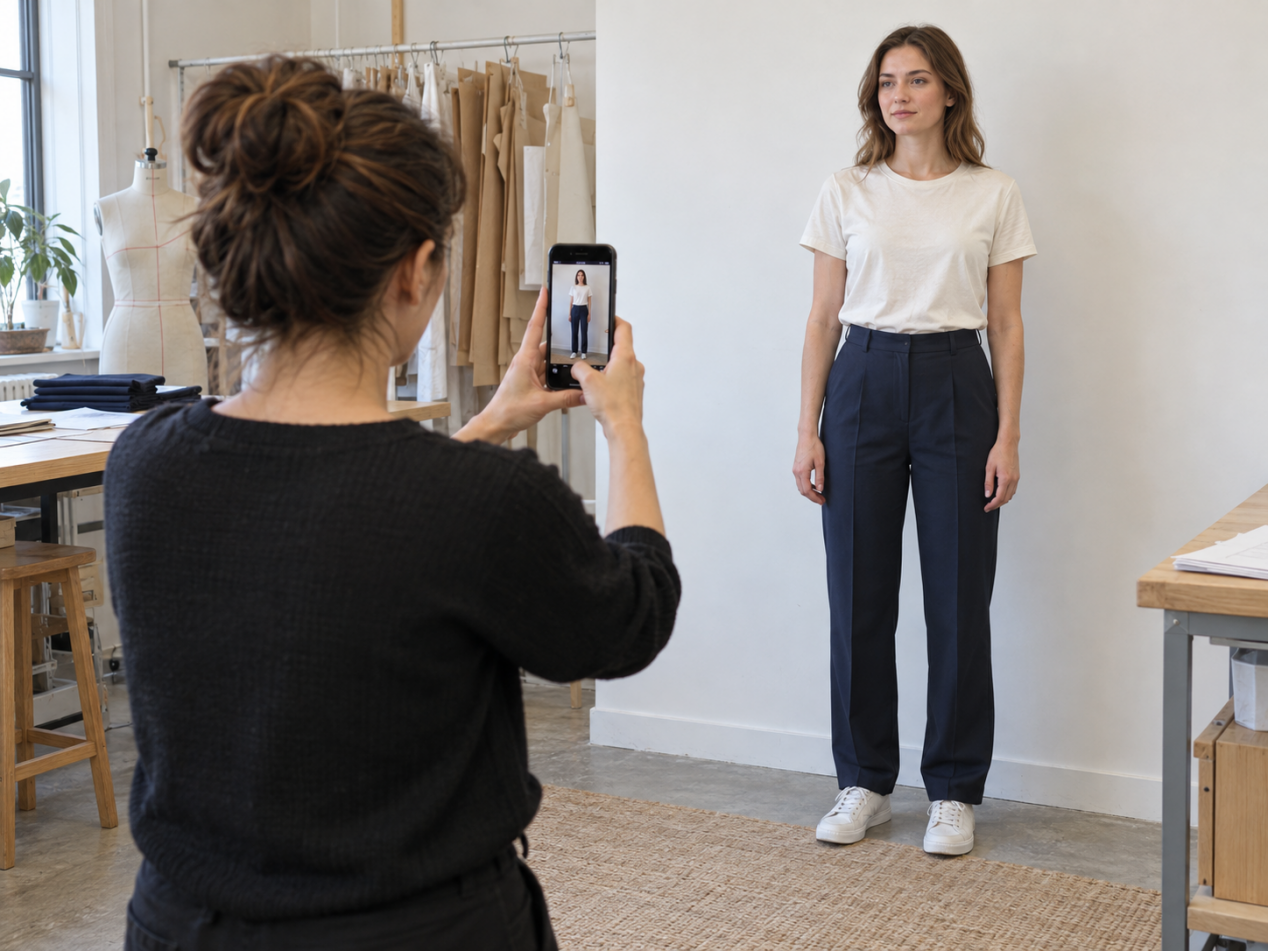
A close-up of a fold shows the fabric, sure. But the pattern maker looking at it has no idea where that fold sits on the body. So send the wide shot first, for context. Then the tighter image of the actual problem area. Context, then detail — that order matters.
Fit problems especially need the full picture. Front, side, back. Three ordinary views usually say more than five nearly identical close-ups. And tell the wearer to just stand normally. Don’t tug the garment into place right before the shot, or you’re photographing your hands, not the fit.
Movement problems need movement. If the restriction only shows when the wearer sits, record that — a short seated video explains a trouser problem that a standing photo hides almost completely.
Marking the images: keep it simple. An arrow at the affected seam, a comment number, a link to the written note. And one thing people get wrong all the time — if you write “left pocket,” say whose left. Yours, or the wearer’s.
Pins and chalk can show the shape you want, fine. But the marks alone don’t explain themselves. Someone still has to write down the measurement you’re asking for, or get the pattern maker to propose the correction. Don’t expect anyone to measure the change off a photograph.
Keep the Good Details in the Conversation
Here’s a habit worth breaking: sending the factory a pure fault list. When a message contains only problems, everyone forgets what was already fine.
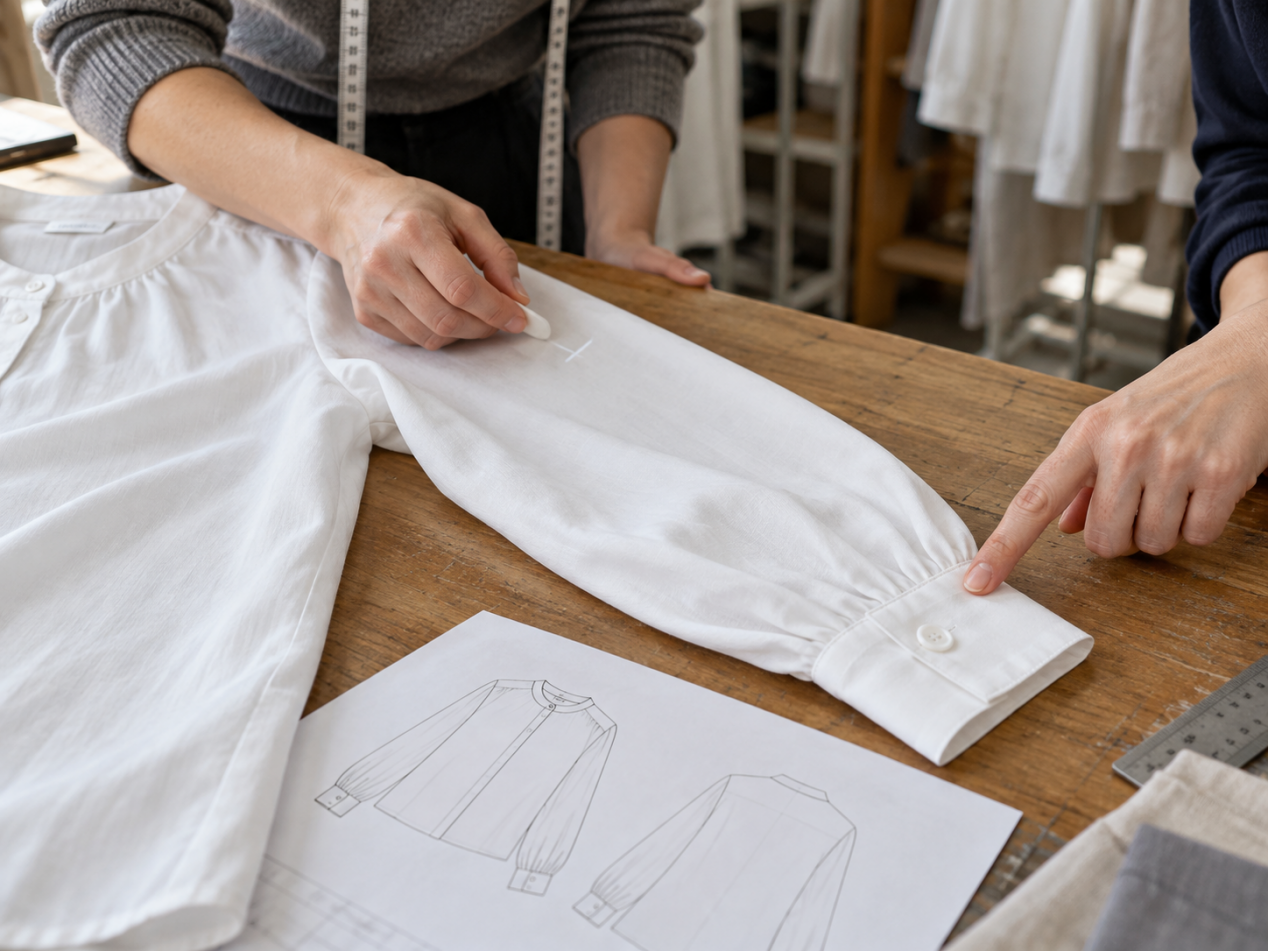
Say the sleeve runs too long, but the cuff depth and opening are exactly right. “Shorten the sleeve” leaves the whole sleeve up for grabs. “Revise the sleeve length to the new target; keep the approved cuff depth and opening as they are” — that’s a comment the pattern maker can act on without second-guessing.
Same logic applies everywhere else: pockets, waistbands, linings, neckline shapes. Whatever you’ve already accepted, write it down next to the change. The factory protects what you name. Everything unmentioned is fair game.
This matters even more with reference garments. You send a jacket for its pocket shape — fine. Just say so. Otherwise it quietly becomes the reference for fabric, body length and fit too, and nobody realises until the sample arrives.
Now, the practical bit. WhatsApp is where fittings actually happen. Photos, voice notes, quick replies — fine, keep them. But pull the final decisions into one dated sample comment sheet, every round. That’s the document people search for later, not the chat.
Before sending round two, read round one. Unresolved issues keep the same comment number until the correction is checked and closed. Skip this and you’ll get a sample that fixed fault A while quietly reopening fault B.
And for OEM clothing production — the confirmed changes can’t live only in the comments. They have to reach the relevant tech pack pages. The comments explain what you decided at the review; the drawings and specifications carry it into production.
Ask for a Useful Reply and the Right Next Sample
“Noted” tells you the factory received your message. That’s all it tells you. Nobody knows if both teams understood the same correction.
So ask for a reply that describes the action. Something like: “Move the pocket 2 cm lower than Sample 02, keep the pocket dimensions as approved, and send a measured placement photo before sewing it onto the revised sample.”
Why push for this? Because the buyer gets one clean chance to catch a misunderstanding before more work gets done. And if the factory disagrees with a proposed change, tell them to say so — explain the concern, show an alternative. Silence helps nobody.
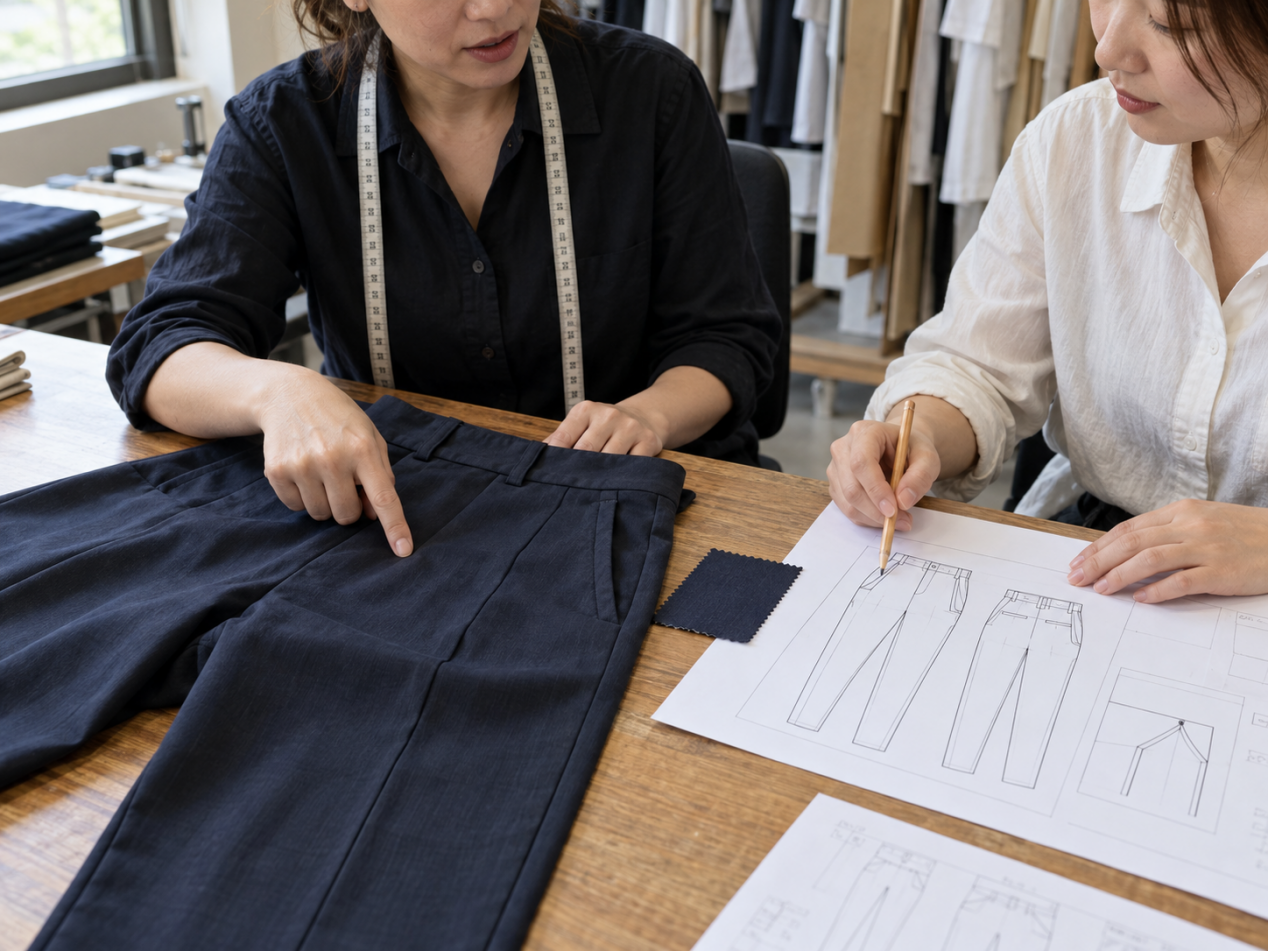
Not all clothing sample revisions need the same follow-up, either. A measured photo can confirm a label position, easy. But a change to the rise, the armhole shape, the garment’s balance, or how the material behaves — those want another physical fitting. No photo settles those.
Before requesting the next submission, ask yourself what it needs to prove. If the open question is whether a dress pulls across the hips while walking, a flat photo of the revised dress answers nothing. Send the right evidence for the question being asked.
The sample stage matters too. An early prototype exists to settle the design direction while materials are still open — that’s its job. A fit sample has a different job: show how the garment fits and moves, in the size actually under review.
Working with a size set? Name the sizes affected by each comment. A change that behaves fine in the base size can fall apart two sizes up.
If the material changed between rounds, say which earlier decisions need re-checking. A different shell fabric, a different lining, a different waistband construction — any of these can undo a correction that looked settled last round.
One last distinction: a correction is not a new design request. Moving a pocket back to its agreed position is a correction. Adding another pocket entirely is a design change — and that one comes with a fresh conversation about development work, cost and timing.
Say What “Approved” Allows the Factory to Do
After several rounds, “looks good” feels like enough. It’s tempting. Just type it and move on. Except the factory is left guessing what “looks good” actually covers — and guessing is how bulk orders go sideways.
Before you hit send, be honest about what the comment really approves. The fit? Fine. But the final fabric might not be settled yet. Same for the lining. Same for the colour and trims. If any of that is still open, the comment has to say so.
When you write that garment sample approval, name the sample version. Spell out the scope in the same message. Anything still unresolved — put it there too, don’t let it dangle.
For example: “The fit of Sample 03 is accepted. The armhole lining under comment 07 still needs correction — submit the revised sample for review, and hold off on bulk cutting until then.”
See what that wording does? The factory gets a clear next step, and a partial decision never morphs into a general production approval by accident. Once everything else is accepted, then you identify the approved sample and the final documents that match it.
And make sure the paperwork for bulk clothing production agrees with that decision. If the final sample shows a change that’s missing from the measurement chart, sort out the difference before it reaches the cutting or sewing team — not after.
Clear comments won’t answer every development question. Nobody’s claiming that. But they do make the next round count. The factory can respond to something specific, and you can see right away whether the revised sample actually fixed it.
At Meng Ruolan Apparel, sample development covers dresses, blouses, skirts and trousers. We can start from a tech pack. Or a measurement chart, a sketch, a reference image, even an original sample you already have. Planning a womenswear order? Send your tech pack with the planned quantity, size range and target delivery date.
Already have a sample in hand? Include the version and the changes you want reviewed. That gives MRL Apparel a much clearer starting point for the next round.
Contact Details:
MENG RUOLAN FASHION COMPANY LIMITED
Email:mandy@mrlapparel.com
WhatsApp +86 18825766882
Post time: Oct-26-2026


