

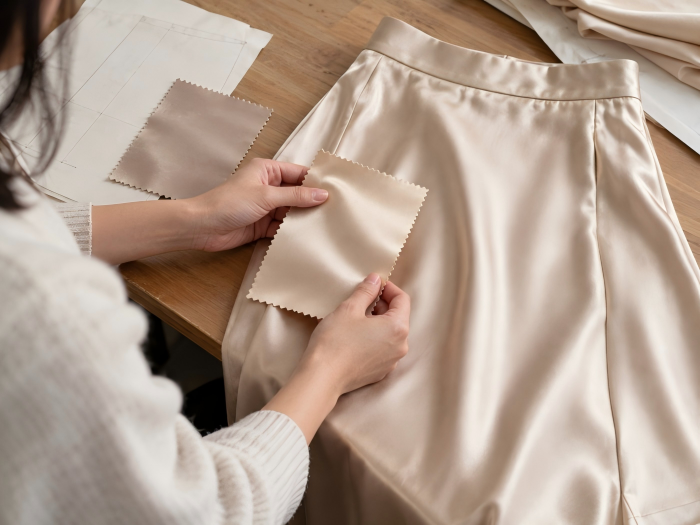
A satin skirt sample may have the right colour, length and drape, yet still need another review before approval. One detail worth checking closely is what happens beside the seams when the garment is fitted and the wearer moves.
Satin skirt seam slippage occurs when fabric yarns move away from the stitching and create an opening. The sewing thread may remain intact, which makes the problem easy to miss when the skirt is hanging without tension.
For a clothing brand developing a satin skirt, the sample should answer practical questions: where does the opening appear, what has caused it, and does the proposed correction work in the fabric intended for production? This guide explains what to review and what to record before approving bulk manufacturing.
What Is Seam Slippage in a Satin Skirt?
Seam slippage is movement within the fabric beside a sewn seam. It differs from a broken stitch, where the sewing thread itself fails.
It also differs from fraying at the cut edge. A skirt can have a neatly finished seam allowance and still show yarn separation near the stitch line.
Before requesting a correction, examine the outside and inside of the affected area. Identifying what has actually moved gives the sample maker a more useful starting point than describing every opening as a “weak seam.”
| What you see | What needs checking |
|---|---|
| An opening beside stitches that remain intact | Whether the fabric yarns have shifted |
| Broken sewing thread | Thread failure and the sewing construction |
| Loose yarns at the cut edge | Edge finishing and remaining seam allowance |
| Ripples along the seam | Puckering and its possible causes |
| A gap visible only while the seam is pulled | Whether this is seam opening under tension, permanent yarn movement, or both |
These observations help direct the review. They do not replace a measured test when your specification requires one.
Why Can Satin Fabric Slip at the Seam?
Satin is a weave description, not a fibre composition. Polyester satin, silk satin and other satin fabrics should not be treated as interchangeable simply because they have a similar surface shine.
The fabric’s yarns, construction and finish can affect how it behaves at a seam. Slippery filament fabrics are among the materials where seam slippage can occur.
The garment design also needs attention. Review whether the opening is limited to one area, whether the skirt feels restrictive there, and whether the same problem appears on both sides.
Does a Higher Fabric Weight Solve the Problem?
Fabric weight alone cannot establish whether a satin will work with your seam construction. A heavier-looking option still needs to be evaluated in the intended design.
When comparing alternatives, review the material, finished seam and garment together. A swatch helps assess colour and handle, but it cannot show the fit of the completed skirt.
Our fabric and trim sourcing service helps customers compare materials against their design, order quantity and project requirements. If seam performance is a concern, raise it before the fabric is selected for sampling.
What Should You Check During a Satin Skirt Fitting?
Start with a sample in the fabric proposed for production wherever possible. If substitute material has been used, make sure the sample notes identify it clearly.
Check the skirt in the intended size on an appropriate fit model. Standing photographs are useful, but they should be followed by ordinary movement such as sitting and walking.
Side Seams Around the Hip
Inspect both side seams before and after movement. Look for yarn separation, an opening beside the stitching, or a change that is more visible on one side.
Record the position precisely. “Left side seam, below the hip” is more helpful than “the skirt seam opens.”
Zipper and Slit Areas
If the design includes a zipper or slit, include those areas in the review. Photograph any distortion or opening and show its position on the full garment as well as in a close-up.
Avoid assuming that every problem at these points has the same cause. The fabric, fit and local construction need to be considered together.
The Inside of the Sample
Turn the skirt inside out and review the affected area. Note the seam allowance, edge finish and any tape or other support used.
This is especially useful when comparing two sample rounds. A similar exterior appearance does not tell you whether the construction has changed.
Satin Skirt Sample Approval Checklist
A useful review combines fitting observations with clear construction records. The following satin skirt sample checks can be added to your sample comments or approval sheet.
| Review item | What the sample should show | What to record |
|---|---|---|
| Sample material | The actual material used | Fabric reference and any substitution |
| Fit through the hip | How the skirt fits during ordinary movement | Measurements and fitting comments |
| Side seams | Condition before and after movement | Photos and affected locations |
| Zipper area, if present | Construction and any local distortion | Detail photos and comments |
| Slit opening, if present | Behaviour during walking and sitting | Position and construction details |
| Inside seams | Allowance, finish and local support | The method used on this version |
| Revised areas | Whether the change addresses the issue | Modification and review result |
| Final approval | One identifiable sample version | Sample date, reference and approval notes |
Keep the photographs consistent between sample rounds. Use the same seam location, a similar camera angle and lighting that shows the fabric clearly.
A ruler beside the area can help communicate its position and scale. It should not be presented as a substitute for a controlled laboratory measurement.
How Can Seam Slippage Be Reduced?
The correction should follow the problem found on the sample. Possible options include reviewing the seam allowance, seam type, stitch density or suitable local support.
These are options to evaluate, rather than one fixed recipe for every satin skirt. The revised construction still needs to suit the fabric and the design.
Review the Seam Construction
Ask the sample maker to explain what will change and where. A wider allowance or different seam construction may be worth trying, but the result should be reviewed on a new sample or representative sewn trial.
Keep a record of the actual satin skirt seam construction approved for the order. “Stronger stitching” is too vague for the production team to reproduce reliably.
Check Support and Exterior Appearance
Where local support is proposed, review it from both sides of the garment. Check whether it creates a visible line, changes the handle or affects the drape.
The decision should include appearance as well as the original seam concern. Photograph both before approving the revision.
Reconsider the Material or Fit Where Necessary
If the issue remains, discuss whether the proposed material and design are a workable combination. Changes to fit or fabric may need another sample round.
Explain any fabric replacement before approval. A close colour match does not establish that the new material will behave like the earlier sample.
Does the Sample Need Laboratory Seam Slippage Testing?
A fitting review helps identify areas that need development work. Laboratory seam slippage testing provides a controlled measurement when the customer’s specification requires one.
ISO 13936 includes methods for evaluating yarn slippage at seams in woven fabrics. Part 1 uses a fixed seam opening method, while Part 2 uses a fixed load method.
Before arranging testing, agree with the laboratory on the applicable method, the material or sample required, and the acceptance criteria. Specify any required fabric directions and conditioning through the agreed test procedure.
Ask the report to identify the material tested. A result for a previous fabric reference should not be treated as evidence for an unconfirmed replacement.
There is no single acceptance figure to insert into every satin skirt order. The customer and laboratory should establish the requirement for the intended product and specification.
What Must Be Confirmed Before Bulk Production?
Sample approval should leave the production team with a clear reference. Confirm the final fabric, pattern version, measurements, seam construction and any agreed local support.
Also record which changes have been accepted. Keep earlier sample comments for reference, but make sure the current approval identifies the version to be followed.
Meng Ruolan Apparel uses clothing sample development to bring materials, pattern and sewing details together for customer review. This gives the customer an opportunity to resolve construction questions before the order moves into production.
For custom skirt manufacturing, include the areas requiring particular attention in the production notes. The first production garments can then be compared with the approved sample and specifications.
If a material or construction change is proposed after approval, clarify whether another review is needed. Record the decision before the changed version is produced.
Frequently Asked Questions About Satin Skirt Seams
Can Lining Prevent Seam Slippage?
Adding lining does not, by itself, demonstrate that the outer fabric’s seam problem has been resolved. Review the finished construction and fit rather than treating lining as an automatic solution.
If lining is added during development, include it in the revised sample review.
Can We Approve a Sample Made in Substitute Fabric?
You can approve clearly defined aspects, such as an initial shape or design detail, while identifying the material limitation. However, substitute fabric cannot establish the seam behaviour of the production satin.
State what has been approved and what remains open. Review the intended fabric before giving final material and construction approval.
Should We Just Increase the Stitch Density?
Stitch density is one variable to review, but a higher number is not a universal answer. The sample maker should assess it alongside the fabric and seam construction.
Ask for a comparison that shows the result. Approve the finished construction rather than a general instruction to add more stitches.
Discuss Your Satin Skirt Development Requirements
Send us your Tech Pack or reference sample, proposed fabric, size range and estimated quantity per style and colour. If you already have a seam concern, include clear inside and outside photographs with the affected position marked.
Tell us about any required testing at the start. We can review the development requirements and clarify which details need to be confirmed on the sample.
Discuss your satin skirt project with MRL Apparel.
Post time: Oct-08-2026


