

After literally over a decade of working in the apparel purchasing business, I am consistently asked by friends, “Where do I even begin if I want to order custom-made dresses directly from a manufacturer?” I am here to tell you that custom-made dresses are NOT hard to order. If you follow the correct steps, and pay attention to the important details, you will probably be able to get everything that meets your requirements, without the headaches! Using the information I’ve learned from working with manufacturers over the last couple of years, I have put together a super detailed, step by step guide for you. Therefore, if you are new to the buying process or already have experience with customization and are just trying to improve your current process, this will be a great guide to follow. Additionally, another use of this guide is for the apparel supplier, as the use of a clear process provides an opportunity to work more efficiently and have fewer disputes in the long run. Mengruolan Apparel Factory adheres to this scientific process to deliver custom services for buyers all over the world.
I want to give you some good facts. In the two years we’ve worked with Mengruolan Garment Factory, we’ve found custom hoodie, pant, skirt, and dress buyers have a satisfaction rate of 97% and a delivery delay rate of 3% when they use a standard custom ordering process. In contrast, those using a chaotic or random ordering process have a reworking rate of 35% in addition to being delayed 7-10 days per order, while paying $1200 more in the process. So, it’s obvious that knowing the right process of customising is very crucial for both parties.
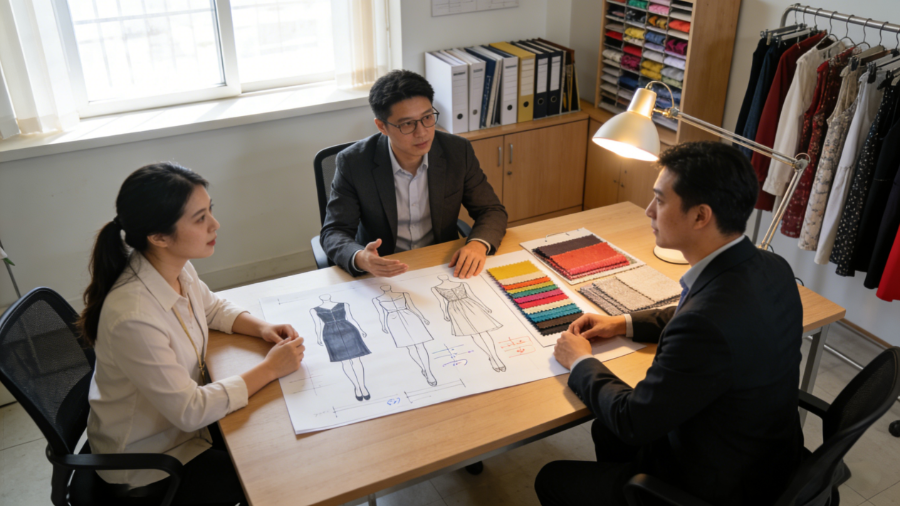
I. Core Process, Time, and Cost Reference Table for Customized Dresses
The first thing we want to show you is this table, which summarizes all of the things that we’re going to do in this tutorial. There is a breakdown of time associated with each item, also the major aspect (main point/idea) of each item, and there is an indication of how much it will cost in terms of the total cost; therefore, the table will give you a good snapshot of everything we are going to cover in this tutorial.
This table indicates the three critical phases of our custom clothing manufacturing process – producing samples, processing orders, etc. therefore, it will should assist you in navigating your way through this process.
| Step | Core Link | Time Required (Regular Order) | Cost Ratio | Core Focus |
| 1 | Requirement Communication + Technical Package Confirmation | 3-5 days | 5% | Clarify style, fabric, size, and confirm the dress technical package |
| 2 | Fabric and Accessory Selection & Confirmation | 2-4 days | 30%-40% | Confirm fabric texture, color fastness, and matching of accessories with fabric |
| 3 | Garment Sampling Process Execution | 5-7 days | 15%-20% | Sample making, try-on, modification to ensure compliance with technical package requirements |
| 4 | Contract Signing + Deposit Payment | 1 day | None (Deposit is 30%-50% of the total amount) | Clarify delivery date, quality standards, and after-sales terms |
| 5 | Garment Production Steps Implementation | 15-25 days (for orders under 1000 pieces) | 25%-35% | Control production progress and conduct mid-term quality inspection |
| 6 | Finished Product Quality Inspection + Packaging & Shipping | 2-3 days | 5%-10% | After full inspection and qualification, package and arrange logistics as required |
Please note that all of the time and cost estimates listed above are not final and may change due to your order quantity (e.g., smaller orders less than 100 pieces, or larger orders greater than 1000 pieces), and will also vary based on how complex the customizations are (i.e., if you have embroidery, or other special techniques). Example: If you choose to have complex embroidery, it will add 2–3 days to the sample time, and the additional cost will be an extra 5%–8%.
II. Step-by-Step Guide: The Complete Process of Customizing a Dress from a Manufacturer
We’ll walk through the process together in this section, explaining how to perform each task, what to look for, and ensuring that we follow a custom garment production process to prevent mistakes typically made by new designers. We are likewise going to help you understand the underlying principles behind the different steps of the process so that you can speak to manufacturers more efficiently.
core movements
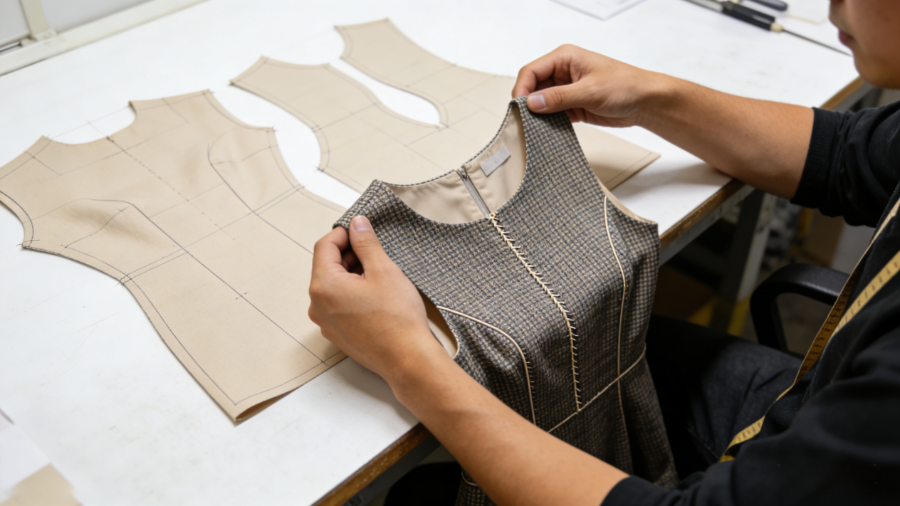
This stage of work is of the utmost importance because it forms the basis upon which the customisation process proceeds for the rest of the project. You must first have a basic understanding of what you need, including the intended use of the dress (Retail, event/wholesale, etc.), the type of customer you are targeting (Europe and America, Southeast Asia, etc.), the styles you need (long or short dress, round neck or V-neck, sleeveless), the fabric (cotton, chiffon, silk), the size range, colours, logos, details that include special techniques (embroidery, printing) etc.
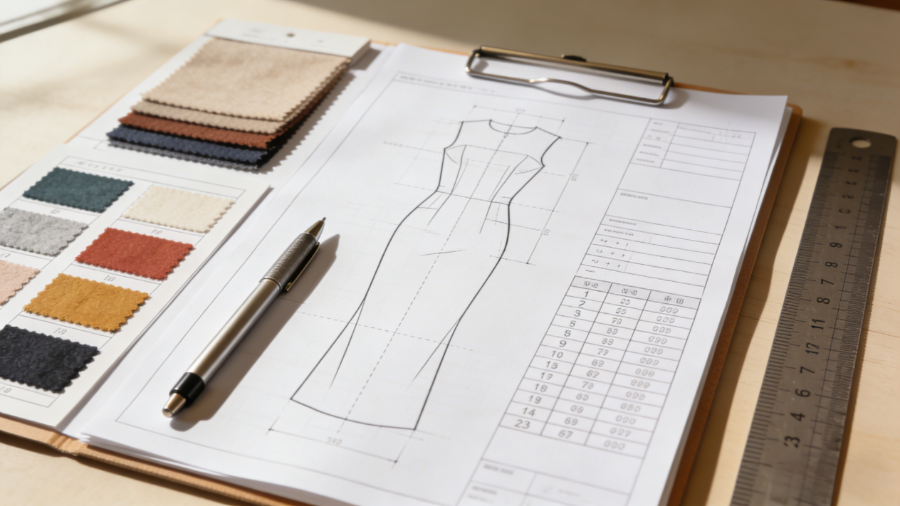
Above all else, verify the dress technical pack with the manufacturer — the technical pack is considered as a “standard manual” of cooperation between two parties. The technical pack of dresses to consist of: design sketch (front/side/backviews), detailed measurement chart (bust/waist/length measurements etc), fabric numbers and parameters; list of required accessories (zipper styles/buttons); craftsmanship info (type of stitches/hem width etc); and finally packaging requirements.
Pitfall avoidance reminder
Many of those new to clothing design are unaware of the necessity of developing a dress technical kit, and express their needs verbally, often resulting in the manufacturer misunderstanding what is required and producing a finished product that is not what the customer wanted. It therefore is recommended that designers create their technical kits prior to producing their garments. If the designer has any question or uncertainty regarding any aspect of the garment, e.g. what type of fabric should be used, the designer should request that the manufacturer supply 2-3 types or styles of fabric for review. For example, our company (Mengruolan Garment Factory) assists purchasers to clearly define their requirements free of charge, and help perfect dress technical kit. This avoids rework because of unclear requirements.
Step 2: Select fabrics and accessories, and confirm samples (the key to controlling the texture).
core movements
The main element in creating custom-made dresses is fabric. It has a direct impact on both how you feel in the dress and the quality of the dress as well as the overall experience of wearing it. Once you have selected your fabric(s) based on your requirements and design concept(s), ask the manufacturer to provide you with samples. Check samples for texture (e.g., roughness/smoothness), thickness, and check for colourfastness, which can be done using a damp paper towel to test for colour transfer (colour bleed), basically. Once you’ve confirmed all three aspects of the fabric are acceptable, you’ll be good to place your order. While verifying fabric, it is also necessary to check the accessories at the same time, for example, whether the zipper acts smoothly, what material the button is made from, and whether they are compatible with the fabric style to avoid the embarrassing phenomenon of “top-class fabric plus low-class accessories”.
Here’s a guide to help you create custom clothing that will be profitable. If you sell retail custom dresses, I recommend choosing a middle range or higher priced fabric (an example is premium quality cotton or imitation silk). In most cases, these fabrics are of fairly high quality but at reasonable prices. For custom event dresses, choose the most economical fabric possible, like polyester or polyester blends; They’re both very easy to care for and durable. Fabric costs typically represent approximately 30%-40% of the full customisation expense of the garment. So choose your fabric according to your budget, do not fall into buying very expensive fabrics blindly nor select very poor quality fabric just to save a few dollars.
Pitfall avoidance reminder
The proper weight and the specifications of fabric are to be checked to make sure that the fabric manufacturer is not making the fabric a lighter weight than the manufacturer states in the fabric specification sheet, such as purchasing 130 gram cotton when it is being manufactured at 100 grams per square meter. Cut a small swatch of fabric color to use as a reference to compare to the finished product after manufacturing. The color of the fabric is probably one of the most overlooked portions of customized clothing manufacture.
Step 3: Initiate the garment sampling process and revise repeatedly until it meets the standards.
core movements
Once the fabric and technical specification packet were approved, the manufacturer began the process of making the sample garments. Typically, the manufacturer would take between 5 and 7 days to create two samples that would be sent out to the buyer for final approval of all aspects of the design. Three points of inspection should be considered upon receipt of the samples. The first is whether or not the patterns match what was put in the technical package; the buyer should try them on and make sure they fit properly and that there is no wrinkling of the pattern. The second is that all fabric and trims used must be the exact match for what was approved and that there should not be any differences in color or texture. The third is that the workmanship is of an acceptable quality, such as no crooked stitching or missed stitches or any puckers in the fabric.
If there’s something that’s not up to your standards, get in touch with the manufacturer immediately, so they can make the adjustments where needed. The majority of manufacturers will provide you with at least one free alteration to your makeover order and most likely two. After you receive your one to two free alterations, there will be a nominal charge for any additional modifications.
Here’s the way we do it, at the Mengruolan Garment Factory, and our way is pretty upfront and clear – when we provide customers with apparel samples, they can always view the entire process of their order being made. When it comes to providing garments samples, we make sure that all of our samples go through the same process so that every one of our customers knows where their sample is in the production phase. We’re quick to reply to your requests for changes. This way we’ll create one final sample that you are happy with and ready for large production.
Pitfall avoidance reminder
Bypass the sampling phase and jump straight into full-scale manufacturing at your peril—especially if you have unresolved design/fabric issues even during sampling, which could lead to problems in your production runs, scrapping your entire lot of stuff, and causing substantial financial loss, too. And while you’re at it, be sure to check and verify the results of the sample’s wash test while you sample, so that you won’t have dresses that shrink or deform or experience colour loss after they’ve been put through their laundering process.
Step 4: Sign the contract and pay the deposit (to protect the rights and interests of both parties).
core movements
If the sample meets your specifications, you can sign the contract directly with the supplier. Make sure that the following important conditions are written in the contract: Sample production complete date, date when full scale production starts, shipping date and delivery date, order quantity and cost per unit and cost of the entire order, deposit % (normally 30 – 50%) and how you make final payment (you pay full amount before the item is delivered or after it is delivered). Also, quality standards, after-sales warranty (how quality issues will be dealt with, are repairs possible?), and customs clearance documents, etc.
Once the agreement is signed and the deposit paid according to the agreement the manufacturer will initiate mass manufacturing. As a side note, it is recommended that the deposit be at least 30% so that the manufacturer does not pull out during production.
The buyer has to make sure that he keeps some part of money as a guarantee for acceptance and therefore doesn’t pay the manufacturer the full amount at once. This is a critical step for the buyer to protect their rights in the custom clothing process.
Pitfall avoidance reminder
Never depend on an oral deal but always enter into a written contract so you don’t have disputes down the road. Evaluate every provision of a contract thoroughly, with a special concentration on the delivery time frame and the quality standard. Terms that read, “Deliver at the earliest opportunity” or “Quality shall be deemed suitable” are ambiguous, so you should clearly state the date and the quality requirements.
Step 5: Follow up on the garment production process and conduct mid-term quality inspection.
core movements
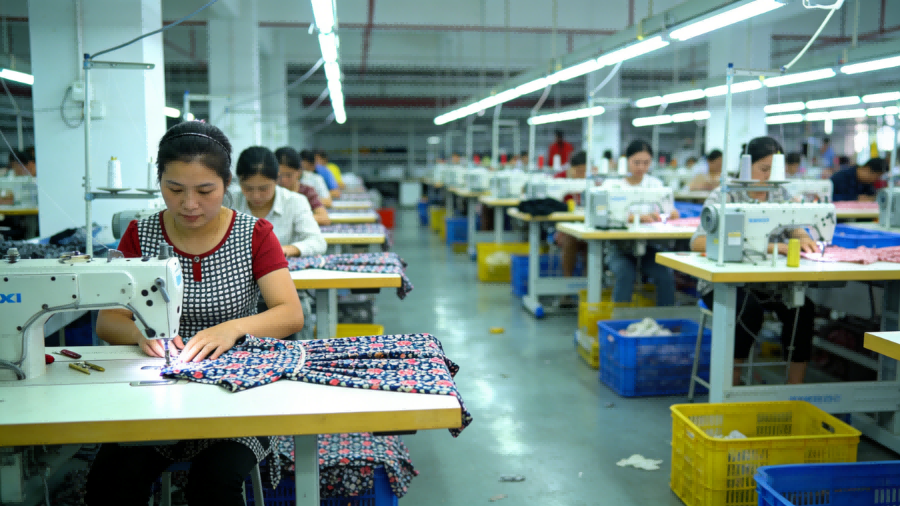
Once you pay your deposit, your vendor will start working on making your dress. This is the main part of the custom gown production process and will take up most of the time that you need to monitor the progress of your dress being made. This production period usually takes between 15 and 25 days for orders under 1,000 units depending on how hard your gowns are to make. You must maintain regular communication with your vendor so as to know the current production status at any given moment and also be able to know when every part of your order (e.g. cutting, sewing or pressing etc) is completed so that your order does not arrive late.
Checking quality midway through production, around halfway, makes sense. For instance, you might want to have a look at the.
manufacturer send you a sample of either finished or unfinished garments (1-2 pcs) to see that the pattern, production process, and material match your original sample, and to check for any issues that may have arisen with batch-produced goods. If there are any issues, you should have the manufacturer correct them immediately so that there is no irreversible damage after bulk production has been completed.
We provide complete traceability of the garment production process and provide clients with daily production-schedule updates and will co-ordinate with youin a mid-production inspection which guarantees that production proceeds one hundred percent accordingto orders.
Pitfall avoidance reminder
Do not totally forget about the production schedule to discover problems only at the final stage of shipping; by then solutions are already somehow impossible. During production, clearly state the loss rate should be generally less than 3 percent. If it exceeds 3 percent, the manufacturer should bear the excess so that they do not charge more for “losses.”
Step 6: Finished product quality inspection, acceptance and shipment (the final step for customized orders)
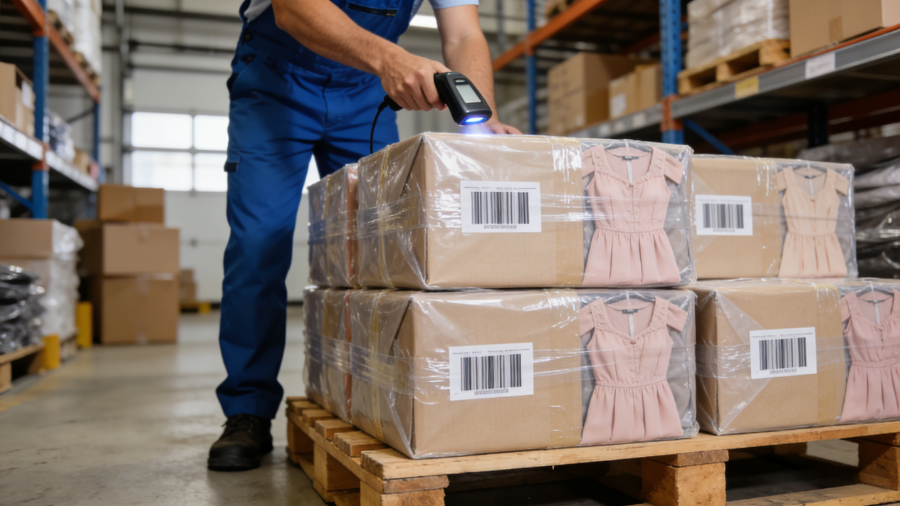
When manufacturing ends, quality control checks are conducted by the manufacturer. Any buyer can ask for a quality inspection after the manufacturing plant has finished producing the product(s). The buyer can also select a third party to conduct the inspection. When you perform inspections, each batch must be checked against either the sample product provided by the manufacturer, the dress technical package, or both. Inspect the product in two specific manners. The first is to inspect the physical measurements by ensuring that the measurements (length and width, etc.) match what is on the dress technical package or sample product provided. The first step of the quality control inspection is to randomly try on or measure about 10%-15% of all goods from each batch and confirm that the measurements conform to those on the dress technical package. Second, confirm that the material and
components used in the product are those agreed upon in the contract, and that there are no discrepancies in the colors or damages to the products. Lastly, ensure that the workmanship is up to par with the standards agreed upon, and that there are no issues with skipping stitches, missing seams, or staining of the product. The third step is to verify that the packaging conforms to what was agreed on in the contract and is free of damage/missing pieces.
If acceptance is granted, then you are to proceed with the final payment, and the manufacturer will prepare the order for shipment in relation to the provided shipping documents to be used for customs clearance (e.g., commercial invoice, packing list, certificate of origin ). If acceptance has not been granted, you should immediately notify the manufacturer to either rework or replace the product until it meets your criteria for acceptance.
Pitfall avoidance reminder
Do not conduct your Acceptance Test on a perfunctory way particularly with large volume purchases. The problem of passing single products but with issues on bulk goods can be prevented through the use of sampling inspection. You will have to ensure that the time required for shipping and delivery has been clearly stated to prevent any time delay in your sales or usage.
II. Summary: Finding a reliable manufacturer makes customization easier
It’s actually very simple to create your own dress from scratch if you simply follow the six steps I mentioned above (see how easy it is!), as well as being mindful of what you should check at each of those steps — basically, confirm your tech pack, follow the sampling process, and follow the garment manufacturing process. With a solid manufacturer, you’ll have an easy custom process and save yourself redoing things or losing money.
Another thing that affects how easy your dress customization will be is the manufacturer you choose. A good professional manufacturer will be able to guide you through each stage of the process clearly, and work on mitigating risks that come with custom dress buying. With their help, you can save both time and money.
If you want to find a reliable custom dress manufacturer who will make it easy and fast for you to get what you want, then Meng Ruolan Garment Factory is the right place to start! We have over 10 years of experience in the custom dress business, so we know everything about how to make a custom dress. We will help you get your dress made right by helping you prepare your dress manufacturing package and we will use standardized procedures for garment sampling and production. We will assign an individual to work with you throughout the entire process; from the time you tell us what you want, until we ship it to you. We conduct quality checks at every stage during the manufacturing process and ship orders on the committed date. In addition, we provide full after sales support.
For both small trial orders of less than 100 pieces, large quantity orders such as over 1000 pieces, or even custom designs that feature embroidery or printing, or designs that have 3D tailoring, we can accommodate any of your needs. We offer freedress technical package templates and freefabric samples. In addition with your custom dress order, you will receive exclusive discounts to help reduce your overall costs and attain your selected custom dress in a quick manner, and will provide you with an advantage in your market space.
Contact Details:
Dongguan Meng Ruolan Clothing Factory
WhatsApp 86 18825766882
Post time: Jul-03-2026


