

Looking for a guide on the global apparel market? This overview is essential for apparel suppliers. It covers important insights and information you
Knowing what customers want and where to get products from is very important for clothing companies involved in exporting and selling clothing. Although many of these companies have the ability to produce products of good quality, they lose out on a large number of orders because they do not fully understand how the apparel market works globally.
This article draws on factual data from the industry along with the distinct regional traits to enable you to have a quick grasp of apparel buyers‘ preferences, buying patterns, and global order demands so as to provide a better guide in searching for clients and closing sales.
Ⅰ. Current Status and Overall Structure of the Global Apparel Market
Even though we’ve had ups and downs in the supply chain over the last few years along with changing consumer habits, the worldwide apparel market is still growing at a solid rate. According to industry statistics, the global apparel consumer market generated more than US$1.7 trillion in 2024. The major areas for apparel consumption and procurement are Europe, America, Southeast Asia and The Middle East.
Buyers from various regions purchase items with very distinct styles, amounts, and price expectations or targets. For example, many buyers will make large purchases over a long period of time, while other buyers prefer to purchase smaller amounts over much shorter time periods. In addition, many buyers tend to concentrate on obtaining the lowest possible price at very high volumes, whereas other buyers will focus on the highest possible quality products that are compliant with regulations.
The only way that you, as a vendor, can improve your success rate with negotiations is to develop a more effective matching of your offerings to meet the specific needs of each region.
Meng Ruolan Apparel Factory has established long-term relationships with many international buyers and thus has good knowledge of the quality inspection standards and shipping requirements of different markets. This allows us to efficiently match the needs of your overseas customers.
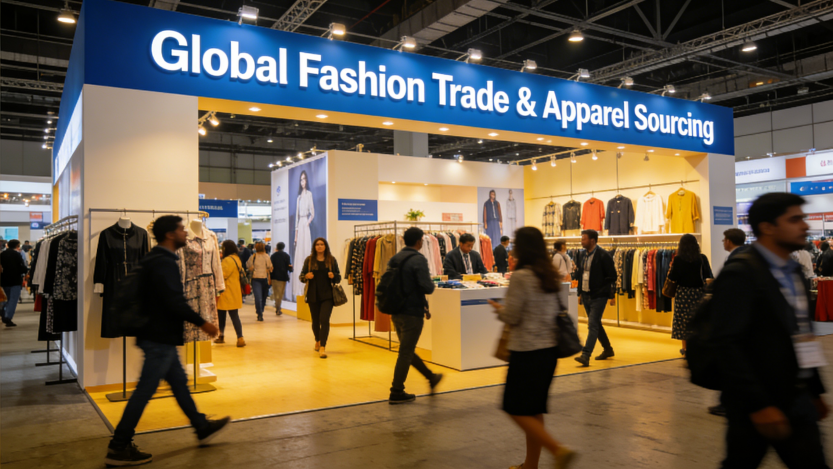
Ⅱ. Major Fashion Purchasing Areas and Buyer Characteristics
Fashion sourcing areas are fundamentally based on where the consumer market is located and on where the logistic hubs are located. The main areas that apparel manufacturers should concentrate their efforts on are outlined below.
1.Europe and America – Quality and compliance are priorities
Europe and North America rank as two major sourcing regions for apparel in the world. The major buyers in both markets are brand owners, chain retailers, and importers.
Characteristics: Orders are relatively stable from suppliers and tend to be high volume orders. Buyers have strict criteria for the fabric, workmanship and testing/certification of products. They have an expectation of standard delivery timeframes and after sales service that is standardised. In addition, fast fashion has very fast renewal of fashion, so buyers are looking for the ability to re-supply quickly.
2.Southeast Asia – Primarily focused on cost-effectiveness and rapid response.
The local South East Asian market is growing fast when it comes to local apparel consumption as well as being an extremely important regional source for “re-export” sourcing.
Orders are small and frequent with frequent style update.
Price competitiveness is a must. Customers are very cost sensitive.
Logistics are easy and suitable for small batch multi production.
3. Middle East – Prefers large items, comfort, and accessible luxury.
Most of their buyers will be demanding a free flowing/ loose fitting dress exclusively made of solid color luxury type, also an easy style and therefore their purchases are usually at higher volumes. Characteristics include:
Large overall order sizes, with a high average order amount.
Buyers of this market demand high comfort level for the fabric and quality of the fabrication.
The demand is continuous throughout the year, yet have longer manufacturing lead time for stock orders.
4. Oceania and Africa markets – primarily basic and practical models.
These regions mostly carry basic, casual and work wear clothing that see a consistent buying pattern
Some of the features of these garments include simple design(s); easy to produce, cost effective durable; great for mass production hwile producing similar garment over and over again.
The different buyer requirements found within fashion sourcing markets provide a direct impact on your price, sampling, and production priority order.. The Mengruolan Garment Factory is able to alter its production methods and packaging to fit the requirements of multiple buyers in any region where it operates.
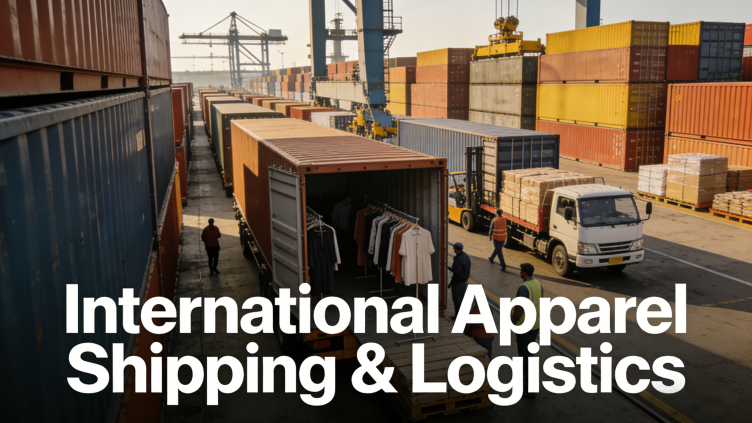
Ⅲ. Apparel Industry Statistics – Using Data to Understand Purchasing Patterns
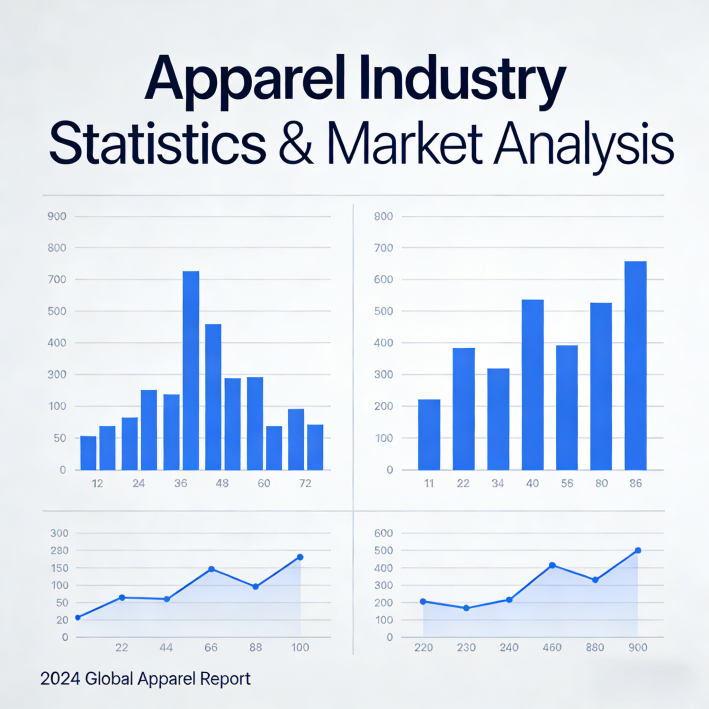
Using only experience to evaluate the market is not reliable; statistical information related to the garment business will help you to know where you are going at a reasonable level.
The following graph demonstrates several essential types of data that are commonly used within the industry to help provide you with a visual representation of the international supply chain.
| Indicator | Data (2024) | Share in Global Market |
| Total global apparel market size | $1.72 trillion | 100% |
| Apparel sourcing from Asia | $920 billion | 53.5% |
| European fashion import volume | $380 billion | 22.1% |
| US apparel import volume | $325 billion | 18.9% |
| Small-batch & fast fashion orders | 41% of total orders | 41% |
The apparel industry can be divided into three regions: Asia (is still the world’s biggest apparel supply base); Europe and America (account for almost 50% of all import orders); and the small order, fast delivery market, which continues to grow because it allows producers to take advantage of flexible manufacturing.
Ⅳ. The Actual Impact of Apparel Market Trends on Suppliers
1. Orders for small batch production are increasing in popularity as Buyers are will no longer place a single large order at one time, but they place many smaller orders in batches to manage inventory risk.
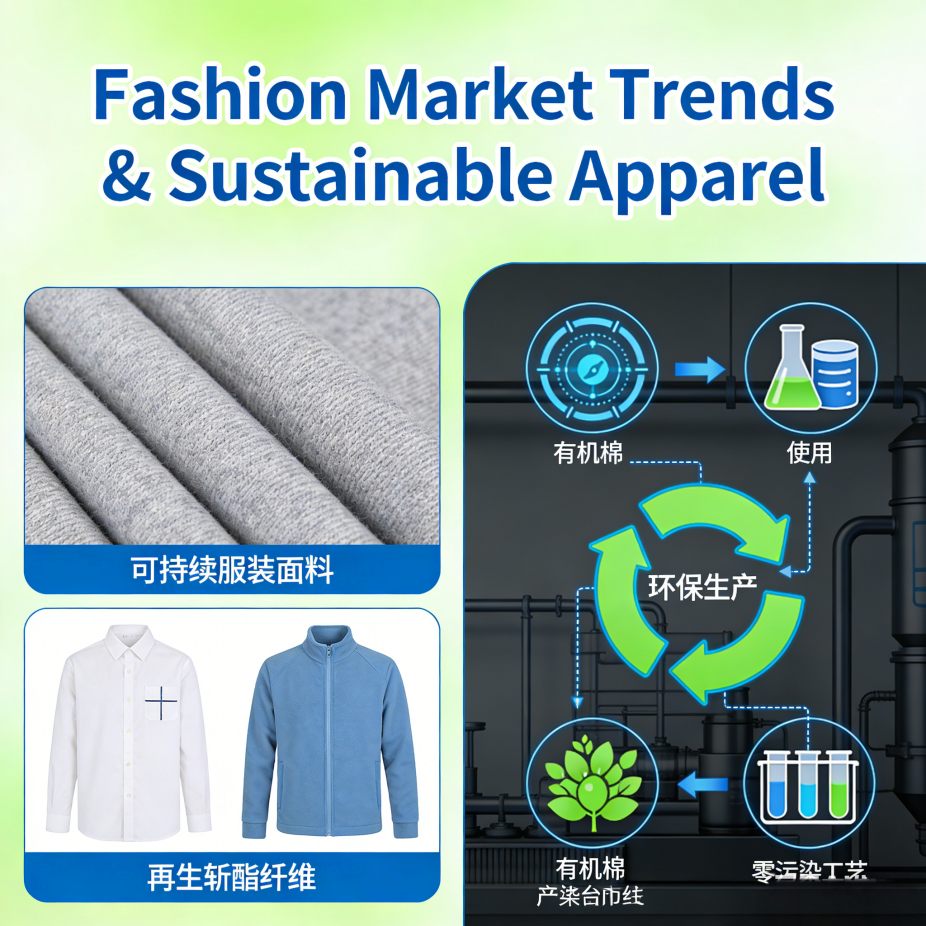
2. Sustainable and environmentally friendly fabrics are increasing in popularity. European and American Buyers respect environmentally friendly fabrics and low carbon production. Suppliers who have the required credentials will be given preference in receiving orders.
3. Compliance and quality inspection standards are increasing, making test reports, fabric content, and production specifications to be basic order requirements.
4. Online procurement is increasing rapidly today. In addition to trade shows, cross-border platforms, and independent suppliers who need to acquire new customers are getting more of their professionalism from the presentations and prices that they provide to their customers.
Adapt to apparel market trends and adjust factory production models Meng Ruolan Garment Factory offers support for the production of small batches of products that require fast response times. They have the ability to produce the appropriate quality inspection documentation that meets the requirements of large procurement operations in the International Marketplace.
V. Practical Advice for Apparel Suppliers
1. Take the time to develop a relationship with buyers located in your major apparel sourcing regions, such as Europe or the United States.
2. Keep an eye out for current trends in the consumer market. Make sure you have styles and fabrics that will be popular during the upcoming seasons available when that trend hits.
3. Use Apparel Industry Statistics to determine the correct price points and when production should commence.
4. Develop the capabilities needed for flexible manufacturing processes that will allow you to provide small quantity/fast delivery/fast turnaround repeat order requirements.
5. Find Quality / Delivery / Compliance oriented experienced partner factories to mitigate all of your risk issues.

Conclusion:
The apparel industry worldwide is vast, containing many sourcing opportunities across different regions. Two of the most important skills every apparel supplier should possess include the ability to analyze apparel industry statistical data and identify/Master Market Trends.
Either you are searching for international consumers or want to improve your sales structure, or you need a reliable OEM production partner, we, Mengruolan Apparel factory, can provide you with one-stop solutions. We have comprehensive knowledge of the needs of purchasers worldwide and have the ability to customize our manufacturing process to accommodate any order size. we provide end-to-end solutions and manage your projects from the first sample through to the final production run.
Mengruolan Apparel Factory welcomes your inquiry at any time!
Contact Details:
Dongguan Meng Ruolan Clothing Factory
WhatsApp +86 18825766882
Post time: Jul-01-2026


