

Sequin Dress Samples: Lining, Seam Comfort, and Zipper Checks
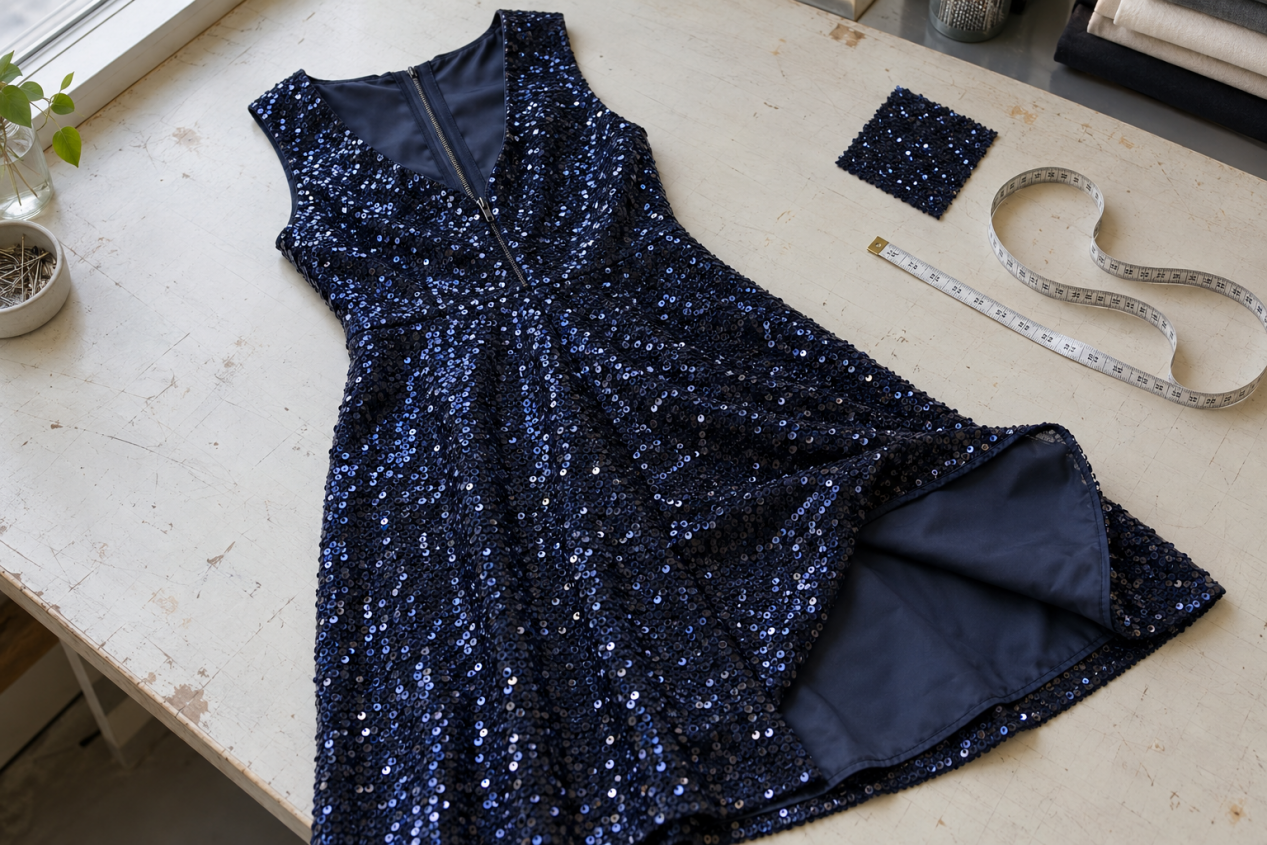
1.The zipper closes when the dress is lying on the table. During fitting, it stops at the waist.
Or the lining feels soft to the touch, but the armhole scratches the fit model the second she lowers her arm. Neither problem shows in a front photo.
When reviewing sequin dress samples, look for where the construction fails and what needs to change. Check the lining coverage, seam finishing and zipper movement together, on the actual materials for the order.
For a brand preparing a new collection, this is the stage to settle those details. Comments such as ,make it softer,or use a better zipper,leave too much unanswered for the next sample.
2.Check the Fabric and Lining First
First thing — check what the sample’s actually made from. Fit samples usually go out in substitute fabric, so what you’re approving is the shape. How the real sequin fabric feels on the body? That comes later.
Flip it over and look at the backing. Stretch mesh? Woven? Whatever it is, make sure it’s the same reference as your production order.
Sequin size, spacing, how it’s attached — get all of that into the material record. Two fabrics that look alike in photos can feel nothing alike once they’re sewn into a dress.
And ask us which parts are temporary. If the lining or zipper changes before production, hold off approving those.
Last, the record itself: shell ref, lining ref, zipper spec, size, date. Keep the swatches with it. If a material gets swapped later, you’ll want them side by side to compare.
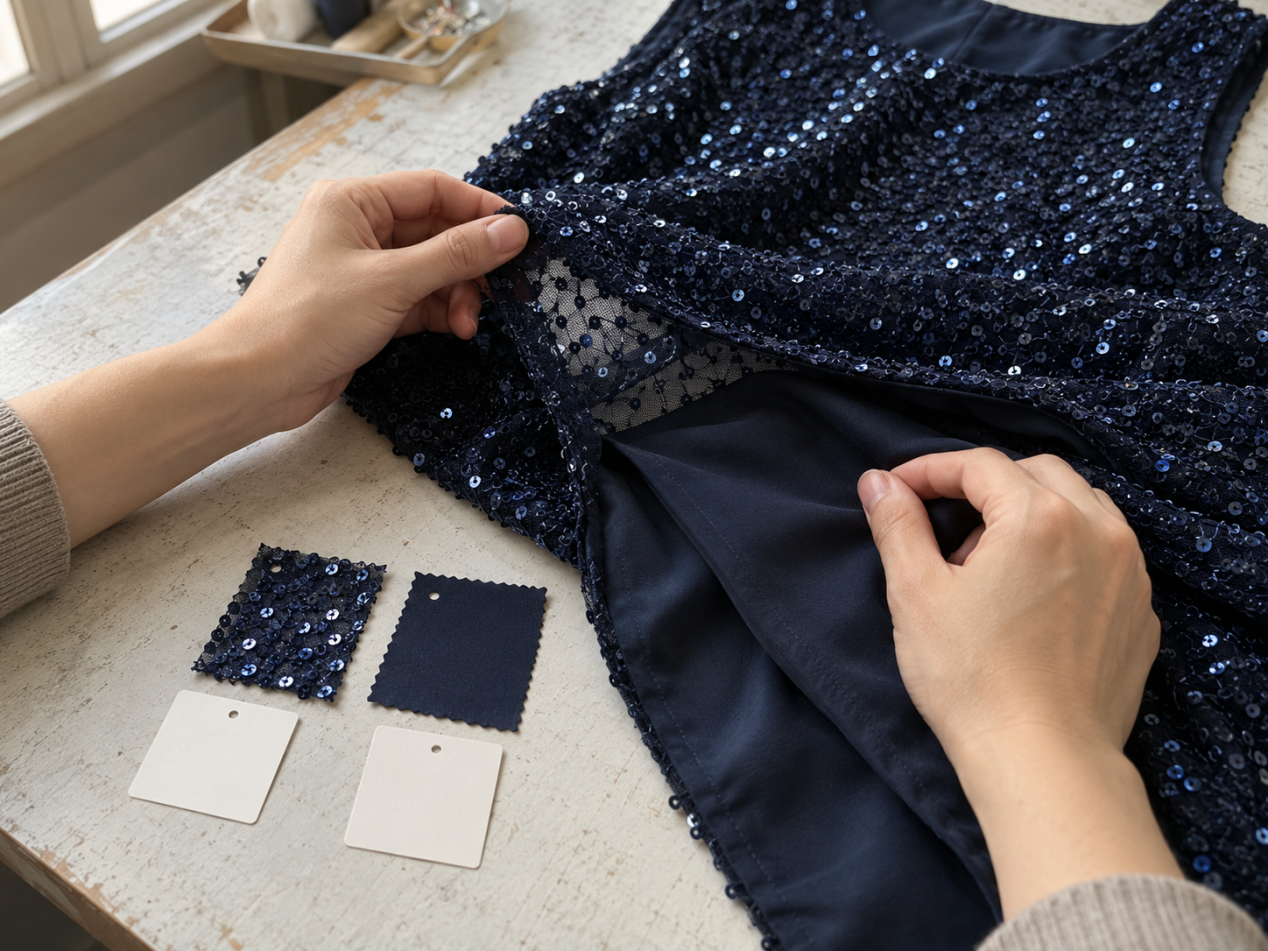
Fully Lined, Still Scratchy
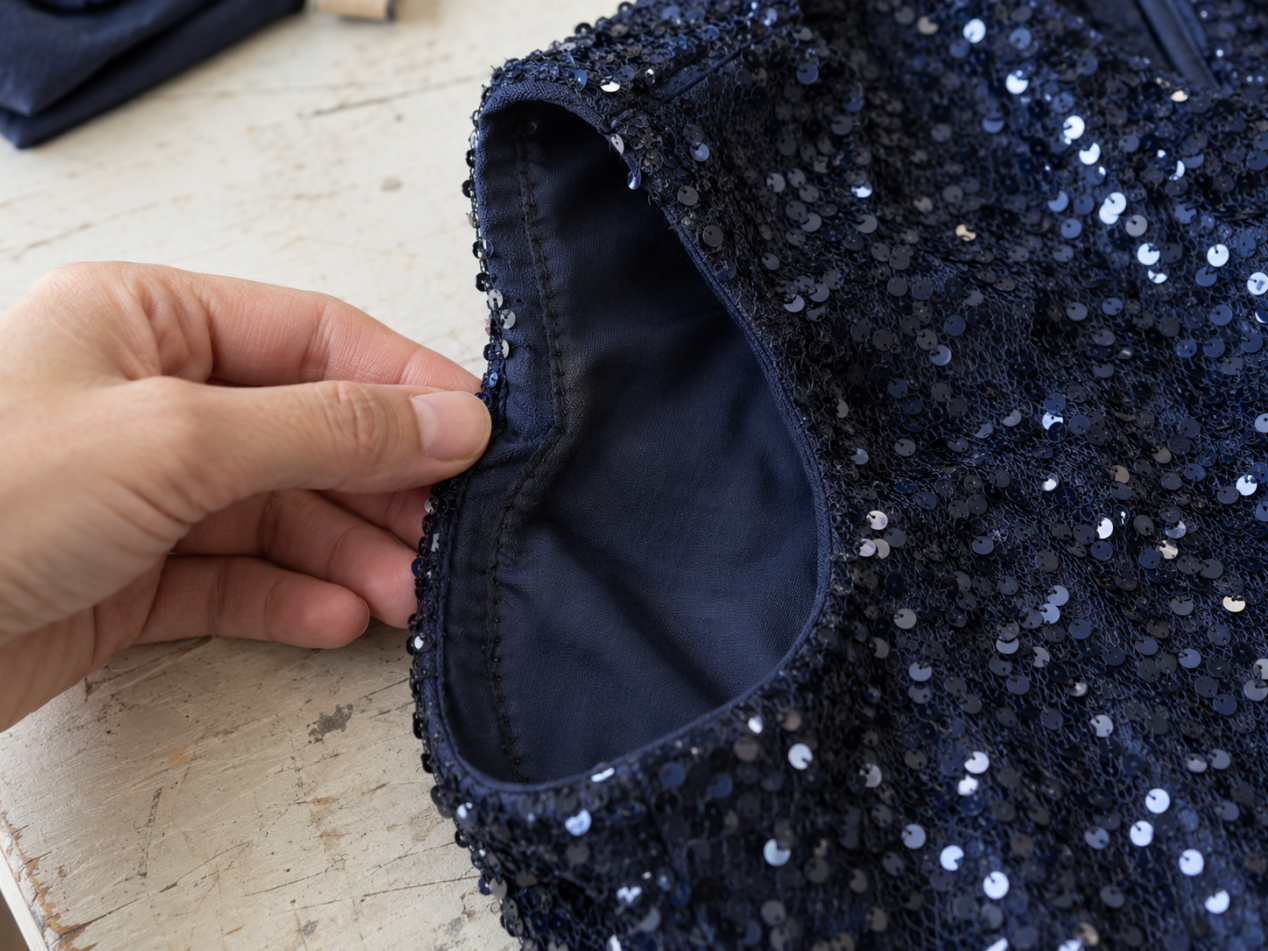
The lining did not cover all the areas where the sequins might come into contact with the skin.Therefore, we will conduct a separate inspection for each opening.Including the neckline, cuffs, shoulder straps,Back opening and hem edge.
We turn the dress inside out and run our fingers along the edges. Sequins sitting on the fold. Rough bits poking out past the lining. Then we work the edge around and see if any seam allowance pops out.
On the model, everything changes. A neckline can sit perfectly while she stands still, then roll in the second she bends or reaches forward.
Underarms are the tricky one. Sometimes the rubbing comes from the outside. Inner armhole feels totally smooth, but the upper arm still catches on the outer sequin surface.
Get the model to drop her arms naturally, move them forward and back. Where’s the contact? Armhole edge, side seam, or the sequined surface right next to it. Write it down.
And more lining won’t fix all of it. A lot of the time the fix is in the edge itself. Or the sequin placement. Sometimes the opening needs reshaping.
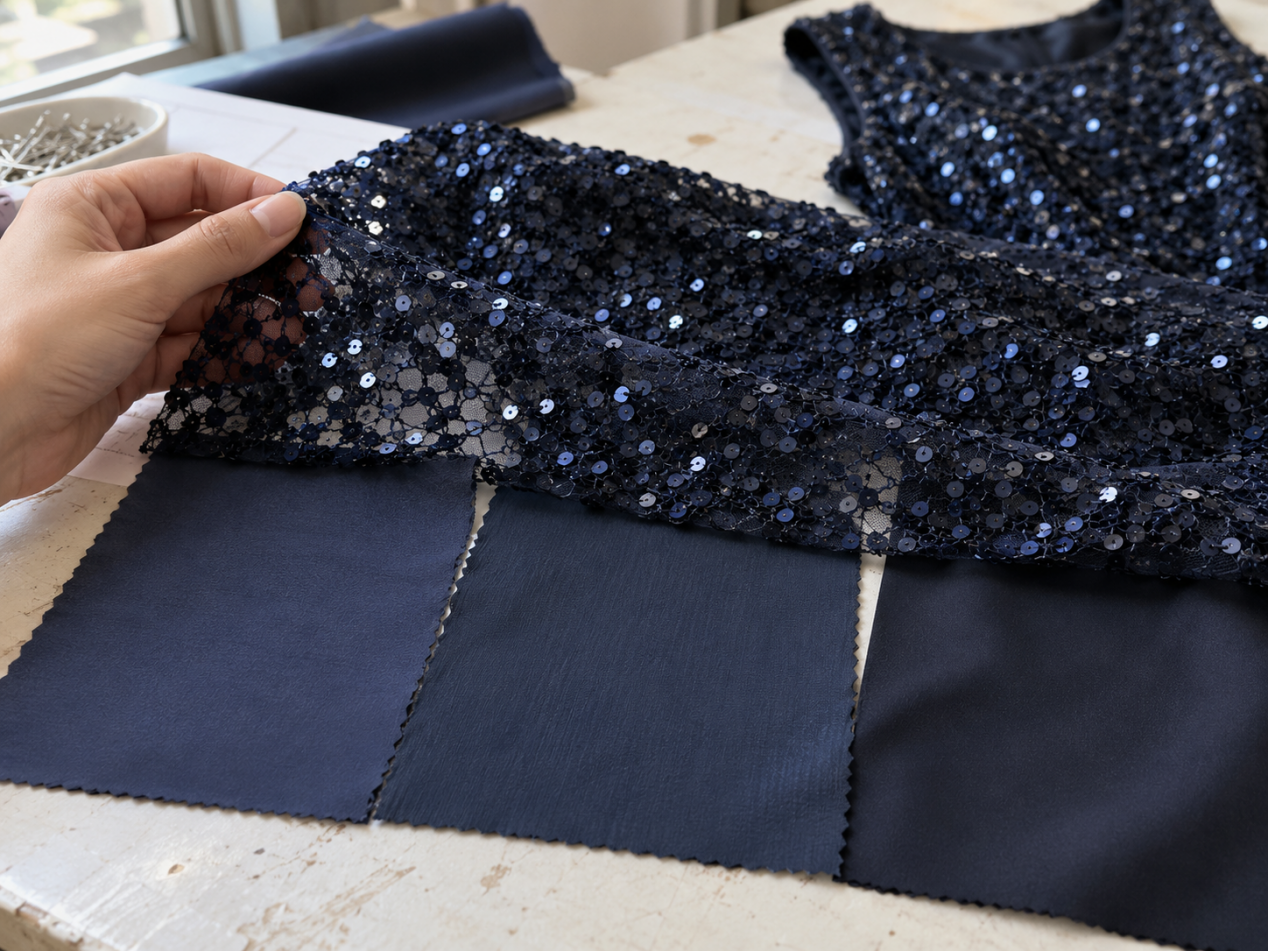
Which Lining Works
There’s no one sequin dress lining that fits every silhouette. We start with the shell itself, how the dress should fit, and how much it needs to move.
Bodycon in stretch fabric? Check if the lining limits the stretch you’ve got in the outer layer. Woven style? Look at the wearing ease and how the lining hangs under the shell.
And a smooth swatch means nothing on its own. Once it’s sewn in, the lining has to stay comfortable across the bust, waist, hips, wherever the skirt is fitted.
| Lining consideration | What to check in the sample | Reason to review it |
| Surface feel | Assess the side intended to face the body, including finished seams | Roughness remains noticeable through normal movement |
| Stretch and allowance | Compare shell and lining movement during fitting | The lining becomes tight before the shell does |
| Coverage | View the proposed layers together under daylight and indoor light | Coverage differs from the approved design |
| Weight and drape | Watch how the dress hangs with the lining attached | The inner layer changes the intended shape or pulls at attachment points |
| Colour | Place the actual lining beneath the selected sequin fabric | The lining shade changes the appearance through an open backing |
| Length | Check standing, sitting, and walking | The lining becomes visible or restricts movement |
Don’t simply approve of changing the lining just because the fibre composition is the same.Even if the ingredients of the two fabrics are the same, their textures can still be very different – regardless of the weight.Elasticity, surface treatment process, or texture.There may be differences in all of them.
If we propose a replacement plan,Please make sure to compare it with the approved reference sample first.Furthermore, if the lining is changed, it may affect the fit of the garment.Then, physical verification must be conducted on the finished garments.One cannot merely make a judgment by simply observing the items laid out on the table.
Check the Lining While Sitting and Walking
You can have the model stand there and the lining looks fine. Then she sits down and it pulls tight across the hips. So don’t judge it standing. Move her.
Sit. Stand. Walk a few steps. Turn. Watch the lining. Does it climb? Twist? Catch? Is she pulling it back down every two minutes?
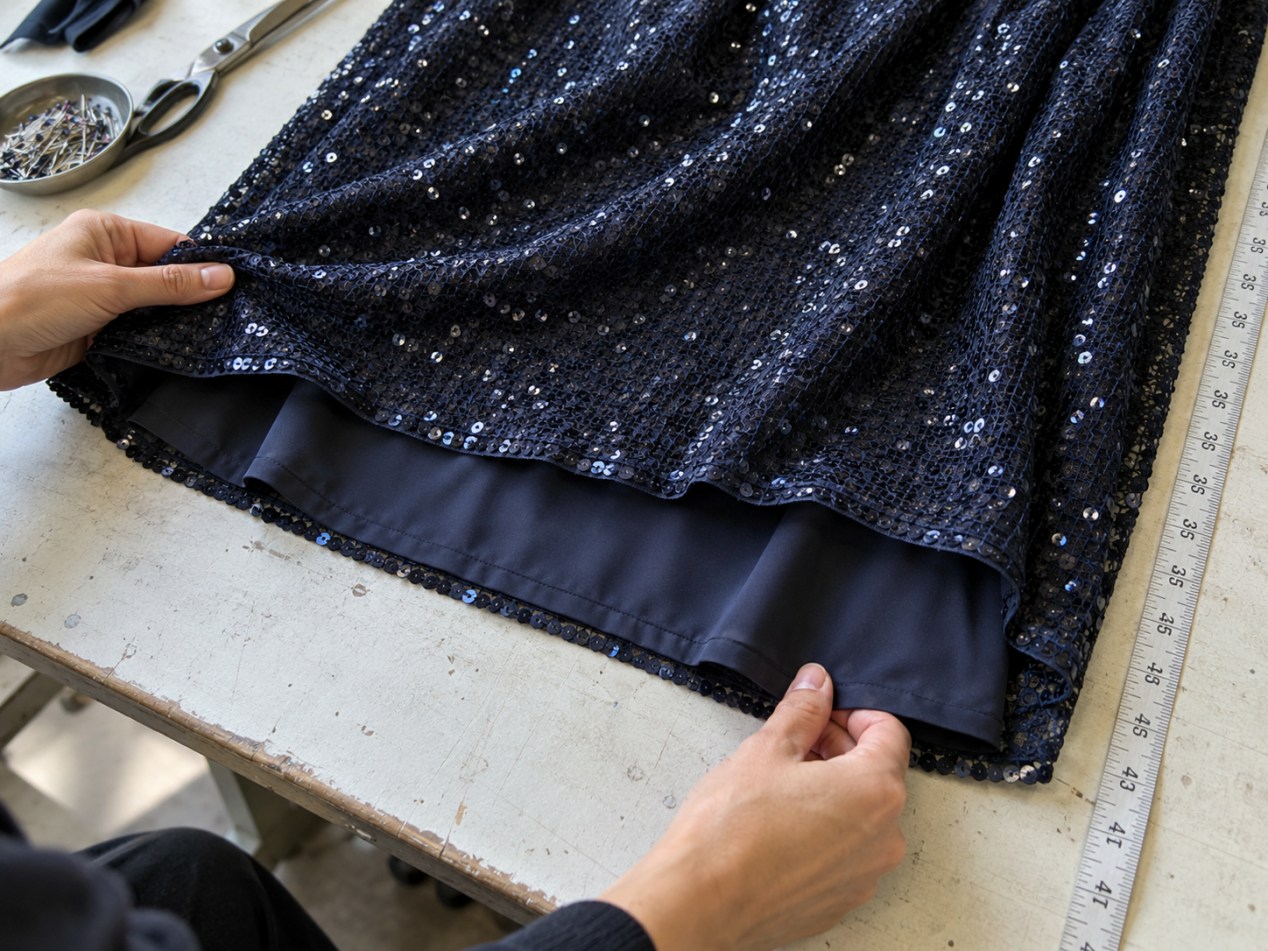
On a sequin mini dress, look at both hems after she sits. The lining should cover what you need covered. But it shouldn’t peek out under the outer hem when she moves.
Longer dress, different problem. Can she actually walk in it? Check the lining at the slit too. It shouldn’t bridge the opening or fight the outer skirt.
And don’t just look at length. Look at where it’s attached. If the two layers are pulling against each other, cutting the lining shorter won’t fix anything.
There’s no magic hem drop that works on every dress. Agree on the coverage first. Then check it on the sample, in the real fabrics.
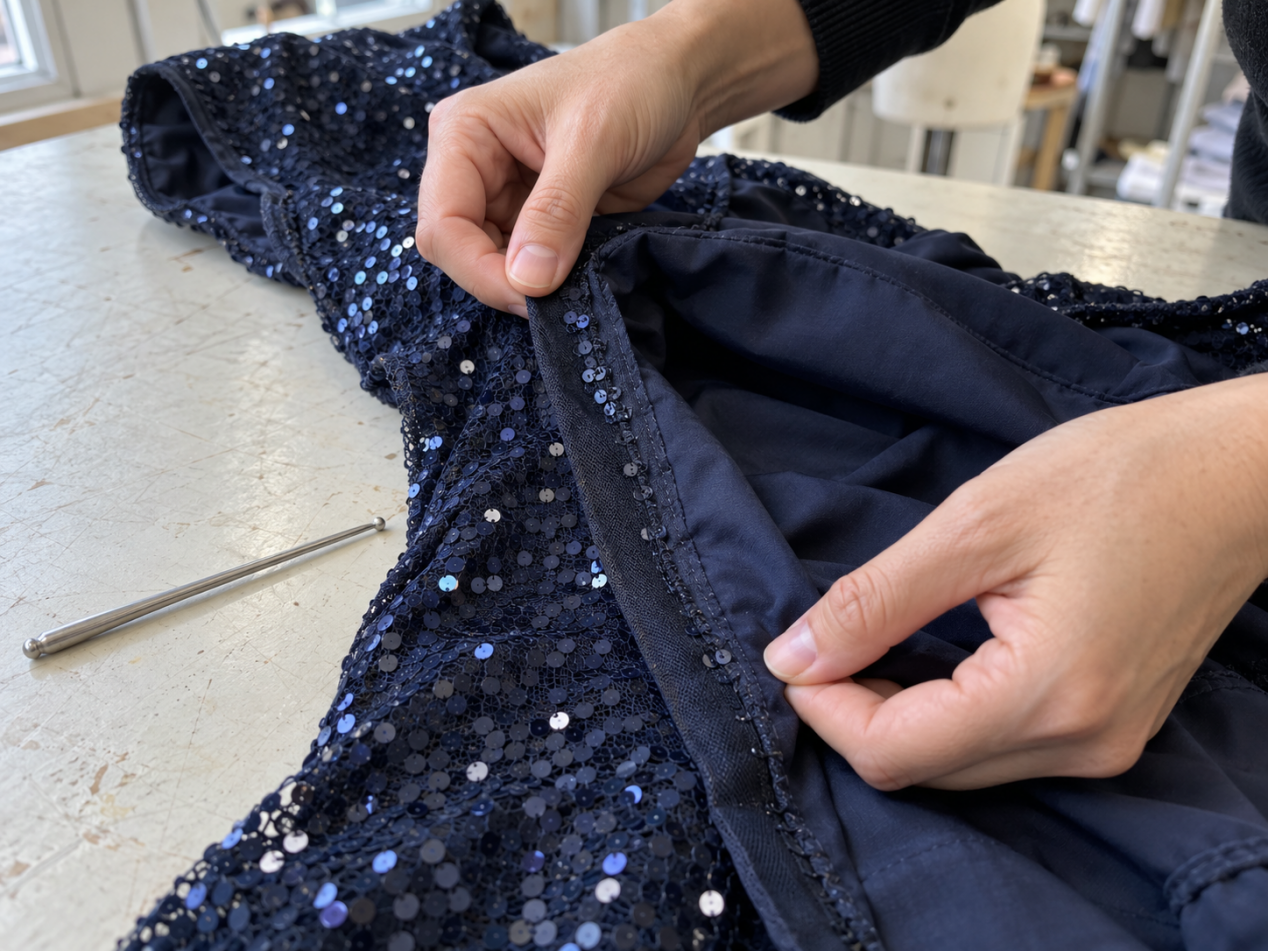
Locate Scratchy Seams Before Choosing a Fix
When you’re reviewing scratchy sequin dress seams, mark exactly where it feels rough. “Right side seam, just below the armhole” is something the sample team can actually find.
Open that area out and look inside. Trapped sequins. Damaged edges. Loose thread ends. Too much bulk. Then compare the bad spot against a smoother section of the same seam.
Big sequins mean bulk inside the seam allowance. Most of the time we just cut them off before sewing that seam. Whether that works depends on how they’re attached to the fabric.
And the sewing team needs a solid answer here: once those sequins come off, what keeps the ones next to them from working loose? After the change, check the inside and the surface beside the seam.
Don’t take them off too far from the seam though. You’ll see a bare strip on the outside. It has to feel fine and look right.
Same with binding or any extra covering they want to add. Don’t approve it off a swatch. Put it on the garment and feel it yourself. A covered seam can still be bulky under a tight bodice.
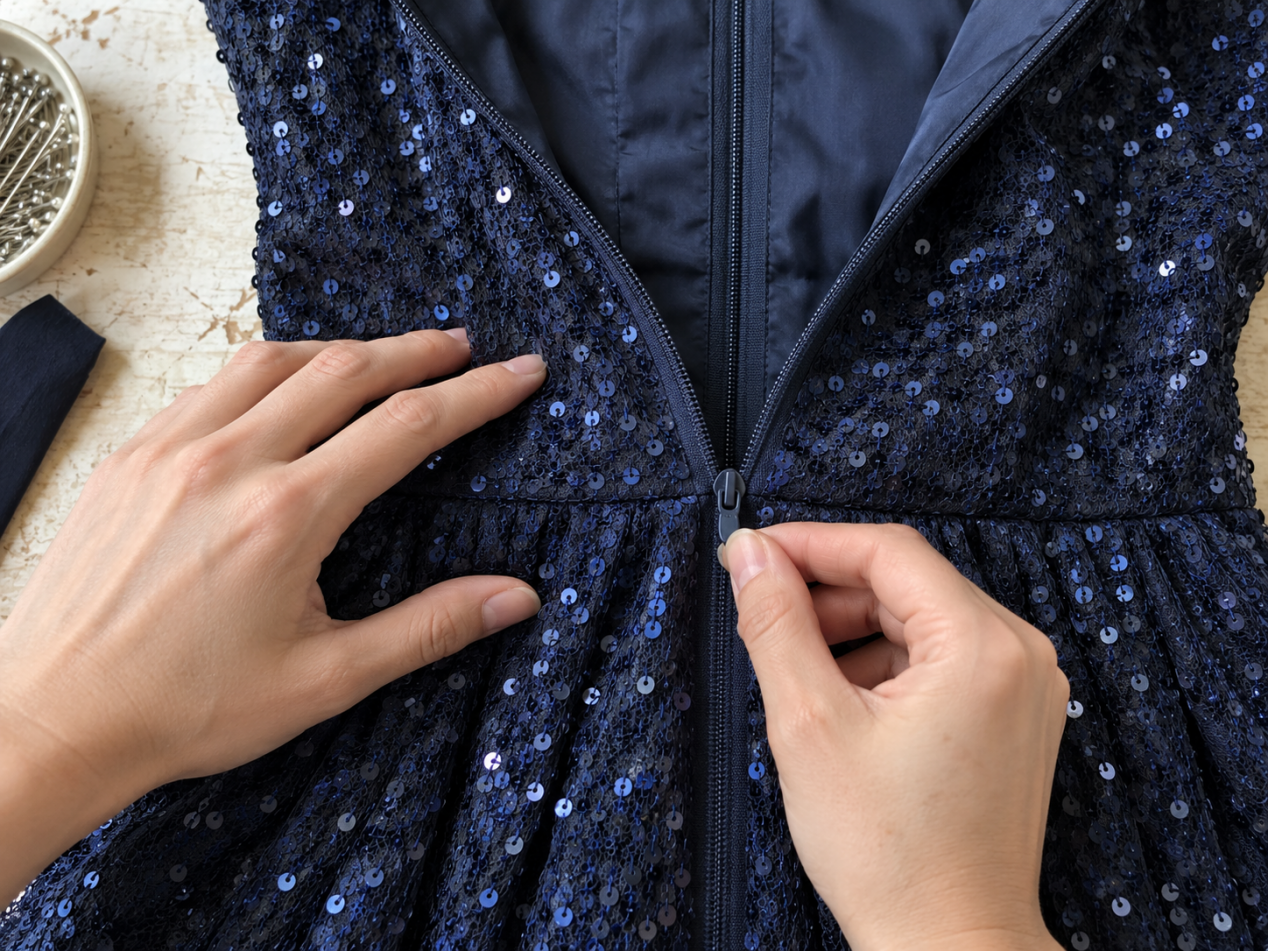
Why Does the Zipper Catch at the Waist Seam?
First work out when it sticks. Flat on the table? On the body? Both?
On the table, we run the zipper full length without stretching the opening. The usual trouble spots are the waist join and anywhere the fabric stacks up thick.
Check if lining, loose threads or sequins are getting in its way. YKK’s own guidance: leave enough clearance around the slider when sewing, and don’t force it when fabric gets caught.
Then we check it on the model, at the sample size. A sequin dress zipper that runs fine flat but fights on the body usually means the fit or the lining tension around the opening is off.
Same catch point both times? We’d open up the layers right there before blaming the zipper. That alone doesn’t mean the zipper itself is bad. Don’t jump to swapping it out.
| What happens | What to inspect first | What the revised sample should show |
| Slider catches loose lining | Lining attachment and clearance beside the zipper | The lining stays clear throughout opening and closing |
| Resistance occurs at the waist join | Layer thickness, seam allowances, and zipper installation | The slider passes the crossing without forced pulling |
| Zipper works flat but strains during fitting | Garment measurements, fit allowance, and lining tension | The opening closes normally at the agreed fit |
| Zipper area waves or twists | Installation, fabric handling, and support around the opening | The closed zipper area sits as intended |
| Top edges do not align | Opening lengths and attachment positions | Both sides finish at the approved level |
| Dressing is difficult even with the zipper fully open | Opening length and garment construction | The opening allows practical dressing for the design |
If the problem is hard to show in still photos, ask for a short video. Full opening first. Then a close-up right where the movement changes.
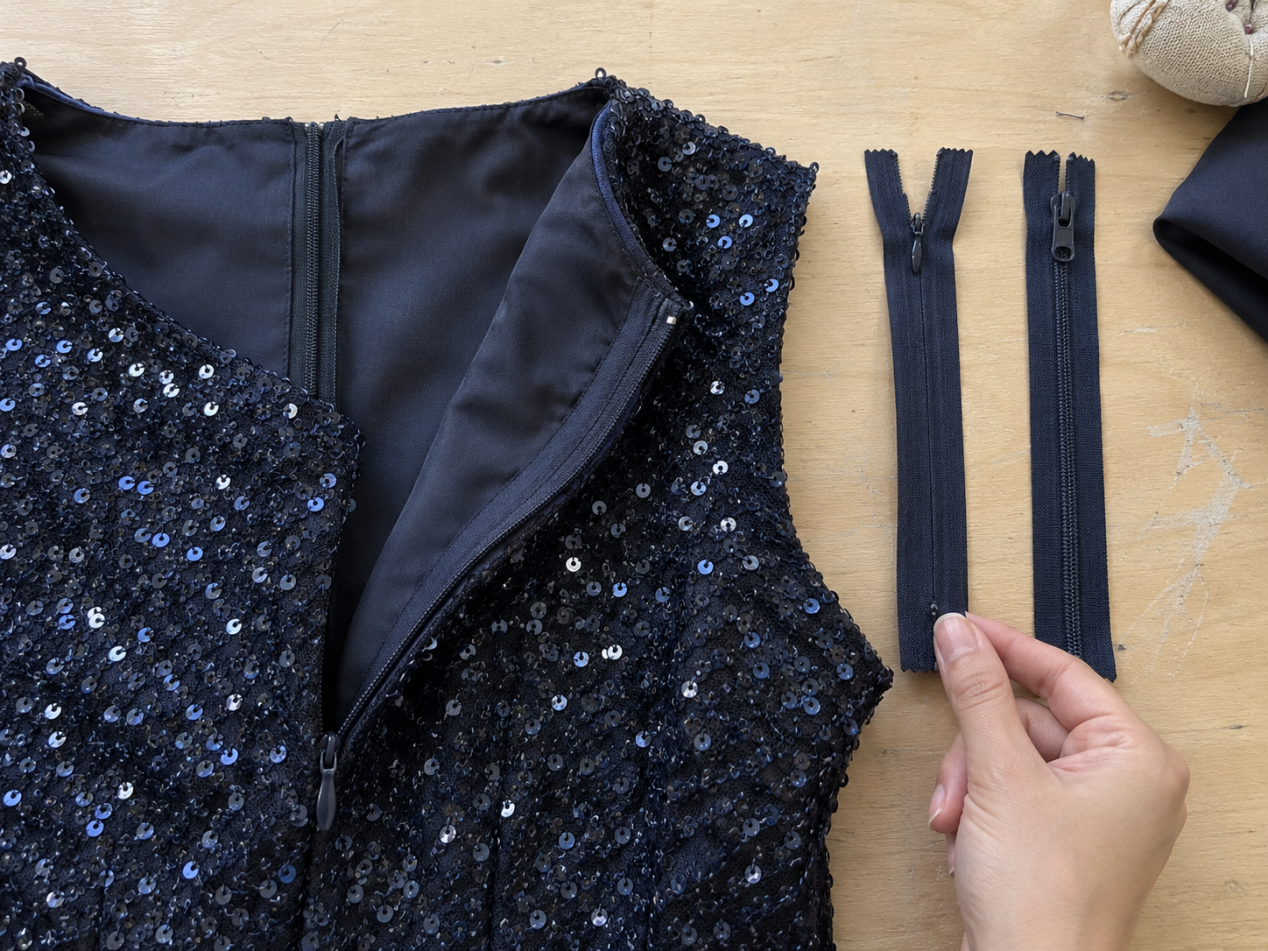
Confirm the Zipper Spec
You might need to change the zipper. When making a choice,The performance of it on actual clothing should be taken into consideration.And not merely by looking at its appearance on the display card.The length of the zipper, the thickness around it,The adaptability and the force it can withstand – these factors must all be taken into consideration.
If the design requires the use of invisible zippers,Please make sure that it is indeed suitable for the fabric and the waist structure.Don’t simply choose it blindly just because it looks simple and beautiful on the display card.
Write down what’s approved: type, size, length, colour, supplier ref if you have it. And if there’s a hook and eye or something else at the top, that goes in the review too.
Look inside at both ends of the zipper. Rough tape edges showing? Corners that dig in? Lining pulling tight when the opening’s fully stretched?
Then zip it up and step back. Waist seam level? Top opening sitting right? Bottom end lying flat? And see how the fabric hangs around it.
Write Comments That Can Be Checked on the Next Sample
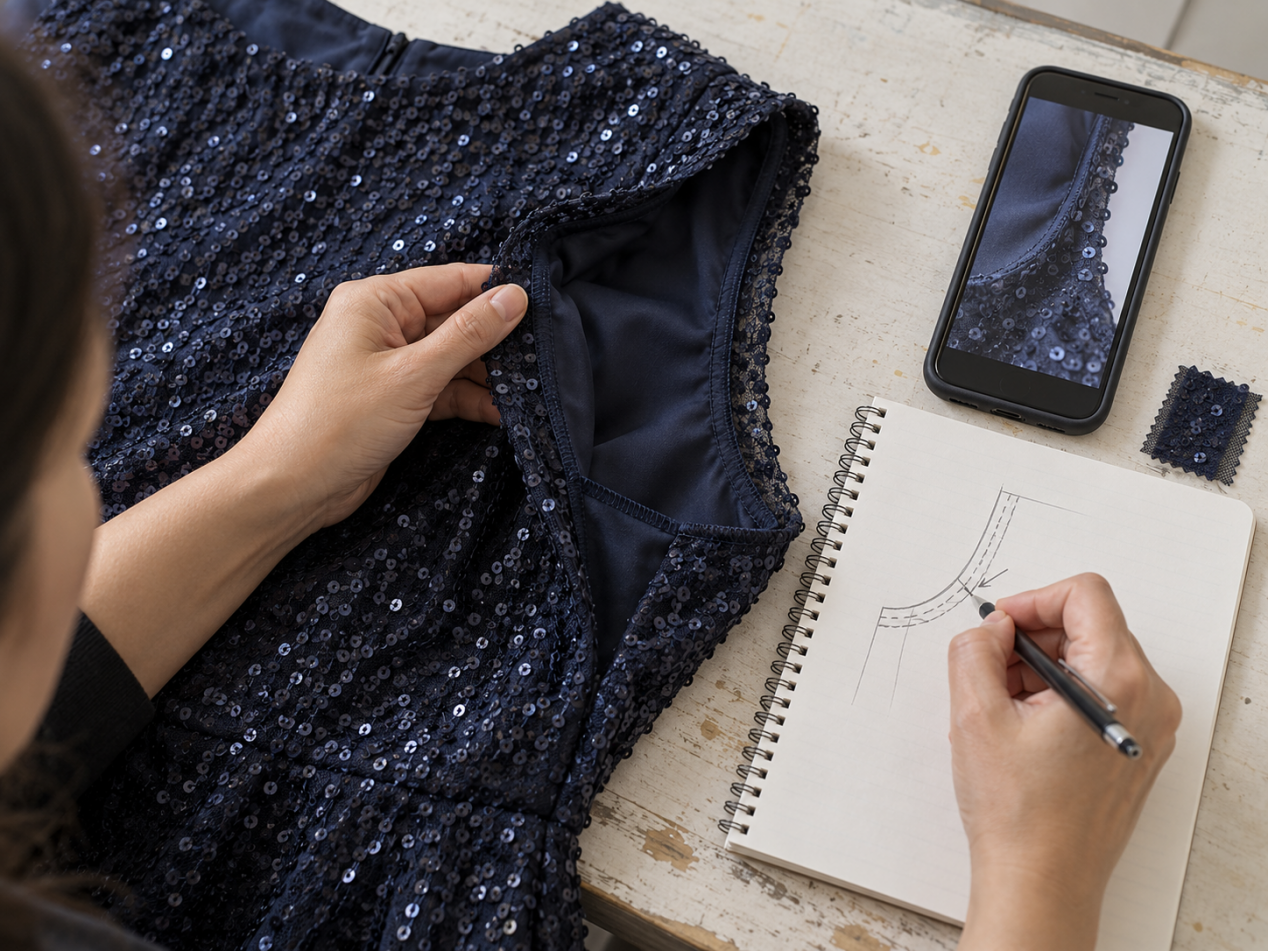
Effective revision comments shall clearly identify the stage where the problem occurs.The specific situation, as well as the results that need to be reviewed.Compared to lengthy textual descriptions, photos with annotations are often more helpful.
For example, “left underarm feels sharp when the arm is lowered” is clearer than “comfort needs improvement.” It allows the sample team to inspect the edge and reproduce the fitting check.
With a zipper issue, we note whether it happened flat or on the body. Plus the sample size. And where the resistance was: waist join, top of the opening, somewhere else.
We keep appearance and comfort comments in the same place. Say decoration gets moved away from a seam — the next check has to cover the inner finish and any visible gap on the outside.
One comment file per sample version. That’s the rule. When photos, measurements and material changes are scattered across message threads, corrections slip through.
Approvals Before Bulk
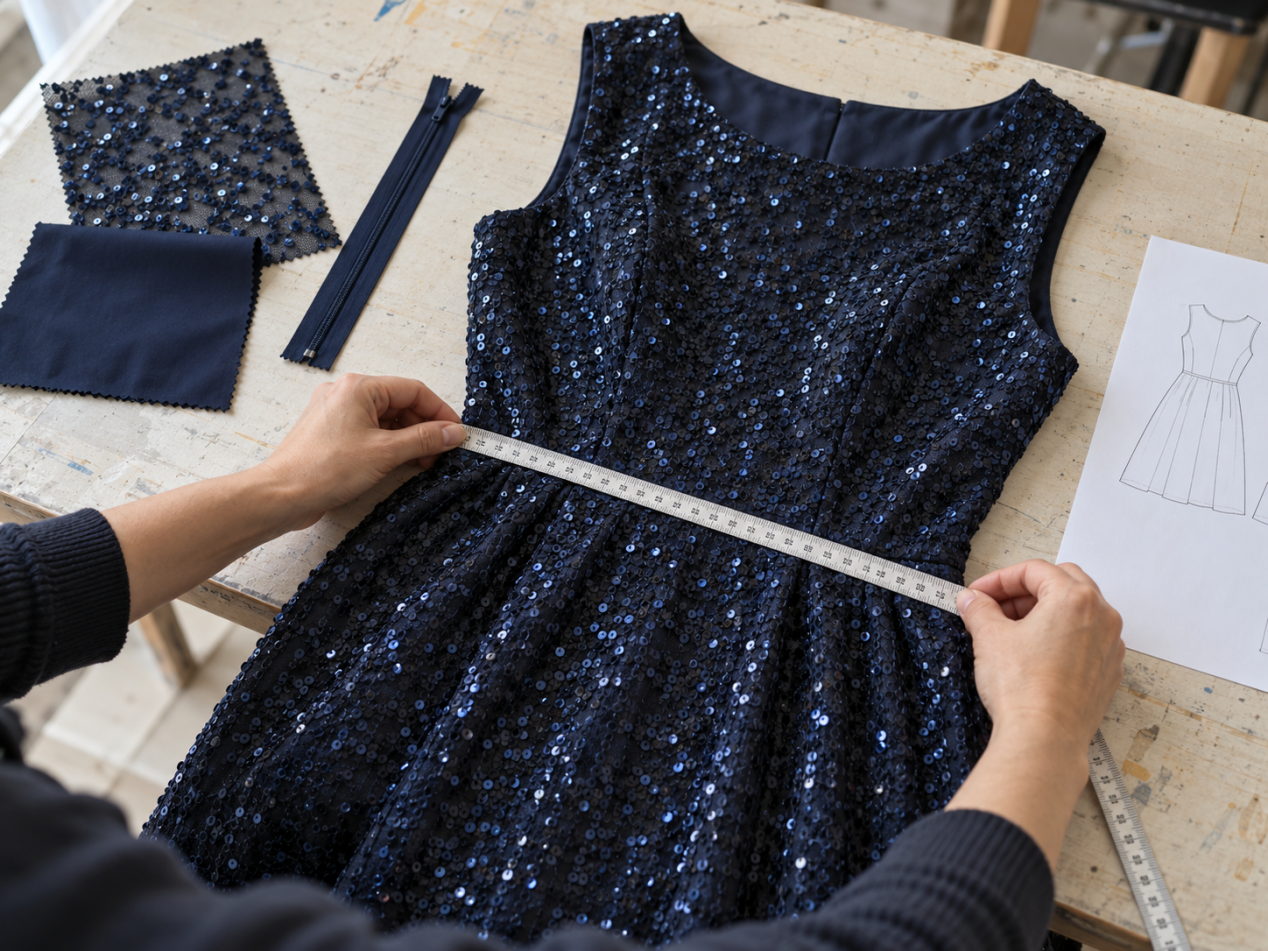
During dress sample development,keep shape approval and materials approval as two separate things. Approving the shape doesn’t mean the fabrics and construction are approved. If the sample has temporary parts, we note that in the approval record.
Before bulk, we go through the shell, lining, zipper and trims in one go. Then check the revised sample actually fixed the old comments without creating a new problem with fit or appearance.
The approval record should cover:
- Shell and lining material references, colours, and any agreed substitutions.
- Garment measurements and the sample size used for fitting.
- Lining coverage, movement, and finished length.
- Neckline, armhole, strap, back-opening, and slit finishes where applicable.
- Seam comfort and surface coverage beside revised joins.
- Zipper specification, installation, alignment, and operation.
- The care method to be verified for the complete material combination.
- Packing details needed to protect the garment during shipment.
The washing and care instructions must take into account the fabric, lining, decorations and accessories.We cannot determine the washing or dry cleaning method solely based on the main fiber composition.Because the decorations may completely change the washing and grooming requirements.
We keep the approved sample with the production and inspection teams. And any seam or zipper that gave trouble during development gets flagged for checking on the first production pieces.
Discuss the Sample Before Confirming the Order
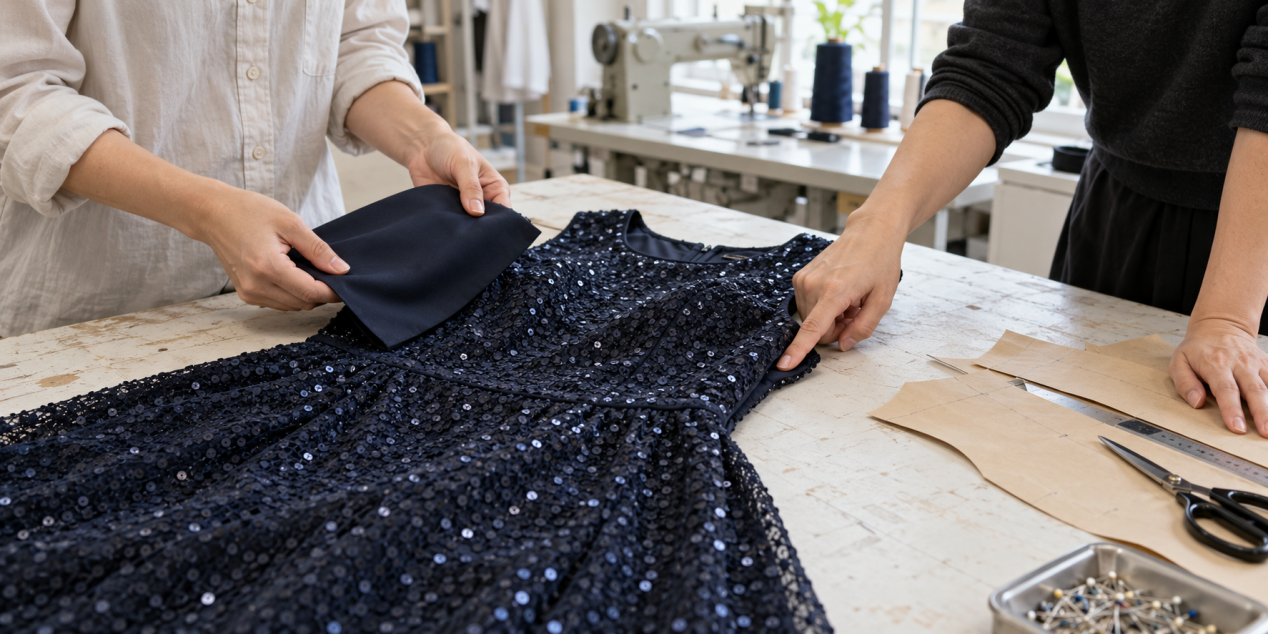
We are “Meng Ruolan Apparel”.A clothing manufacturing factory,We can make use of the technical data package (tech pack),The production is carried out based on the reference sample garment or the sketch.If you have a demand for the production of sequined dresses,Please provide the size chart, the order quantity, and the required fabric.And specific requirements or suggestions regarding the samples.
Photos help a lot here. With a comfort problem, close-ups of the inside show us where it rubs. With a zipper, show us where it stops. On the table, or only when someone’s wearing it?
Discuss your sequin dress project with our team. We’ll go over the materials and construction with you and confirm everything before production.
Contact Details:
MENG RUOLAN FASHION COMPANY LIMITED
Email:mandy@mrlapparel.com
WhatsApp +86 18825766882
Post time: Oct-19-2026


